
Introduction
Online gaming has come a long way since its humble beginnings. What started as a simple form of entertainment on dial-up internet connections has grown into a global industry worth billions of dollars. Over the past few decades, online gaming has seen enormous technological and cultural shifts, transforming the way players interact with each other, the content they consume, and the devices they use. This article explores the evolution of online gaming, tracing its journey from early dial-up connections to the immersive experiences offered by virtual reality (VR) today.
The Early Days: Dial-Up and LAN Parties
The Birth of Online Gaming
The late 1980s and early 1990s marked the beginning of online gaming. The internet was still in its infancy, and the concept of playing games with others over a network was groundbreaking. Early online gaming required slow dial-up internet connections, typically using modems with speeds as low as 56 kbps, which meant playing online games required patience. These connections were far from ideal, often causing lag, disconnections, mostbet and limited interactivity.
However, despite these limitations, the first online multiplayer games began to emerge. Titles like Gauntlet (1985), The Empire Game (1977), and Habitat (1986) were some of the earliest examples of virtual worlds where players could interact in real-time. These games were primitive by today’s standards, but they laid the groundwork for what would become a multi-billion-dollar industry.
Local Area Network (LAN) Parties
In the 1990s, LAN parties became an essential part of the online gaming culture. Gamers would gather in someone’s home or office and connect their PCs via a Local Area Network (LAN), enabling them to play games together without the limitations of dial-up connections. Games like Doom (1993), Warcraft (1994), and StarCraft (1998) became popular at LAN events, allowing players to engage in multiplayer matches with low-latency connections.
While the internet was still not fast enough for seamless online play in every home, the LAN party culture thrived, fostering a sense of community and competition among players. Many of the competitive gaming traditions we see today, including tournaments and esports leagues, have their origins in these LAN gatherings.
The Rise of Broadband and the 2000s Boom
Broadband and the Online Revolution
As broadband internet became more widely available in the early 2000s, online gaming started to experience a major shift. Unlike dial-up connections, broadband offered faster speeds, better stability, and an overall smoother gaming experience. This opened the door for a new generation of online games that could support larger, more complex multiplayer environments.
In 2004, World of Warcraft (WoW) revolutionized the world of online gaming. As a massively multiplayer online role-playing game (MMORPG), WoW allowed millions of players to coexist in a persistent world, collaborating and competing in real-time. The game became an instant cultural phenomenon, attracting millions of players and solidifying the MMORPG genre as a major force in gaming.
At the same time, the Halo franchise helped establish console gaming as a viable platform for online multiplayer, introducing the world to the concept of online matchmaking on consoles. Halo 2 (2004) on the Xbox was one of the first games to feature fully integrated online multiplayer with voice chat, allowing players to communicate in real-time, which transformed the experience.
The Growth of Online Multiplayer
By the mid-2000s, online multiplayer games were becoming mainstream. Popular games like Call of Duty 4: Modern Warfare (2007), Team Fortress 2 (2007), and Counter-Strike: Source (2004) all offered fast-paced, competitive multiplayer experiences that could be accessed by anyone with an internet connection. The rise of gaming services like Steam (2003), Xbox Live (2002), and PlayStation Network (2006) further facilitated online gaming by providing players with the ability to easily connect with one another, download games, and play together.
In addition to competitive first-person shooters and real-time strategy games, the 2000s saw the rise of social and casual online games. Titles like FarmVille (2009), World of Warcraft, and Second Life (2003) allowed players to engage in non-violent, social experiences that appealed to a wider audience. This marked the beginning of a shift in gaming demographics, where players of all ages could find a game to enjoy.
The Mobile Revolution: Gaming on the Go
Smartphones and Casual Gaming
In the late 2000s and early 2010s, the release of smartphones with advanced touchscreens and internet capabilities brought gaming to an entirely new platform. The iPhone, in particular, transformed the gaming landscape. Casual games like Angry Birds (2009), Candy Crush Saga (2012), and Clash of Clans (2012) became cultural phenomena, attracting millions of players who had never considered gaming before.
The convenience of mobile gaming, paired with free-to-play models, made gaming more accessible to a global audience. These games often utilized simple mechanics, social features, and in-app purchases to keep players engaged. In 2015, Pokémon GO became an international sensation, introducing augmented reality (AR) into the mobile gaming experience, allowing players to explore the real world while interacting with virtual creatures.
Mobile gaming quickly became one of the largest segments of the gaming market, catering to players looking for quick, casual experiences as well as deep, immersive titles. The accessibility of mobile gaming ensured that it reached an even broader audience, making online gaming a part of daily life for millions of people worldwide.
The Virtual Reality Revolution
VR: Gaming in a New Dimension
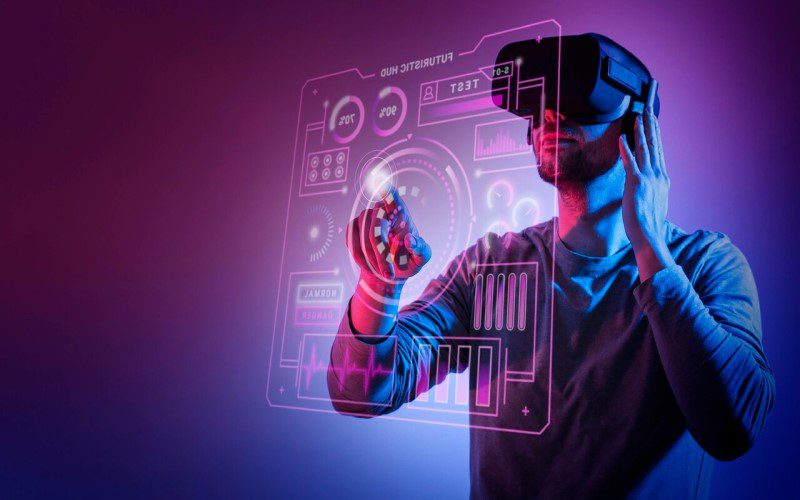
As technology continued to evolve, the next frontier for online gaming emerged: Virtual Reality (VR). In 2016, the release of VR headsets such as the Oculus Rift and HTC Vive marked a major step toward immersive gaming experiences. VR offered players the ability to fully immerse themselves in virtual worlds, turning gaming from a passive activity into an active, sensory experience. VR also made online multiplayer gaming more immersive, as players could interact with each other in 3D environments in ways that were never before possible.
Games like Beat Saber (2018), Rec Room (2016), and VRChat (2014) allowed players to not only engage in virtual worlds but also interact socially with others in a completely new and exciting way. As technology advances, VR gaming is becoming more affordable and accessible, opening the door for more players to experience this revolutionary form of online gaming.
Moreover, VR gaming has seen significant advancements in haptic feedback and motion tracking, making gameplay feel more natural and immersive. In the coming years, VR may offer even more realistic online multiplayer experiences, with advancements in artificial intelligence (AI) and graphical fidelity that could change the way we perceive gaming.
The Future: AI, Cloud Gaming, and Beyond
Artificial Intelligence (AI) and Cloud Gaming
Looking ahead, the future of online gaming appears limitless. Advances in Artificial Intelligence (AI) are making games smarter, more responsive, and more interactive. AI-driven opponents, non-playable characters (NPCs), and environments are becoming increasingly realistic, offering players more dynamic and engaging experiences.
Cloud gaming is another area set to transform the industry. With services like Google Stadia, Xbox Cloud Gaming, and NVIDIA GeForce Now, players no longer need powerful gaming PCs or consoles to enjoy the latest titles. Cloud gaming allows users to stream games directly to their devices, eliminating the need for costly hardware upgrades. This democratizes access to high-end gaming experiences, enabling more players to enjoy online multiplayer games.
In the coming years, we can expect the integration of AI and cloud technologies to create highly immersive, accessible, and dynamic gaming experiences. Augmented reality (AR) and mixed reality (MR) could also play a role in further bridging the gap between the physical and digital worlds.
Conclusion
From dial-up connections to virtual reality, the evolution of online gaming has been a remarkable journey. As technology advances, gaming has become more accessible, interactive, and immersive than ever before. Today, players around the world can come together, whether to compete, socialize, or simply have fun. What started as a niche pastime has blossomed into a multi-billion-dollar industry that continues to shape the future of entertainment.
As we look to the future, it’s clear that online gaming will continue to innovate. With the advent of VR, AI, and cloud gaming, the next generation of players will experience gaming in ways that were once unimaginable. The journey from dial-up to virtual realities is far from over, and the best is yet to come.

