
A hair transplant is often described as a permanent solution to hair loss. While that can be true, success is not automatic.
A successful hair transplant depends on a combination of biological factors, surgical technique, and post-procedure care. Understanding these elements helps set realistic expectations and explains why results can vary from person to person.
This article focuses on what actually drives success, not marketing promises.
Hair Transplants Rely on Donor Hair Quality
Every hair transplant begins with donor hair. Donor hair is typically taken from areas of the scalp that are resistant to hair loss, usually the back or sides of the head.
The quality, density, and stability of this donor area play a major role in outcomes. Research on follicular unit survival following hair transplant shows that the way follicles are harvested, handled, and implanted directly affects their ability to survive and grow in the recipient area.
If donor hair is limited or weak, it restricts how much coverage can be achieved.
Donor hair factors that affect results
- Density of hair follicles in the donor area
- Thickness and texture of individual hairs
- Long-term resistance to hair loss
- Overall scalp health
Strong donor hair provides a better foundation for long-lasting results.
Surgical Technique Matters More Than Graft Count
Many people assume that more grafts automatically mean better results. This is not always true.
A successful hair transplant depends on how grafts are harvested, handled, and implanted. Poor technique can damage follicles or reduce survival rates, regardless of graft number.
Modern procedures focus on preserving follicle integrity throughout the process.
Key technical factors that influence success
- Careful extraction that minimizes trauma to follicles
- Proper storage and hydration of grafts
- Precise placement that supports natural growth patterns
- Correct angle and direction of implanted hair
Technique directly affects how many transplanted hairs actually grow.
Hairline Design Plays a Critical Role
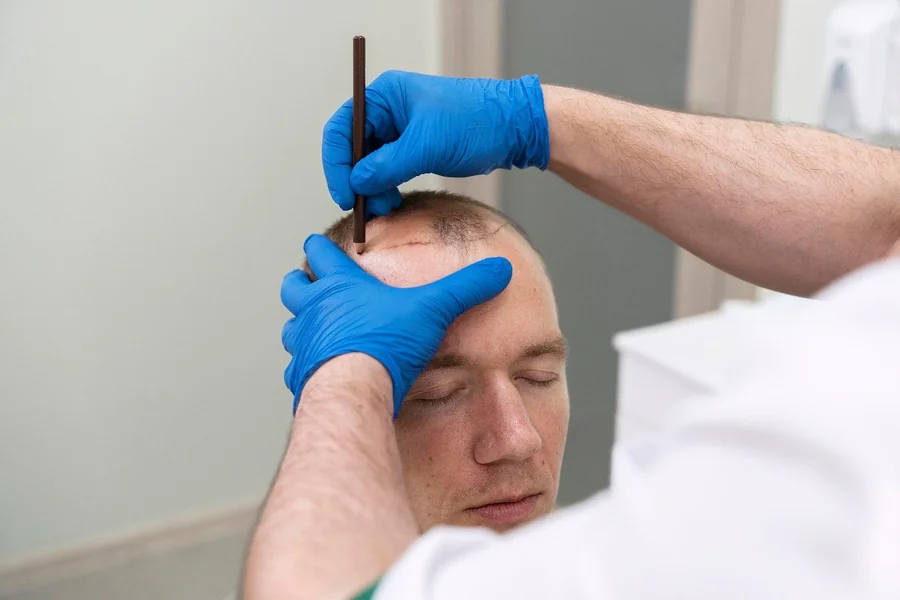
Hairline design is one of the most important factors in a natural-looking outcome. A successful hair transplant does not aim to recreate a teenage hairline. It considers facial structure, age, and future hair loss patterns.
Poorly designed hairlines can look unnatural even if hair growth is strong.
Principles of effective hairline design
- Placement that aligns with facial proportions
- Gradual density rather than sharp edges
- Variation in hair direction for realism
- Planning for long-term hair loss progression
Design decisions have permanent visual consequences.
Healing and Post-Procedure Care Affect Outcomes
The transplant procedure is only part of the process.
After surgery, the scalp goes through a healing phase that affects graft survival. Proper care supports healing and reduces complications.
Most transplanted hairs shed initially before entering a new growth cycle. This is expected and does not indicate failure.
Post-procedure factors that support success
- Following aftercare instructions closely
- Avoiding trauma to the scalp during healing
- Managing swelling and inflammation
- Maintaining overall scalp health
Patience is essential, as final results can take up to a year to fully develop.
Individual Biology Influences Hair Growth
Not everyone responds to a hair transplant in the same way.
Genetics, circulation, scalp condition, and overall health all influence how transplanted hair grows. These factors are largely outside surgical control but are considered during consultation.
This is why assessment matters as much as the procedure itself.
Experience and Medical Oversight Matter
Hair transplantation is a medical procedure, not a cosmetic shortcut.
Successful outcomes require medical oversight, training, and experience. Providers must understand scalp anatomy, hair growth cycles, and surgical technique.
Clinics offering successful hair transplant services focus on careful assessment, precise execution, and long-term planning rather than quick fixes.
This approach improves predictability and supports natural-looking results.
Setting Realistic Expectations Is Part of Success
A successful hair transplant improves density and appearance, but it does not stop natural hair loss entirely.
Long-term success often involves a combination of surgical and non-surgical strategies to maintain results.
Clear expectations help ensure satisfaction with the outcome.
The Bottom Line on Hair Transplant Success
A successful hair transplant is defined by more than visible growth.
It depends on donor hair quality, surgical technique, thoughtful design, healing, and individual biology. When these factors align, results can be natural, durable, and life-changing.
Understanding what drives success helps patients make informed decisions and choose providers who prioritize outcomes over promises.
