
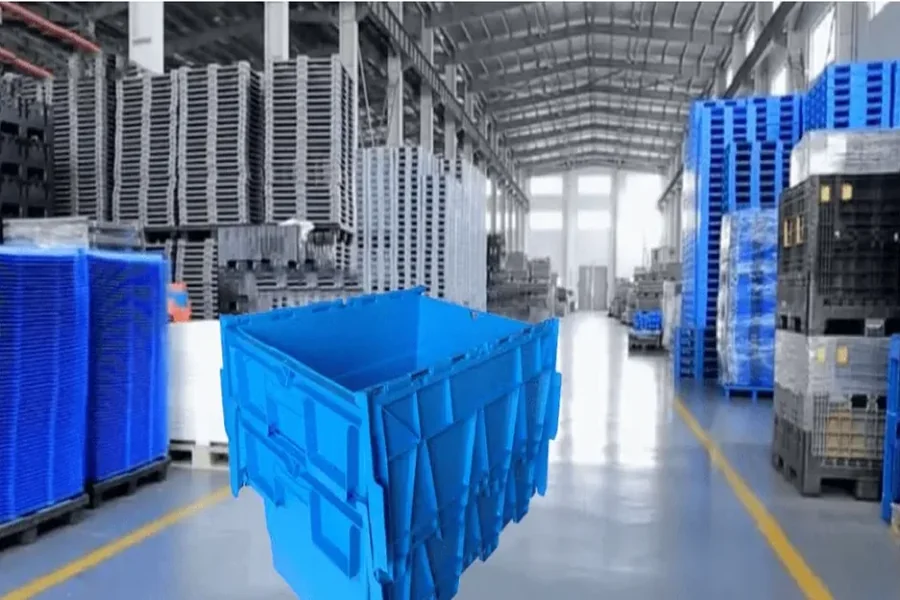
High-turn inventory has a special talent for creating chaos. You pick it, replenish it, move it, count it, and somehow it still ends up in the wrong spot at the worst time. Stacking totes are built for that reality. They give fast-moving parts a consistent home that’s easy to handle, easy to label, and simple to stage for picking, kitting, WIP, or replenishment.
In large warehouses, consistency matters as much as capacity. When every location uses the same container footprint, teams spend less time “making it work” and more time moving product.
How Stacking Improves Space Use and Access
Stacking is not just about going vertical. It’s about staying usable while you do it.
- Cleaner aisles: fewer loose cartons, less floor sprawl, fewer “temporary” piles that become permanent
- Better pick access: uniform stack heights are easier to reach and less likely to topple
- Faster visual checks: when totes are labeled consistently, teams spot shortages and mis-slots quicker
- Easier staging: outbound waves, kitting lines, and assembly cells run smoother when containers match the workflow
If you’re using shelving, flow rack, or pallet racking for small-to-mid items, stackable industrial totes can also reduce wasted cube. Instead of storing “air” in oversized boxes, you right-size the container to the SKU.
Common Materials and Tote Styles
Most operations land on plastic for a reason. It’s durable, lightweight, and easy to clean. Still, “plastic tote” covers a lot of ground, so it helps to know the common options businesses search for.
Common Materials
- HDPE (high-density polyethylene): tough, impact-resistant, good for repeated handling
- PP (polypropylene): often a little stiffer, can handle certain temperature swings well
Common Tote Styles
- Straight-wall totes: best for dense packing and consistent footprint, great for picking and automation-friendly setups
- Attached-lid totes: better when you need contained storage for transport or security
- Hopper front or open-front bins: useful for piece-pick environments where grab access matters more than sealing
- ESD-safe totes: needed around sensitive electronics where static control matters
The “right” tote is the one that matches how your team touches inventory. If the tote is too heavy when full, too tall for the shelf, or too slick to grip with gloves, it becomes one more friction point.
Where Stacking Totes Perform Best
Stacking totes show up anywhere speed and repeatability matter.
Order Fulfillment and Picking
Pick paths love consistency. Uniform totes work well for pick carts, zone picking, batch picking, and replenishment. They also reduce the “repack tax” where teams waste time moving items into a different container at the next step.
Production and Work-in-Progress
Work-in-process (WIP) is notorious for multiplying. Totes help keep assemblies, components, and sub-kits separated and traceable. In manufacturing, they’re often used for point-of-use staging near workstations.
Returns and Putaway
Returns are messy by nature. Standardized totes help triage, sort, and keep the process moving without sacrificing organization.
If your team is already searching for stacking totes because the building feels full even when it’s not, that’s a sign your storage method needs a reset, not just more locations.
Mistakes To Avoid When Using Stacking Totes
Most tote problems aren’t “bad totes.” They’re mismatch problems.
<H3> Overloading and Overstacking
Every tote has a practical limit, even if it survives the abuse. Overloaded stacks create safety risks, crushed parts, and frequent rework. Set a standard stack height and stick to it.
Mixing Footprints
A mix of stacking tote sizes makes stacking unstable and wastes shelf space. Standardize footprints by zone and limit exceptions.
<H3> Ignoring Labels and Visual Controls
Stacking totes without clear ID become anonymous plastic. Use durable labels, consistent placement, and location rules your team can follow on a rushed Monday.
Choosing the Wrong Style for the Flow
Open-top stacking totes in a dusty environment, attached-lid totes for high-frequency picks, oversized totes for tiny SKUs.
New vs Used Stacking Totes
New totes are predictable. Used stacking totes can be a big cost win, especially when you’re buying hundreds or thousands at once. The key is knowing what to inspect.
When evaluating used inventory, check:
- Cracks at corners and handles
- Warping that prevents stable stacking
- Lid hinge integrity for attached-lid styles
- Excessive wear that impacts nesting or stack fit
- Cleanliness requirements, especially for food or regulated environments
If you’re actively looking for stacking totes for sale, it’s worth getting clear on three specs up front: footprint, interior volume, and load rating. Those three prevent most “we bought the wrong ones” headaches.
Where To Source the Right Totes
Stacking totes are one of those unglamorous upgrades that pays you back daily. Less clutter, cleaner flow, faster picking, and fewer inventory mysteries. When the container matches the work, your warehouse feels calmer and runs faster, even at peak volume.
If you’re ready to lock in a consistent tote system, Container Exchanger can help you source warehouse-ready options in volume, including used inventory when it makes sense for your budget and timelines.

