
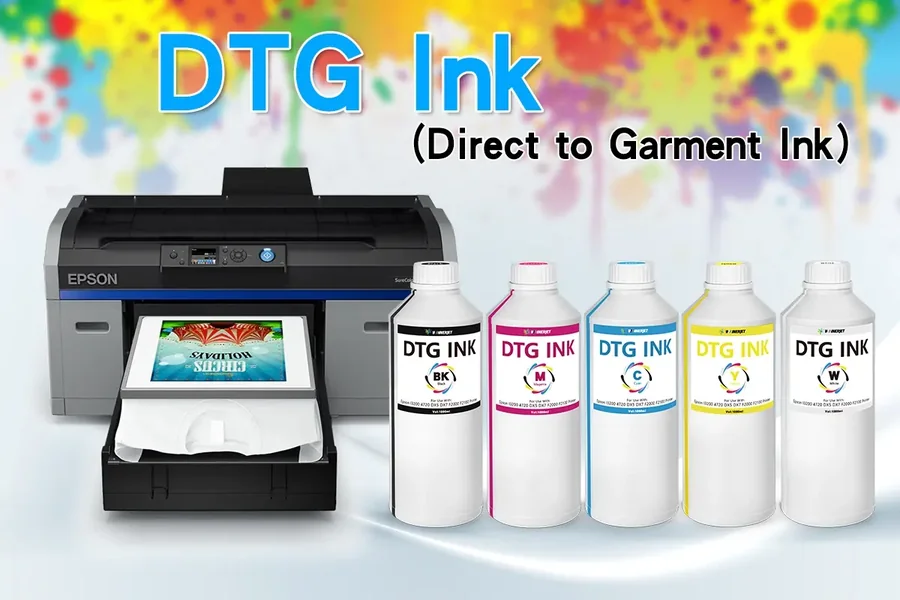
Spend enough time in garment printing and one thing becomes obvious pretty quickly. The ink running through your printheads determines everything. Your printer could be top-notch, the artwork flawless, and the workflow efficient. But the wrong ink or a lack of understanding about what’s actually flowing through those nozzles will cost you in quality and profit. So let’s get into it.
What Is DTG Ink?
Direct-to-garment (DTG) ink is water-based ink specifically designed for use on textiles. These inks adhere to textile fibers to create long-lasting prints with bright colors. It also affects print quality, washability, and the tactile feel of the printed part. The choice of ink is very impactful on the final product. When looking to shop direct-to-garment ink, it helps to focus on water-based formulas that bond well with fabric fibers, since ink quality directly influences color vibrancy, durability, and overall feel.
Types of DTG Ink
There are a variety of DTG inks to choose from, each tailored to a specific set of needs and fabrics. Pigment ink continues to be the leader, as it is capable of producing vibrant colors and a high wash speed. Specialty inks exist for darker substrates that have a higher amount of binder to increase opacity and coverage. White ink, essential for printing on non-white textiles, demands constant attention and maintenance.
Compatibility with Printers
Every DTG printer does not use the same ink. Well, which ink works best will depend on the printhead technology and the equipment manufacturer’s recommendation. Using the wrong kind of ink can block printheads or yield a low-quality print. To ensure the smooth operation of ink-substituted printers, it is advisable to check the specifications of printers before buying them so that the equipment remains protected from damage.
Fabric Compatibility
Fabric affects the ink performance. Because of its ability to absorb DTG ink, cotton is the most common type of apparel used for colorful prints. Blends sometimes work, but they mostly don’t, and you can never be sure what fiber was in the blend. And finally, polyester and other synthetic fibers typically require pre-treatment or special ink formulations to properly bond and achieve proper color brilliance.
Performance on Different Materials
DTG ink works optimally on alpha-calcified, high-cotton products. Pre-treatment solutions promote ink adhesion and minimize wash-fastness fugitive coloration. The prints may look dull or wash out quickly, however, on untreated or low-cotton textiles. We have tested on multiple materials to reveal the optimal combinations for enduring designs.
Color Vibrancy and Detail
DTG inks made from pigments are great at delivering high visual quality with sharp graphics and vivid colors. The bonding process allows for the delivery of excellent image sharpness and fade resistance over time. With a proper setup and a pretreatment, printers can produce results just as excellent as if they were produced with traditional screen printing—particularly with complex artwork.
White Ink: Challenges and Maintenance
With white DTG ink, you can print white on dark garments, but it presents its set of challenges. Because they are pigments, they tend to settle and require continuous agitation in the printer. Frequent stirring of the white prevents it from clogging, and maintenance routines keep it bright! Neglecting maintenance can cause expensive fixes and unpredictable performances.
Washability and Durability
Well-cured DTG prints can be washed repeatedly without significant fade or cracking. This is vital, since the curing temperature and time will determine how long you keep the results for. Over-curing or under-curing can result in premature wear or dullness. Recommended guidelines help ensure that printed garments maintain their look and quality.
Environmental Considerations
Since DTG ink is water-based, it is generally less harmful to the environment than solvent-based inks. There are a lot of companies that release inks that have minimal harmful substances. This process also makes use of environmentally friendly inks, and it is important to dispose of these inks and any other chemicals properly.
Storage and Shelf Life
Inks are to be kept in an air-conditioned room and away from exposure to sunlight. Heat or moisture reduces the lifespan and quality of prints. Containers are sealed tight, and if jars start to thicken, they’re pulled from stock — thick ink can clog printheads and affect performance.
Troubleshooting Common Issues
Most print-related glitches are due to issues with ink compatibility or, in many cases, just neglect. Washes of color, blocked nozzles, or uneven prints indicate potential problems with the ink selection or application. Regular printer checks, appropriate storage, and the use of recommended ink can resolve most issues.
Conclusion
The ink used in DTG, its specification, compatibility, and other indicators will also determine the quality of the garment once printed. Understanding the different types, maintaining them, and selecting the right fabric ensures consistently high-quality results. Users get a reliable print, making customers happy if everything is considered.

