
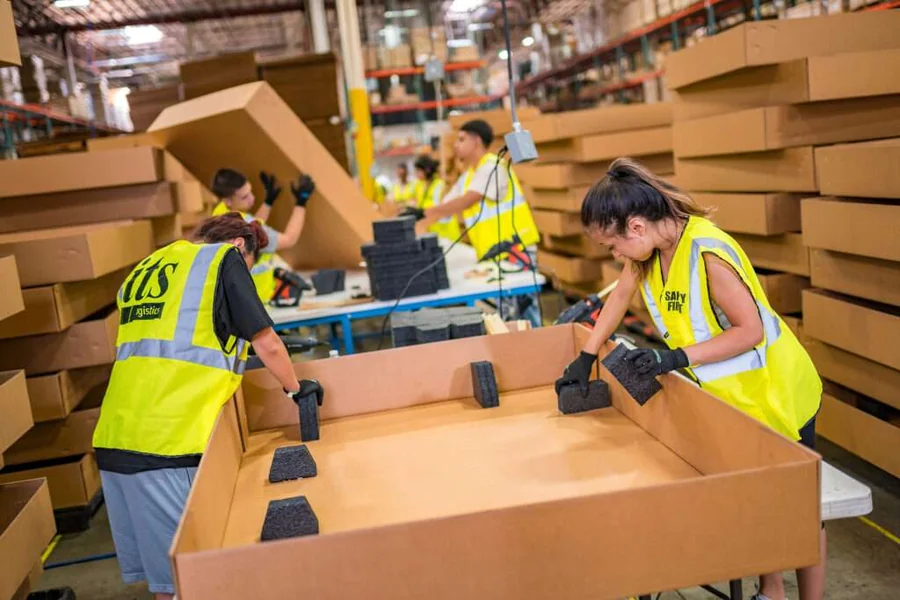
Warehouse packing lines slow down when multi-item orders require last-minute assembly at the packing bench. Subscription boxes, promotional bundles, and starter kits often pull products from several warehouse zones, which means more walking, more scans, and more handling before an order is ready to ship. During busy periods, those extra steps can quickly build queues and increase the risk of missing pieces or packing mistakes.
Pre-built kits offer a practical way to simplify that process. When commonly paired products are assembled ahead of time and stored as a single SKU, a five-item order can be picked and packed like a single product. The approach reduces decision points on the floor, shortens pick paths, and helps teams keep packing lines moving steadily during high-volume fulfillment days.
Assembly Bottlenecks Defined
Multiple items from separate shelves can turn a simple order into a slow build at the packing station. When packers must collect parts from different zones, they spend more time walking, waiting on replenishment, and scanning extra barcodes. Those extra touches reduce orders per hour and create more chances for wrong items, missing components, or damaged packaging during rush periods.
A common way to remove these delays is to combine frequently paired products into one packaged unit before customer orders are released. Through kitting services, those items are assembled in advance and assigned a single SKU. Pickers retrieve one ready unit instead of several loose components, while pack stations process fewer steps. Throughput becomes more predictable and quality checks stay focused on one unit at a time.
Designing Practical Product Kits
Purchase history and order patterns give the best starting point for deciding what belongs in a kit. When the same items are repeatedly bought together, combining them into one warehouse SKU cuts down picking steps and reduces scanning at pack-out. Starter sets, promo bundles, and launch packages tend to benefit because the parts and quantities stay consistent across many orders.
Clear kit rules matter just as much as the product mix. A defined bill of materials, barcode placement, and consistent packing layout support a uniform unboxing and retail-ready look, and they make inspections faster when returns or audits come up. When a kit is built with repeatability in mind, the work on the floor looks more like shipping a single item than assembling a bundle.
Operational Workflow Changes
Scheduled kitting batches move bundle assembly away from the outbound line and into a planned work area. Dedicated staff build kits earlier in the day or week using a set bill of materials, the right packaging, and clear scan points. That pulls multi-item handling out of pack-out, so finished kits enter storage as a single pickable unit.
Pack teams benefit because their tasks narrow to scanning, boxing, labeling, and loading, with fewer stops for inserts or last-minute fixes. Work becomes easier to balance since kitting labor can be planned around inbound receipts and forecasted demand, while outbound stays focused on order flow. During high-volume periods, that separation keeps lanes moving with steadier cycle times.
Inventory Control With Kitting
Two inventory records need attention when kitting is added: the on-hand count of each component and the on-hand count of the finished kit SKU. If the system only tracks the kit, teams can lose sight of low parts until the kitting area stalls. If it only tracks components, customer-facing availability for the bundle becomes guesswork and oversells become more likely.
Accurate dual tracking prevents the common failure where orders come in but one small item is short, like an accessory, printed insert, or sample. Good setups reserve components to open kit work orders, deduct parts at build time, and post the finished kit back into stock with a clear status. That keeps purchasing, kitting schedules, and order promises aligned day to day.
Measuring Operational Gains
Order cycle time is one of the first numbers that improves when kits replace last-minute assembly at pack-out. With fewer separate picks and scans per order, pick paths tighten up and exceptions drop, so orders move from release to label faster. Picking accuracy usually climbs as well, because workers handle one verified kit SKU instead of several loose items that can be swapped or missed.
Shipments per hour tends to rise because each completed kit reduces touches at both picking and packing. Labor planning gets cleaner since kitting can be staffed in set blocks while outbound stays focused on boxing and carrier cutoffs. Capacity gains are often noticeable without new floor space, extra equipment, or added staff, leaving room for higher volume targets next month.
Kitting works best when it supports the daily rhythm of warehouse operations rather than adding complexity to it. Turning common multi-item orders into standardized kits reduces handling, shortens pick paths, and simplifies packing decisions across the floor. With clear kit structures, scheduled build runs, and accurate tracking of both components and finished kits, teams gain better control over inventory and labor planning. Packing lines spend less time assembling bundles and more time moving orders out the door. Over time, steady improvements in cycle time, picking accuracy, and shipments per hour signal a kitting strategy that supports consistent, scalable fulfillment performance.

