
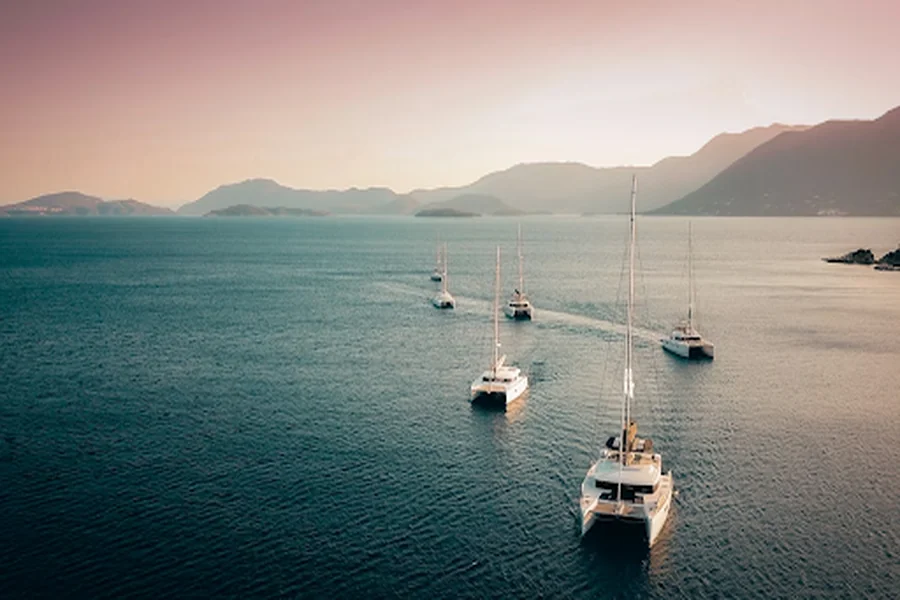
For most people, yachting isn’t planned — it just sort of happens. A friend has a contact, someone finds a last-minute deal, a birthday trip gets planned around a vague idea of “something different.” The boat leaves the harbor, the city gets smaller behind you, and somehow everything just… quiets down, not in volume, but in feeling.
That quiet is what people come back for. Everything else is secondary.
The first hour is a little chaotic (in a good way)
Nobody arrives on a yacht knowing what they’re doing. Even people who’ve watched every sailing documentary on the planet spend the first 45 minutes learning where things are, what not to touch, and what the skipper means by “ready about.” For most people who rent yachts for a day, this orientation period feels somewhere between a fire drill and an adventure game — mildly stressful, weirdly fun.
What’s interesting is that this friction is part of why the experience works. According to a 2022 NMMA survey, 43%+ of respondents, particularly newcomers, feel more recharged and less stressed after spending time on the water. Phones go into bags. Inboxes stop existing.
By noon, the rhythm takes over
After about an hour, the engine goes quiet, and what comes next is a kind of silence you don’t expect. Wind. Hull. Rigging. Motor yachts are louder and faster, more about covering distance — but both share something: you are moving through a version of the world that most people only ever see from the shore, and it looks completely different from out here.
Lunch on the water deserves a mention, oddly enough. There’s actual research — not just sailor mythology — suggesting that the combination of wind exposure, mild physical activity, and background noise reduction measurably heightens taste perception. A basic sandwich eaten at anchor in a small cove with the sun overhead hits differently than the same sandwich at a desk. It just does.
Finding a decent charter used to require knowing the right people. Now platforms like GetBoat have opened up day sailing to pretty much anyone — crewed options, bareboat rentals, destinations from the Adriatic to the Andaman Sea — which has pushed first-timer numbers up sharply over the past few years.
Two things that catch people off guard
- The tiredness. By mid-afternoon, most first-timers are running on sun, salt air, and whatever they ate at anchor, and they feel it — but it’s a clean kind of tired, the kind that comes from being outside and physically present all day rather than from staring at screens. People sleep extraordinarily well the night after a day on the water.
- The wildlife. Dolphins appearing off the bow is common enough in certain regions — the Azores, the Adriatic, parts of the Gulf of Mexico — that experienced sailors almost take it for granted. First-timers never do.
Don’t overlook the social side. A group of people on a yacht — eight to twelve, usually, sharing a relatively small space with no reliable internet — sounds like it should produce conflict. In practice, it reliably produces the opposite. Even a few hours outside together can lead to stronger bonds and better moods than the same time spent inside.
Coming back in
The return to harbor has its own quality. The afternoon wind usually softens, the light shifts toward orange, and there’s a near-universal reluctance to dock — even from people who were visibly nervous getting on. Lines get tied, the boat gets squared away, everyone drifts onto the dock slightly dazed and salt-dried, making plans for next time that feel surprisingly likely to actually happen.
The honest bottom line
It’s not about luxury. It’s not really even about the sea, in some abstract sense. It’s about what happens to attention and time when both of them stop being governed by a schedule and start being governed by wind direction and tide. Days on the water have a different texture than days on land. Longer, somehow. More actual.

