
Why Drivers Fail to See Hazards at Night
Driving at night presents a completely different set of challenges compared to daytime conditions. Reduced visibility, limited contrast, and increased reliance on artificial lighting all contribute to a higher level of risk. One of the most critical issues is the inability of drivers to detect hazards in time. This directly affects driver response time and increases the likelihood of collisions.
Understanding why drivers fail to see hazards at night is essential for improving road safety, enhancing driver training, and developing better systems. This article explores the underlying causes of reduced nighttime hazard detection and explains how these factors influence perception, decision making, and reaction time.
The Nature of Night Driving and Visual Limitations
Human vision is not equally effective in all lighting conditions. During the day, the eye relies on cone cells, which are responsible for color detection and sharp detail. At night, vision shifts to rod cells, which are more sensitive to light but less capable of detecting fine detail and color differences.
This shift creates several limitations. Objects become harder to distinguish, contrast is reduced, and peripheral vision weakens. As a result, hazards that would be obvious during the day may go unnoticed at night until it is too late to respond effectively.
Driver response time increases because the perception stage takes longer. When a driver cannot clearly see a hazard, the entire chain of reaction slows down.
Reduced Visibility and Limited Headlight Range
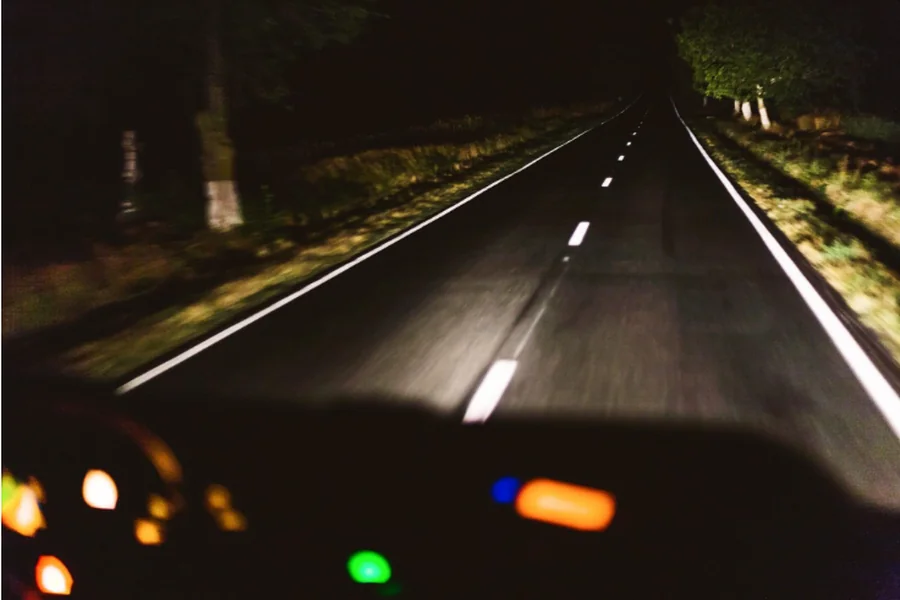
One of the most obvious reasons drivers fail to see hazards at night is limited visibility. Headlights illuminate only a portion of the road ahead, leaving large areas in darkness.
Most standard headlights provide clear visibility for a limited distance. At higher speeds, this creates a mismatch between how far a driver can see and how quickly they are moving. A hazard that appears at the edge of the headlight beam may not provide enough time for the driver to react safely.
This becomes especially dangerous on highways or rural roads where lighting is minimal. Drivers may feel confident due to low traffic, but the reduced visibility significantly increases risk.
Glare from Oncoming Vehicles
Glare is another major factor that affects nighttime hazard detection. Bright headlights from oncoming vehicles can temporarily impair vision, making it difficult to see the road clearly.
When exposed to glare, the eyes take time to adjust. During this period, contrast sensitivity drops, and smaller objects may become invisible. Pedestrians, cyclists, and road debris are particularly difficult to detect under these conditions.
Even after the glare passes, recovery is not immediate. The driver’s eyes need time to readjust to the darkness, which can further delay hazard recognition and increase driver response time.
Poor Contrast and Object Recognition
At night, the ability to distinguish objects from their background is significantly reduced. Many hazards blend into the environment due to low contrast.
For example, a pedestrian wearing dark clothing on an unlit road can be nearly invisible until they are very close to the vehicle. Similarly, animals, stalled vehicles, or road obstacles may not stand out against the dark surroundings.
This lack of contrast forces drivers to rely on limited visual cues, which slows down the perception process. By the time the brain recognizes the object as a hazard, valuable reaction time has already been lost.
Fatigue and Reduced Alertness at Night
Night driving often coincides with natural dips in alertness. The human body follows a circadian rhythm that promotes sleep during nighttime hours. Driving during this period can lead to fatigue, even if the driver does not feel extremely tired.
Fatigue affects both attention and reaction speed. A tired driver may take longer to notice a hazard and even longer to respond. In some cases, brief lapses in attention can cause drivers to miss hazards entirely.
This combination of reduced visibility and decreased alertness makes nighttime driving particularly challenging. It is not just harder to see hazards, but also harder to stay focused enough to detect them.
Overdriving Headlights
Overdriving headlights occurs when a driver travels at a speed that exceeds the distance illuminated by their headlights. In simple terms, the vehicle is moving too fast for the driver to stop within the visible range.
This is a common issue on dark roads where drivers may not realize how limited their visibility actually is. When a hazard appears, there may not be enough time or distance to react safely.
Overdriving headlights directly impacts driver response time because it reduces the margin for error. Even a quick reaction may not be enough to avoid a collision if the hazard is detected too late.
Peripheral Vision Limitations
Peripheral vision plays a key role in detecting movement and identifying potential hazards outside the direct line of sight. At night, peripheral vision becomes less effective.
This makes it harder to notice hazards approaching from the sides, such as pedestrians stepping onto the road or vehicles entering from intersections. Drivers may focus on the illuminated area ahead but miss important cues in the surrounding environment.
Reduced peripheral awareness increases the likelihood of delayed reactions, especially in complex driving scenarios.
Inadequate Road Lighting and Infrastructure
Road design and lighting conditions also contribute to nighttime visibility issues. Poorly lit roads, faded lane markings, and lack of reflective signage can make navigation more difficult.
When the road itself is harder to interpret, drivers must spend more mental effort understanding their surroundings. This increases cognitive load and reduces the ability to quickly detect hazards.
Well designed infrastructure, including proper lighting and reflective materials, can significantly improve visibility and reduce the risk of missed hazards.
Driver Behavior and Risk Perception
Driver behavior changes at night in ways that can increase risk. Some drivers become more cautious, while others may take advantage of lower traffic levels and drive faster.
In some cases, drivers may develop a false sense of security due to reduced congestion. This can lead to less vigilance and slower hazard detection.
Risk perception also plays a role. If a driver does not expect hazards, they are less likely to actively scan for them. This reduces situational awareness and increases the chance of delayed reactions.
The Role of Vision Health
Vision health is a critical factor in nighttime driving performance. Conditions such as poor night vision, glare sensitivity, and uncorrected vision problems can significantly reduce the ability to detect hazards.
As people age, these issues often become more pronounced. Even drivers with normal daytime vision may struggle in low light conditions.
Regular eye examinations and proper corrective measures are essential for maintaining safe driver response time at night.
Technology and Its Impact on Night Driving
Modern vehicles are equipped with technologies designed to improve nighttime visibility and hazard detection. Features such as adaptive headlights, night vision systems, and automatic high beams can enhance the driver’s ability to see the road.
However, technology is not a complete solution. Drivers must still remain engaged and attentive. Overreliance on these systems can reduce situational awareness, which may negatively affect response time in critical moments.
The interaction between human perception and technological assistance continues to be an important area of study in road safety.
Improving Nighttime Hazard Detection
Addressing the challenges of night driving requires a combination of awareness, training, and system improvements.
Drivers can take practical steps such as reducing speed, maintaining a safe following distance, and avoiding distractions. Keeping headlights clean and properly aligned also improves visibility.
From a broader perspective, research and consulting play a key role in identifying risks and developing solutions. Organizations like Driver Research Institute provide insights into driver behavior, perception, and response patterns. Their consulting work helps businesses, fleet operators, and policymakers design safer systems and improve driver performance.
By applying research-based strategies, it is possible to reduce the gap between hazard appearance and driver response.
Conclusion
Drivers fail to see hazards at night due to a combination of biological limitations, environmental conditions, and behavioral factors. Reduced visibility, glare, fatigue, and poor contrast all contribute to delayed hazard detection and increased driver response time.
Improving nighttime driving safety requires more than just better lighting. It involves understanding how drivers perceive and react to their environment and taking steps to address the factors that slow down this process.
Through a combination of education, technology, and research-driven solutions, it is possible to enhance hazard detection and reduce the risks associated with night driving.

