
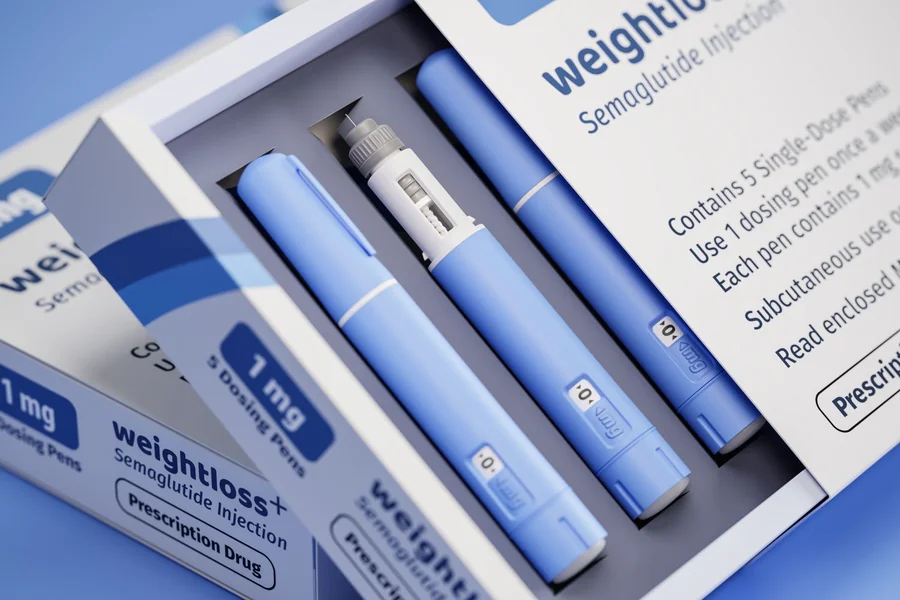
Approximately 10 million Americans were enrolled in GLP-1 receptor agonist treatment programs by 2025 – a figure that represents nearly a sevenfold increase in the proportion of overweight and obese adults receiving this class of medication compared to just a few years prior. As GLP-1 therapy has moved from specialist prescribing into primary care and telehealth settings, the question of which medication may be most appropriate for weight management has become a central consideration for both clinicians and patients.
GLP-1 receptor agonists are not interchangeable. They differ in their molecular mechanisms, dosing schedules, clinical efficacy profiles, side effect patterns, regulatory approvals, and cost. This overview examines the key medications in this class, what the clinical evidence indicates about their relative performance for weight loss, and the factors that typically inform clinical decision-making.
What GLP-1 Receptor Agonists Are and How They Work
GLP-1 (glucagon-like peptide-1) is a gut hormone released after eating. It signals the pancreas to produce insulin, suppresses glucagon (which would otherwise raise blood sugar), slows gastric emptying to promote satiety, and – crucially for weight management – acts on receptors in the hypothalamus to reduce appetite. GLP-1 receptor agonists are synthetic compounds that mimic this hormone’s action, binding to GLP-1 receptors throughout the body.
The class has expanded considerably since its origins in diabetes treatment. Several agents are now available with indications specifically for chronic weight management, while others have dual hormonal targets that extend beyond GLP-1 alone.
The Main GLP-1 Medications Used for Weight Loss
Semaglutide (Wegovy, Ozempic)
Semaglutide is currently the most widely used GLP-1 receptor agonist for weight management. The subcutaneous formulation marketed as Wegovy – at a dose of 2.4 mg weekly – received FDA approval specifically for chronic weight management in adults with obesity or overweight with at least one weight-related health condition. Ozempic (semaglutide 0.5 – 2 mg) is FDA-approved for type 2 diabetes and is sometimes used off-label for weight management, though at doses lower than the dedicated obesity formulation.
Semaglutide accounts for approximately 60.7% of the GLP-1 weight loss market by revenue, according to Grand View Research, and has the most extensive clinical trial data of any agent in its class for obesity indications. The STEP 1 trial, published in the New England Journal of Medicine, found that participants receiving semaglutide 2.4 mg experienced a mean body weight reduction of 14.9% over 68 weeks, compared with 2.4% for placebo.
Tirzepatide (Zepbound, Mounjaro)
Tirzepatide represents a distinct advance in the GLP-1 class. Rather than targeting GLP-1 receptors alone, it is a dual agonist – acting on both GLP-1 and GIP (glucose-dependent insulinotropic polypeptide) receptors. This dual mechanism of action appears to produce greater weight loss than semaglutide alone in head-to-head comparison.
A head-to-head trial published in the New England Journal of Medicine found that participants treated with tirzepatide achieved mean weight loss of 20.2%, compared with 13.7% for semaglutide – a statistically significant difference. Average absolute weight loss was approximately 22.9 kg (50.3 lbs) with tirzepatide versus 15 kg (33.1 lbs) with semaglutide. Tirzepatide (as Zepbound) received FDA approval for chronic weight management in 2023 and has grown rapidly as a prescribing option.
Liraglutide (Saxenda)
Liraglutide was among the first GLP-1 receptor agonists approved specifically for weight management. It requires daily subcutaneous injection, in contrast to the once-weekly dosing of semaglutide and tirzepatide. Clinical trial data demonstrated meaningful weight loss with liraglutide 3 mg, though generally of a smaller magnitude than the more recently approved weekly agents. As a result, liraglutide is now less commonly selected as a first-line option where weekly agents are available and covered, though it remains an approved and clinically relevant option.
Dulaglutide and Exenatide
Dulaglutide (Trulicity) and extended-release exenatide (Bydureon) are GLP-1 receptor agonists primarily indicated for type 2 diabetes management rather than for weight loss specifically. They may result in some weight reduction as a secondary effect, but are not approved for chronic obesity treatment and are not typically the primary agents considered in dedicated weight management programs.
Clinical Comparisons: What the Evidence Indicates
Efficacy for Weight Loss
Network meta-analyses published through 2024 and 2025 have consistently placed tirzepatide at the top of the efficacy hierarchy for weight loss among currently available agents, followed by semaglutide 2.4 mg, then liraglutide. The SURMOUNT-5 trial provided direct head-to-head comparison data supporting this hierarchy: tirzepatide at maximum doses produced approximately 6.5 percentage points more weight loss than semaglutide 2.4 mg. Researchers have noted, however, that individual patient responses vary substantially within each treatment group – some patients achieve greater results with semaglutide than the average tirzepatide responder, and vice versa.
Cardiovascular and Metabolic Outcomes
Semaglutide has the most established cardiovascular outcomes evidence in the obesity context. The SELECT trial found a 20% reduction in major adverse cardiovascular events in adults with pre-existing cardiovascular disease and obesity or overweight. Cardiovascular outcomes data for tirzepatide in obesity (without diabetes) is being generated through ongoing trials, with preliminary data broadly positive but with less long-term follow-up than the SELECT study.
Side Effect Profiles
Side effects are broadly similar across the GLP-1 class: gastrointestinal symptoms – nausea, vomiting, diarrhoea, and constipation – are the most frequently reported, particularly during the dose escalation phase. Comparative data suggests tirzepatide and semaglutide have similar tolerability profiles overall, though individual variation is significant. Both agents appear better tolerated than older GLP-1 formulations requiring daily administration.
How Clinicians Approach GLP-1 Selection
In practice, the selection of a specific GLP-1 medication for weight management is rarely driven by efficacy data alone. Several practical factors influence clinical decision-making.
Insurance Coverage and Prior Authorisation
Coverage for GLP-1 medications for weight management varies significantly by insurance plan, employer, and geography. Some payers cover one agent but not another; prior authorisation requirements often specify which medications must be trialled first. For many patients, cost – not clinical profile – is the determining factor in which medication they can access.
Individual Medical History
Contraindications, comorbidities, and concurrent medications all influence prescribing decisions. Patients with established cardiovascular disease may have semaglutide’s SELECT data weighted more heavily by their physician. Those with a history of certain thyroid conditions may be steered away from GLP-1 agents altogether. Patients already taking GLP-1 medication for type 2 diabetes management may be transitioned to higher-dose obesity-indicated formulations.
Dosing Preference and Adherence
Once-weekly subcutaneous injection is generally preferred over daily injection for adherence reasons. Oral semaglutide formulations exist for diabetes management, and research into oral obesity-indicated GLP-1 agents is ongoing – which may further shape prescribing preferences as these options mature.
The Role of Physician-Supervised Programs
All GLP-1 receptor agonists for weight management are prescription medications, requiring evaluation by a licensed clinician before initiation. Structured physician-supervised programs have become the primary access pathway – both through traditional clinical settings and through telehealth platforms that have significantly broadened reach.
Programs like those offered by the TrimRx team, which provides online physician-supervised GLP-1 weight loss treatment starting at $179 per month, exemplify this model: licensed physician consultation is mandatory, prescriptions are tailored to individual patient needs, and the program supports access to multiple GLP-1 options including semaglutide and tirzepatide. Medication is delivered directly to patients, with a 4-week supply per cycle and ongoing medical support included – an approach that reflects the broader movement toward convenient, supervised GLP-1 access.
The telehealth expansion has driven meaningful growth in GLP-1 utilisation across demographics. GLP-1 prescriptions for weight management grew 84.6% among Gen X patients from 2023 to 2024, with significant growth across younger adult cohorts as well. Researchers have noted that while access has improved considerably, cost and insurance coverage gaps remain significant barriers for a substantial proportion of patients who may benefit from treatment.
Emerging Directions in GLP-1 Therapy for Weight Loss
Higher-Dose Semaglutide
The STEP UP trial evaluated semaglutide 7.2 mg – significantly above the currently approved 2.4 mg dose – and found a mean weight reduction of 20.7% across 1,407 participants. This suggests a dose-response relationship that extends beyond the current approved dose, and regulatory applications for higher-dose formulations are anticipated to progress through review processes in the near term.
Triple-Agonist Agents
The next generation of obesity pharmacotherapy includes agents targeting three receptor pathways simultaneously – GLP-1, GIP, and glucagon receptors. Retatrutide and similar molecules are in late-stage clinical development, with early trial data suggesting weight loss outcomes potentially exceeding what current dual-agonist agents achieve. These represent the next frontier in the GLP-1 class rather than an immediate clinical option.
Combination with Non-Pharmacological Interventions
Research continues to examine how GLP-1 medications interact with structured nutrition programmes, resistance training, and bariatric surgery. Initial evidence suggests that the combination of GLP-1 therapy with lifestyle interventions may produce better long-term outcomes than either approach alone – though the evidence base for optimal combination strategies is still developing.
Important Considerations for Long-Term Weight Management
One of the consistently reported findings from GLP-1 research is that weight tends to return following treatment discontinuation. Extension studies for both semaglutide and tirzepatide have shown that patients who stop medication typically regain a substantial proportion of lost weight within 12 months. This has prompted clinical discussions about GLP-1 therapy as a long-term or potentially indefinite intervention for many patients – a framing with significant implications for how cost-effectiveness is evaluated and how insurance coverage decisions are made.
Researchers have also noted that GLP-1 medications, while effective at producing weight loss, do not address all components of obesity as a complex disease. Factors including sleep quality, psychological health, environmental context, and socioeconomic determinants of health shape both obesity risk and treatment response – aspects that comprehensive weight management programs increasingly seek to address alongside pharmacotherapy.
Conclusion
The GLP-1 medication class has produced the most consistent and clinically meaningful pharmacological weight loss outcomes seen in obesity medicine to date. The available evidence places tirzepatide at the top of the efficacy hierarchy for weight reduction, with semaglutide 2.4 mg a well-documented and more established alternative with robust cardiovascular outcomes data. Liraglutide remains an approved option for patients where weekly agents are not accessible.
Clinical selection of a GLP-1 medication for weight management involves balancing efficacy data, individual patient medical history, contraindications, insurance coverage, and practical access considerations – a set of factors that makes prescribing decisions inherently individual. Physician-supervised programs, whether through traditional clinical settings or telehealth platforms, provide the evaluation and monitoring framework within which these decisions are appropriately made.
