
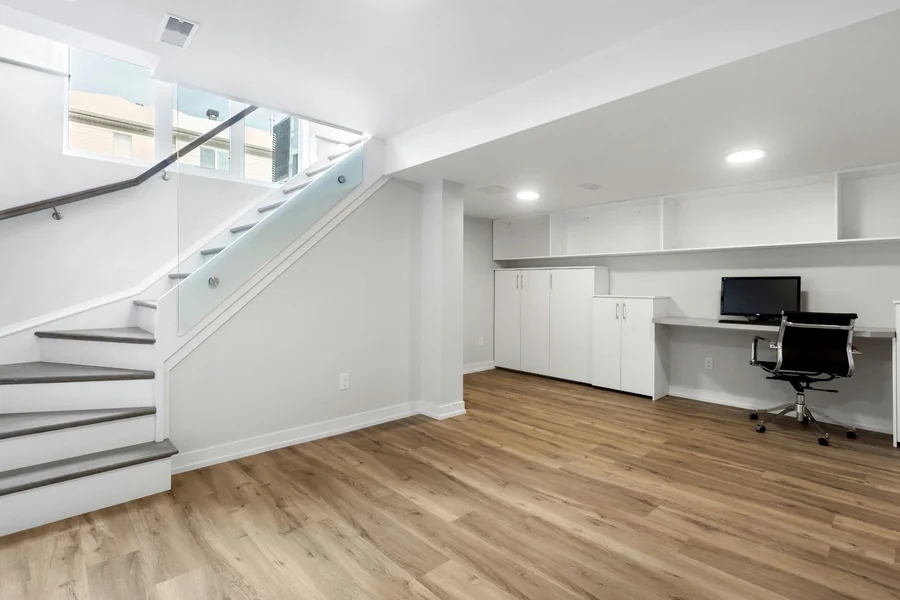
Basement windows are one of those home features that most people never think about until something goes wrong.
Water seeping in after a heavy rain. A finished basement that feels perpetually cold and damp no matter how high you run the heat. A utility room so dark you need to turn the light on at noon just to find the circuit breaker. A window that rattles every time the wind picks up and lets in a draft that makes the whole lower level uncomfortable through the winter.
These are not small problems. They affect energy bills, moisture levels, air quality, and in the case of finished basement spaces, the livability and value of a significant portion of the home. And in the vast majority of cases, they trace back to one root cause: the wrong windows, poorly chosen and often poorly installed.
The good news is that basement windows are not complicated once you understand what actually matters. Here is a thorough breakdown of everything you need to know before you buy.
Why Basement Windows Deserve More Attention Than They Get
The basement sits below grade, which means its windows operate in fundamentally different conditions than every other window in the house. They face moisture pressure from the surrounding soil. They are vulnerable to water infiltration during heavy rain and snowmelt. They receive less direct sunlight, which affects both natural light and temperature management. And in many homes, they are the only means of emergency egress from the lower level.
That combination of factors means that a window that performs adequately on the main floor of a house could be completely wrong for a basement application. Frame materials, glazing specifications, drainage details, and sizing requirements all need to be evaluated specifically against basement conditions, not general residential standards.
Getting this right is the difference between a basement that works as a genuinely useful part of the home and one that is a constant source of problems.
Step One: Understand What Your Basement Is Actually Used For
The right window for a dark, rarely-visited utility room is not the same window you want for a finished family room or a basement bedroom. Before you specify anything, be clear on what each space in your basement is used for, because that determines the priorities.
Finished living spaces need windows that maximize natural light, provide adequate ventilation, and create a comfortable, livable environment. Egress requirements may also apply depending on your local building code.
Bedrooms and sleeping areas have strict egress requirements in most jurisdictions. If a room in your basement is used for sleeping, local building codes almost universally require that at least one window meets specific minimum dimensions for emergency exit. These requirements typically specify minimum clear opening width, height, and net clear opening area, as well as a maximum sill height from the floor. This is not optional and not something to guess at. Check your local code before purchasing.
Utility and mechanical rooms prioritize function over aesthetics. Ventilation matters here for moisture management and air quality, but egress and light are secondary concerns.
Home offices and work spaces benefit from as much natural light as possible, which makes window well design and sizing particularly important in below-grade applications.
Step Two: Choose the Right Frame Material
Frame material is one of the most consequential decisions for basement windows, and it is where a lot of homeowners make mistakes by defaulting to the cheapest option without considering long-term performance.
Vinyl frames are the most common choice for basement windows and perform well in terms of moisture resistance and thermal efficiency. Quality vinyl does not rot, does not conduct cold the way aluminum does, and requires minimal maintenance. The key qualifier is quality. Cheap vinyl can warp over time, particularly in applications where it experiences significant temperature swings, which basement windows often do.
Fibreglass frames outperform vinyl in durability and dimensional stability, particularly in high-moisture environments and in climates with significant temperature variation. They do not expand and contract as much as vinyl, which means seals stay tighter over time. The trade-off is higher upfront cost, but for basement applications where moisture management is critical, that investment tends to pay for itself.
Wood frames are generally not recommended for basement windows. Even with careful finishing and maintenance, the moisture exposure inherent to below-grade applications creates conditions that wood performs poorly in over time.
Aluminum frames conduct cold effectively and are prone to condensation issues in basement applications. They are best avoided unless specifically engineered for thermal performance with appropriate thermal breaks.
Step Three: Get the Glazing Right
For most basement applications, double-pane insulated glass is the minimum reasonable specification. Single-pane windows in a basement are essentially an energy efficiency hole in your building envelope, creating a thermal bridge that will cost you in heating and cooling bills year-round.
In Canadian climates or anywhere with cold winters, triple-pane glazing is worth serious consideration for basement windows, particularly on north-facing exposures. The additional layer of insulation makes a measurable difference in both thermal comfort and condensation management.
Low-E coatings, which reflect infrared heat back into the room while still allowing visible light to pass through, are a smart addition for basement windows. They improve energy efficiency without meaningfully reducing light transmission.
Step Four: Plan Your Window Wells Properly
Window wells are the curved metal or masonry structures that surround below-grade windows, creating a small excavated space that allows the window to function. They are often an afterthought, but they are absolutely critical to how well your basement windows perform.
A poorly designed or poorly drained window well collects water against the foundation and creates exactly the moisture infiltration problems that good basement windows are meant to prevent. A properly designed window well has adequate depth, proper drainage at the base, and a gravel bed that allows water to dissipate away from the foundation rather than sitting against the wall.
Window well covers are also worth considering. A quality transparent cover keeps debris and precipitation out of the well while still allowing light through, significantly reducing maintenance demands and improving water management.
Step Five: Do Not Overlook Ventilation
Moisture management in a basement depends heavily on air circulation. Windows that open, whether sliding, casement, or hopper style, allow you to ventilate the space actively, which is particularly important during the shoulder seasons when mechanical systems are not running and humidity can accumulate.
For a detailed walkthrough of all these considerations together, including sizing guidance and specific product specifications, reading a thorough guide on how to choose the right basement windows before you commit to anything is time well spent.
The Bottom Line
Basement windows are a small line item in a renovation budget relative to the problems they prevent when chosen correctly and the problems they cause when they are not. The difference between a basement that is comfortable, efficient, and dry year-round and one that is a constant maintenance headache often comes down to decisions made at the window specification stage.

