
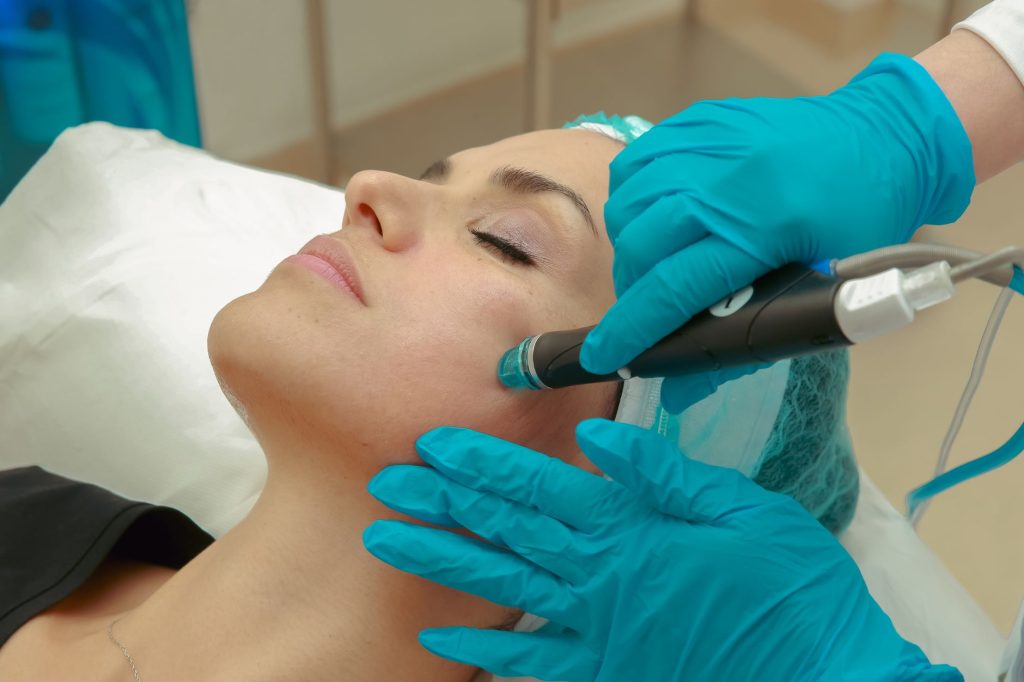
Few skincare treatments have achieved the combination of widespread clinical adoption and genuine consumer enthusiasm that HydraFacial has. It appears on menu boards at medspas, dermatology offices, and luxury salons around the world, and for good reason. The treatment addresses multiple skin concerns in a single session, requires no downtime, and produces results that are often visible immediately after the appointment. Understanding what actually happens during a HydraFacial session helps explain why so many people book it repeatedly rather than treating it as a one-off indulgence.
The Three Core Phases of Treatment
HydraFacial is a multi-step treatment that uses a patented device to cleanse, exfoliate, extract, and infuse the skin with serums in a single continuous process. Unlike traditional facials that rely on manual manipulation, the HydraFacial device delivers controlled water and serum flow through a vortex tip that simultaneously vacuums debris from the pores while hydrating the surrounding tissue. The result is an exfoliation and cleansing experience that is more thorough than most at-home routines without the irritation that harsher peels or manual extractions can sometimes cause.
The standard treatment follows three core phases. The first involves cleansing and exfoliation, where a gentle resurfacing tip removes dead skin cells and loosens surface congestion. The second phase uses a mild glycolic and salicylic acid blend to soften the contents of pores and prepare them for extraction. The third phase performs the extraction using the vortex suction system while simultaneously infusing the clean pores with a hydrating serum blend containing hyaluronic acid, antioxidants, and peptides. Additional booster serums targeting specific concerns such as hyperpigmentation, fine lines, or oiliness can be added based on the client's skin goals.
Who It Works For
The treatment is suitable for a broad range of skin types, including sensitive skin, because the process is controlled and the device's suction pressure can be adjusted based on how the skin responds. Common concerns addressed include dullness, uneven texture, enlarged pores, mild acne and congestion, dehydration, and early fine lines. It is not a replacement for treatments targeting deeper concerns such as severe acne scarring or significant volume loss, but as a maintenance and enhancement tool for overall skin quality, it is highly versatile.
For residents and visitors seeking this treatment in the UAE capital, HydraFacial in Abu Dhabi at Brau delivers the treatment in a professional setting with an approach tailored to each individual's skin type and concerns.
Results and Maintenance Schedule
Results after a single session include improved skin tone, a smoother texture, and a hydrated, luminous appearance that many clients describe as a visible freshness or glow. With a series of treatments, typically spaced two to four weeks apart, the improvements in skin quality compound over time. Most providers recommend a monthly maintenance schedule once the skin has reached the desired baseline condition.
One of the treatment's strongest selling points is the complete absence of recovery time. Immediately after the session, skin may appear slightly pink for an hour or so, but this resolves quickly. Makeup can be applied the same day, and there is no peeling, flaking, or sensitivity that follows. This makes the treatment practical for people who want professional-grade skincare results without scheduling days of restricted activity around an appointment.
Frequently Asked Questions
Q: How long does a HydraFacial treatment take?
A: The standard treatment takes approximately 30 to 45 minutes. Sessions with additional booster serums or add-on treatments such as LED therapy or lymphatic drainage may extend the appointment to 60 minutes or longer.
Q: How many sessions do I need to see lasting results?
A: Many people notice immediate improvement after a single session, but for sustained improvements in skin quality, texture, and tone, a series of six or more monthly treatments is commonly recommended. After that, monthly maintenance sessions help preserve the results.
Q: Is HydraFacial suitable for acne-prone skin?
A: Yes, particularly for mild to moderate congestion and blackhead-prone skin. The extraction phase removes debris from pores, and salicylic acid in the treatment helps address surface breakouts. Cystic or inflammatory acne may require additional or alternative treatments alongside HydraFacial.
Q: Can HydraFacial be combined with other treatments?
A: It can be combined with treatments like LED light therapy or dermaplaning. However, it should not be combined with chemical peels or laser treatments in the same session. Your provider will advise on what combinations are appropriate for your skin condition.
Q: How does HydraFacial differ from a regular facial?
A: A regular facial relies on manual techniques such as steam, manual extraction, and topical product application. HydraFacial uses a mechanical vortex system that delivers more consistent extraction and deeper serum infusion than manual application alone can achieve. The experience is also significantly more comfortable than traditional manual extractions, which can be painful on congested skin.
