
For individuals pursuing a Green Card from outside the United States, the path to permanent residency runs through consular processing — and the DS-260 is one of the most important steps in that process. Formally known as the Immigrant Visa Electronic Application, this online form is submitted to the U.S. Department of State and serves as the foundation for your consular interview. Knowing what it requires, when to file it, and how to avoid common mistakes can help you move through this stage with fewer delays.
What Form DS-260 is and when you need it
The DS-260 is an electronic application completed through the Consular Electronic Application Center (CEAC) by individuals applying for an immigrant visa while living outside the United States. It is used across a range of immigrant visa categories — including family-based petitions such as F1 and F2A, employment-based categories such as EB-1, EB-2, EB-3, and EB-5, and certain special immigrant categories.
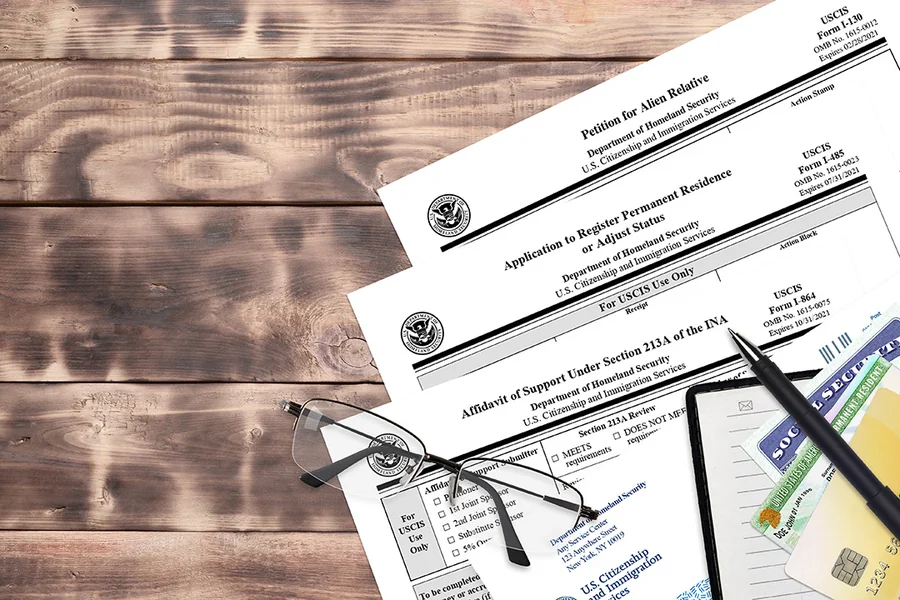
The DS-260 is not the first step in the process. It comes after U.S. Citizenship and Immigration Services (USCIS) has approved an underlying immigrant petition — such as Form I-130 for family-based cases or Form I-140 for employment-based cases. Once approved, the case is transferred to the National Visa Center (NVC), which sends a welcome letter containing the case number and invoice ID needed to access the CEAC portal. The DS-260 becomes available only after required fees are paid and confirmed as processed.
One important distinction worth noting: the DS-260 is specifically for immigrant visa applicants pursuing permanent residency from abroad. It is not the same as Form DS-160, which is used for nonimmigrant visa applications. Applicants already living in the United States who are eligible to adjust status generally file Form I-485 rather than the DS-260.
Completing the application
The DS-260 collects detailed personal, travel, and background information across several sections. Applicants should be prepared to provide their full legal name and date and place of birth, passport details, marital status and family information, address history, employment and educational background, social media account information, and responses to security and background questions.
Accuracy is essential throughout. Inconsistencies between the DS-260 and other submitted documents are a frequently cited cause of delays and correction requests from the NVC. Each family member applying for an immigrant visa must submit their own DS-260, even if all members are included under the same underlying petition.
Before submitting, applicants should review every section carefully. Once submitted, a confirmation page is generated — this should be printed and saved, as it is required at the visa interview.
Documents to upload after submission
After the DS-260 is submitted, supporting civil documents must be uploaded through the CEAC portal. The NVC will not schedule a visa interview until all documents have been reviewed and accepted. Documents commonly required include:
- A valid passport
- Birth certificate
- Marriage certificate and divorce documentation, if applicable
- Police certificates from every country where the applicant has lived for more than six months
- Court or military records, where applicable
- Financial support documentation from the sponsor, including Form I-864 and supporting tax records
Documents not in English — or not in the official language of the country where the application is being processed — must be accompanied by certified translations. Scanned documents should be submitted in color in PDF, JPEG, or JPG format, with each file kept under 4 MB. Original documents do not need to be mailed to the NVC but must be brought in person to the visa interview.
Country-specific civil document requirements can be verified on the Department of State’s reciprocity and civil documents page.
What happens after submission
Following submission of the DS-260 and supporting documents, the NVC reviews the application — a process that typically takes a few weeks. The applicant will receive an email notification indicating whether the documentation is complete or whether corrections are needed. Responding promptly to any NVC requests helps avoid further delays.
Once the NVC confirms the application is complete, a visa interview is scheduled at the appropriate U.S. embassy or consulate. Interview scheduling depends on when the applicant’s priority date becomes current on the USCIS Visa Bulletin. Prior to the interview, the applicant must also complete a medical examination with an approved panel physician.
At the interview, applicants should bring original documents or certified copies, the DS-260 confirmation page, any medical exam results provided in a sealed envelope, a valid passport, photographs, and the appointment letter.
Tips for avoiding delays
A few practices are frequently associated with smoother processing at the DS-260 stage:
- Ensure all names, dates, and details are consistent across every form and document submitted
- Use clear, color scans in an approved file format and keep file sizes within the 4 MB limit
- Save progress regularly within the CEAC portal, as the session can time out
- Check the CEAC portal regularly for updates or requests from the NVC
- Retain copies of every confirmation page and payment receipt
The value of legal guidance
Consular processing involves coordination across multiple government agencies and sequential documentation requirements where errors at any stage can cause meaningful delays. For applicants managing complex immigration histories, challenging documentation, or tight timelines, working with experienced immigration counsel is a practice frequently cited as an effective way to stay organized and approach the visa interview with confidence.

