
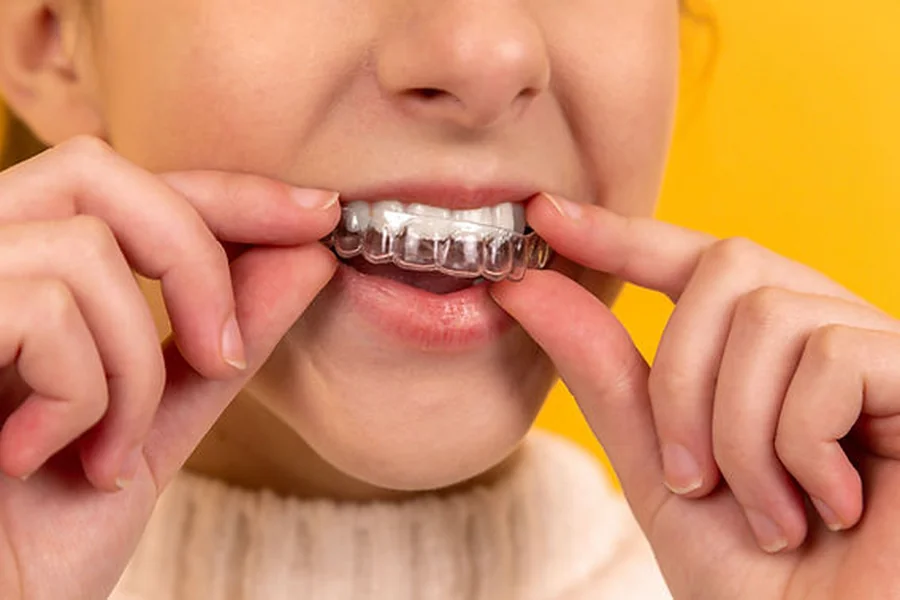
For decades, straightening teeth meant committing to metal brackets cemented across every visible surface. That reality kept plenty of adults from pursuing treatment at all. Clear aligner technology has rewritten the playbook. Custom-fitted, removable trays now correct misalignment without a single wire or bracket in sight. The result is a process that feels less clinical and more personal. Teens and adults who want a discreet correction method are turning to this approach in growing numbers, drawn by its comfort and subtlety.
How Clear Aligners Work
Each treatment begins with a detailed digital scan of the patient’s mouth. That scan feeds into planning software, which maps out every stage of tooth movement from start to finish. A series of transparent, BPA-free plastic trays is then produced, each one shaped slightly differently to apply targeted pressure. Patients wear a single set for roughly two weeks before switching to the next tray in the sequence.
Providers offering Invisalign in Las Vegas use 3D imaging tools that let patients preview their projected results before a single tray is worn. That kind of visual roadmap helps set clear expectations around timelines and outcomes, making the process feel less uncertain from day one.
The Role of SmartTrack Material
The trays themselves are made from a patented thermoplastic called SmartTrack, a material refined through years of clinical testing. It fits closely against the teeth and applies a steady, even force at each stage of correction. Metal braces rely on tension from wires and brackets to create movement. SmartTrack achieves a similar effect through controlled elasticity instead. Patients tend to experience fewer soft-tissue problems, such as mouth sores or irritation in the inner cheek, as a result.
Conditions Clear Aligners Can Correct
This treatment method handles a wide variety of orthodontic concerns. Crowded teeth, noticeable gaps, overbites, underbites, and crossbites all fall within its range. Mild to moderate cases typically respond best. More complex situations may still call for traditional appliances, which is why a thorough professional assessment matters before starting.
Crowding and Spacing
Teeth pressed tightly together or overlapping make proper cleaning difficult. That tight positioning raises the likelihood of decay and gum inflammation over time. Sequential aligner trays shift each tooth gradually until healthy spacing is established. Gaps caused by natural growth patterns close through the same incremental process.
Bite Misalignment
An uneven bite places disproportionate stress on specific teeth and often contributes to jaw discomfort. Aligners address overbites and underbites by adjusting the position of the upper and lower arches relative to one another. Crossbite correction follows a comparable method, guiding teeth laterally until contact points sit in proper balance.
Benefits Beyond Appearance
Straight teeth are far simpler to brush and floss thoroughly, which means less plaque accumulation day to day. Lower plaque levels translate directly into fewer cavities and a reduced risk of gum disease. Correcting bite issues also distributes chewing pressure more evenly, protecting enamel from premature wear.
Removability adds another layer of convenience. Patients take the trays out during meals, so dietary restrictions associated with fixed braces simply do not apply. Brushing and flossing stay straightforward because nothing is bonded to the tooth surface.
What to Expect During Treatment
A typical plan runs between 12 and 18 months, though individual timelines depend on the complexity of the case. Progress appointments happen every six to eight weeks, giving the provider a chance to confirm that teeth are shifting according to plan.
Consistent wear is essential. Keeping the trays in for 20 to 22 hours daily produces the strongest results. Patients remove them only to eat and clean their teeth. Some mild pressure is normal after switching to a fresh set, but that feeling usually subsides within a day or two.
Maintaining a rigorous oral hygiene routine during this period is equally vital to prevent staining and decay beneath the aligners. According to this dentist who offers Invisalign in Little Neck NY, faithfully brushing and flossing before reinserting the trays ensures that your teeth remain perfectly clean and healthy as they move toward their final alignment.
Conclusion
Clear aligner therapy offers a comfortable, low-profile path to better alignment without any metal hardware involved. The trays fit discreetly, come out easily for meals and cleaning, and effectively address many of the most common orthodontic issues. Advances in dental imaging and material science have made outcomes more predictable than they were even a few years ago. A consultation with a qualified provider is the best starting point for anyone considering this option. This single step can lead to significant, long- lasting improvements in both oral health and daily confidence.
