
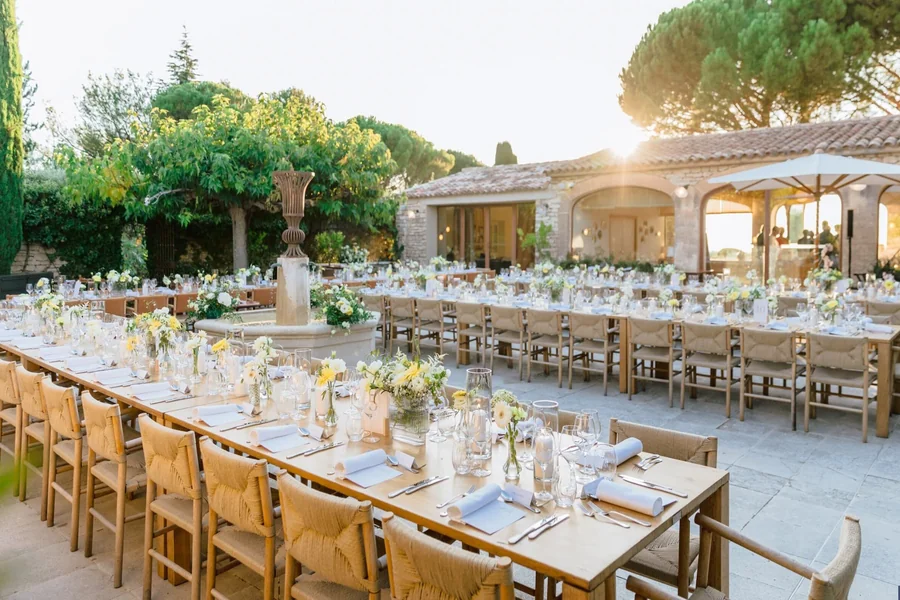
Dreaming of saying “I do” surrounded by lavender fields, ancient olive groves, and golden sunlight? Provence has long been one of Europe’s most romantic wedding destinations, attracting couples from around the world who seek that quintessential French charm. But with countless stunning venues scattered across this beautiful region, how do you choose the one that’s truly perfect for your special day?
Why is Provence such a popular wedding destination?
Provence offers something truly magical that few other regions can match. The landscape itself feels like stepping into a painting: rolling hills covered in vineyards, medieval villages perched on hilltops, fields of purple lavender stretching to the horizon. The light here is legendary, soft, warm, and flattering at almost any time of day, which creates naturally beautiful wedding photos without needing much intervention.
Beyond the scenery, Provence delivers on practicality too. The region enjoys approximately 300 days of sunshine per year, making it a reliable choice for outdoor celebrations. Spring and early autumn offer particularly pleasant weather, with temperatures warm enough for garden receptions but not so hot that guests feel uncomfortable in formal attire.
The culinary scene is another major draw. Provençal cuisine celebrates fresh, local ingredients, think sun-ripened tomatoes, fragrant herbs, exceptional olive oil, and world-class wines from nearby Côtes du Rhône and Châteauneuf-du-Pape. Your wedding menu can showcase the best of French gastronomy in its most authentic, rustic form.
Accessibility matters too. Major cities like Marseille, Nice, and Avignon have international airports, while the TGV high-speed train connects Paris to Provence in just three hours. This makes it relatively easy for international guests to attend, even if they’re traveling from overseas.
What types of venues can you find in Provence?
Provence offers remarkable diversity when it comes to wedding venues, each with its own character and advantages. Historic châteaux and manor houses provide classic elegance with centuries-old stone walls, grand staircases, and formal gardens. These properties often come with substantial indoor space, making them ideal if you’re concerned about weather contingencies or hosting a larger guest list.
Vineyards and wine estates have become increasingly popular, offering couples the chance to celebrate among the vines with tastings and tours as part of the wedding experience. Many estates feature modern facilities alongside traditional Provençal architecture, giving you both rustic charm and contemporary comfort.
For a more intimate celebration, restored bastides and farmhouses deliver authentic Provençal character. These smaller properties typically accommodate 50-100 guests and often allow exclusive use, giving you privacy and freedom to personalize every detail. The trade-off is that facilities might be more basic, requiring you to bring in more vendors.
Luxury hotels and resorts provide full-service convenience with on-site catering, accommodation, and coordination. While potentially less “unique,” these venues eliminate much of the logistical stress and are excellent choices if you want a seamless, professionally managed experience.
Finally, outdoor spaces like gardens, olive groves, and lavender fields can host ceremonies and receptions under the Provençal sky. However, these always require careful planning for weather contingencies and often involve more complex logistics around power, lighting, and facilities.
What should you consider when selecting your venue?
Guest count and accommodation come first. Many Provençal venues are located in rural areas, far from hotels. If you’re inviting international guests or hosting a destination wedding, consider properties that offer on-site lodging or are near quality hotels. Nothing diminishes your guests’ enjoyment faster than a long, confusing drive through dark country roads late at night.
Timing significantly impacts both availability and cost. Peak wedding season in Provence runs from May through September, with June and September being most sought-after for their perfect weather and natural beauty. If you’re planning a high-season wedding, book 12-18 months ahead. Off-season weddings (October-April) often come with substantial savings and better vendor availability, though weather becomes less predictable.
Budget reality deserves honest consideration. Destination weddings in Provence aren’t inexpensive. Venue rental alone typically ranges from €3,000-€15,000+ depending on size, facilities, and season. Factor in catering (€100-250+ per person), flowers, photography, and other vendors, and costs add up quickly. Be realistic about your budget from the start to avoid disappointment or financial stress.
Vendor requirements vary dramatically between venues. Some provide comprehensive packages including catering, furniture, and coordination. Others are “blank canvas” spaces where you must arrange everything yourself. Understanding what’s included and what you’ll need to source separately is crucial for accurate budgeting and planning.
How do you ensure your wedding day runs smoothly?
Working with experienced local vendors makes an enormous difference. While you might be tempted to bring your own photographer from home, professionals who regularly work in Provence understand how to capture the unique light, know the best locations for portraits, and have established relationships with local venues. This local expertise translates into better results and fewer unexpected challenges on your wedding day.
Consider hiring a French-speaking wedding planner or coordinator, especially if you don’t speak French fluently. French bureaucracy can be complex, with specific requirements for marriages involving foreign nationals. A local planner navigates these regulations effortlessly and communicates effectively with vendors, venues, and officials on your behalf.
Visit your venue before committing, ideally at the same time of year as your planned wedding. Photos can be misleading, spaces might look larger or smaller than they appear online, lighting conditions vary seasonally, and you’ll want to assess practical details like parking, accessibility, and facilities firsthand.
Build in contingency plans for weather. Even in sunny Provence, rain happens. Ensure your venue offers adequate indoor backup space or budget for a quality tent. Nothing creates more stress than watching storm clouds gather without a proper Plan B.
What about legal requirements for getting married in France?
If you’re planning a legally binding ceremony in France, understand that the process is significantly more complex for non-French citizens. You’ll typically need to reside in France for at least 30-40 days before the ceremony, gather extensive documentation, and navigate French civil law requirements.
Many international couples choose to handle the legal paperwork in their home country (a quick civil ceremony or registration) and then hold a symbolic ceremony in Provence. This allows you to enjoy the romantic French setting without the bureaucratic complications. Your wedding coordinator can arrange for a bilingual officiant to conduct a meaningful, personalized ceremony that feels entirely authentic even though it’s not legally binding.
Final thoughts
Choosing the perfect wedding venue in Provence means balancing romance with practicality, dreams with budget, and vision with logistics. Start your search early, visit venues in person when possible, and work with experienced local professionals who know the region intimately. The investment in careful planning pays off when you’re standing beneath ancient plane trees, surrounded by loved ones, with the golden Provençal light illuminating your celebration. That’s when you’ll know you made the right choice.

