
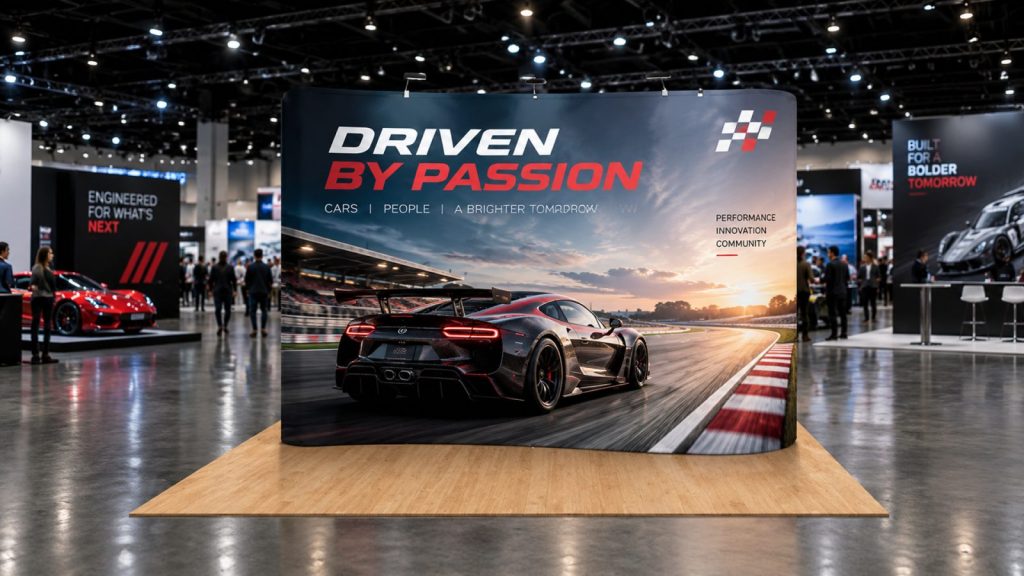
A limited trade show budget doesn’t mean you have to settle for a booth that looks unfinished or forgettable.
The biggest challenge is knowing where your money will actually make a difference. It is easy to spend too much on furniture, promotional items, decorations, or features that look impressive but do little to help visitors understand your business.
A more practical approach is to start with the purpose of the booth, identify what attendees need to see, and then invest in the elements that support those goals.
With the right planning, even a modest booth can create a professional presence, communicate a clear message, and give visitors a reason to stop.
Start With Your Trade Show Goal
Before choosing displays or ordering graphics, decide what you want the booth to accomplish.
Your objective might be to:
- Generate qualified leads
- Introduce a new product
- Schedule sales meetings
- Demonstrate a service
- Increase brand awareness
- Meet existing customers
- Collect contact information
- Drive visitors to a website or promotion
Your goal should influence how you use the available space.
For example, a booth designed primarily for product demonstrations may need open floor space and a counter, while a lead-generation booth may need a simple conversation area and an easy way to collect visitor information.
Starting with the objective prevents the budget from being spent on items simply because they look good.
Know Exactly What Your Booth Space Includes
Your assigned booth size should be one of the first things you confirm.
A standard 10 x 10 space has different requirements from a 10 x 20 booth, and an inline booth may have different visibility considerations than a corner space.
Also check what the event organizer already provides.
Depending on the show, your package may include some combination of:
- Pipe and drape
- Tables
- Chairs
- Flooring
- Electricity
- Waste removal
- Basic signage
Understanding what is already included can prevent you from paying for items you don’t actually need.
You should also review the show’s rules regarding display height, signage, lighting, hanging structures, and booth placement before finalizing your design.
Prioritize the Elements Visitors See First
When money is limited, not every part of the booth deserves the same level of investment.
Think about the booth from the aisle.
What does a visitor see first?
Usually, the most important visual elements are the ones that communicate:
Who are you?
What do you offer?
Why should I stop?
Your main display or backwall often has a major role in answering these questions. Current trade show guidance commonly recommends prioritizing the primary graphic and keeping the overall visual system coordinated rather than filling the booth with unrelated elements.
A strong primary graphic can therefore be more valuable than several smaller decorative pieces.
Invest in Trade Show Displays That Do More
One way to stretch a limited budget is to choose displays that can serve multiple purposes across different events.
For example, a portable display may work for:
- Trade shows
- Conferences
- Product launches
- Networking events
- Retail promotions
- Corporate presentations
This gives the display more opportunities to generate value rather than becoming a one-event purchase.
Businesses can explore different trade show displays based on booth size, portability, graphics, setup requirements, and how frequently they attend events.
If you participate in several shows each year, reusable hardware can also make more sense than repeatedly purchasing temporary display materials.
Keep Your Main Message Simple
One of the easiest ways to improve a booth without spending more money is to simplify the messaging.
Visitors are usually moving through a busy show floor. They may only glance at a booth for a few seconds before deciding whether to stop.
Your primary graphic should therefore communicate the most important information quickly.
Instead of filling the backwall with:
- Company history
- Multiple paragraphs
- Several product descriptions
- Long lists of services
- Numerous contact details
Focus on a few essentials:
Brand name
Primary value proposition
Key product or service
Simple call to action
Detailed information can be provided through conversations, brochures, product samples, QR codes, or digital content.
Use One Strong Visual Instead of Many Small Ones
A limited budget can sometimes encourage businesses to buy several smaller displays instead of investing in one cohesive visual system.
That can make the booth feel cluttered.
A better approach is often to establish one strong focal point and support it with a few complementary elements.
For example:
Main display: Brand and core message
Counter: Lead collection or product information
Small banner: Supporting message
Product area: Demonstration or samples
This gives visitors a clear visual path through the booth.
Consider Portable Booth Displays
For exhibitors working with limited budgets, portability can be an important part of the purchasing decision.
A display that is easier to transport and set up may reduce the complexity of attending multiple events.
Portable trade show booth displays can be particularly useful for businesses that need a professional presentation without investing in a large custom-built exhibit.
Look beyond the initial purchase price and consider:
- How easily the display can be transported
- How many people are needed for setup
- How much storage it requires
- Whether graphics can be replaced
- Whether the system can be reused at future events
A slightly more versatile display can sometimes provide more practical value over multiple shows than a cheaper single-use solution.
Spend More on Graphics Than Decorations
Your graphics are one of the most visible parts of the booth.
That makes graphic quality an area where cutting costs too aggressively can work against you.
You don’t necessarily need an expensive custom exhibit to create a professional appearance. A clean layout, high-quality graphics, strong branding, and appropriate display structure can accomplish a lot.
Instead of spending heavily on decorative objects, consider putting more of the available budget toward:
- Professional graphic design
- High-quality printing
- Strong brand photography
- Clear messaging
- Appropriate display hardware
The goal is to make the booth look intentional rather than expensive for its own sake.
Use Lighting Strategically
Lighting can change how a booth looks, but you don’t necessarily need an elaborate lighting system.
A few strategically positioned lights can help draw attention to an important graphic, product, or demonstration area.
If lighting isn’t essential to your booth’s purpose, however, it may be an area where you can save.
For a limited budget, ask whether lighting solves a specific problem:
Does it improve visibility?
Does it highlight an important product?
Does it make the primary graphic easier to read?
If the answer is no, the money may be better spent elsewhere.
Keep Furniture Simple
Furniture can quickly consume booth space and budget.
You don’t necessarily need a large lounge area, multiple chairs, or oversized furniture.
Choose furniture based on what visitors actually need.
For example:
- A small counter can support conversations and lead collection.
- Two stools may be enough for short meetings.
- A simple product table may work better than a large seating area.
- Open floor space can make the booth easier to enter.
A booth that feels open and accessible may encourage more visitors to step inside.
Avoid Overloading the Booth With Giveaways
Promotional products can attract attention, but they shouldn’t consume a large part of the booth budget simply because they are expected at trade shows.
If you use giveaways, choose something relevant to your audience rather than distributing large quantities of inexpensive items that visitors may quickly discard.
You could also make the giveaway part of a larger interaction.
For example, visitors might receive a useful item after:
- Completing a product demonstration
- Joining a mailing list
- Scheduling a meeting
- Participating in a short activity
This gives the promotional item a purpose beyond simply adding more objects to the table.
Make Your Booth Staff Part of the Display
Your booth can have excellent graphics and still underperform if the people working inside it aren’t prepared to engage visitors.
Staff should know:
- The main product or service message
- Who the ideal customer is
- The questions to ask visitors
- How to explain the value proposition
- How to collect and qualify leads
- What the next step should be
This doesn’t necessarily require additional spending.
A short pre-show briefing can help the team deliver a more consistent experience.
The booth shouldn’t rely entirely on the physical display to generate conversations.
Design for Traffic Flow
A budget booth can become less effective when too many objects are packed into a small area.
Think about how people will approach and move through the space.
Leave enough room for visitors to:
- Enter comfortably
- View the main graphic
- Examine products
- Speak with staff
- Move without feeling blocked
Your booth layout should also keep important branding visible from the aisle.
A beautiful graphic hidden behind a table, monitor, or tall display won’t accomplish much.
Use Digital Content Where It Saves Space
Digital content can sometimes reduce the need for large quantities of printed material.
Instead of carrying stacks of brochures, you might use a QR code to direct visitors to:
- Product information
- Catalogs
- Case studies
- Pricing information
- Appointment booking
- Contact forms
This doesn’t mean eliminating printed materials completely. Some audiences still prefer physical information.
The point is to avoid printing large amounts of content that visitors don’t necessarily need at the booth.
Reuse Your Display Across Multiple Shows
If you attend multiple trade shows, think beyond the next event.
A display can become more cost-effective when it can be used repeatedly with minor updates.
Before purchasing, ask:
Can the hardware be reused?
Can the graphics be replaced?
Can the layout work in another booth size?
Can the display support different campaigns?
Is it easy to transport and store?
Modular or adaptable systems can be useful when your event schedule changes from one show to another.
Spend According to the Event
Not every trade show deserves the same level of investment.
A major industry event with thousands of relevant prospects may justify a larger display investment than a small local networking event.
Before allocating your budget, consider:
- Expected audience
- Relevance to your target customers
- Booth size
- Number of competitors
- Number of events you attend each year
- Expected lead volume
- Travel and shipping requirements
Your booth budget should be considered alongside the total cost of exhibiting, which can also include freight, labor, travel, electrical services, marketing, and follow-up.
Create a Budget Priority List
If your budget is tight, organize purchases into three groups.
Must-Have
These are the elements required for the booth to function properly.
- Primary display
- Quality graphics
- Basic table or counter
- Required signage
- Lead collection method
Useful
These improve the visitor experience but aren’t essential.
- Additional banner
- Product stands
- Lighting
- Branded table cover
- Small seating area
Nice-to-Have
These can wait if the budget doesn’t allow them.
- Large furniture
- Extensive decorations
- Premium technology
- Large quantities of giveaways
- Complex interactive installations
This simple exercise can prevent optional purchases from consuming money needed for the essentials.
Don’t Forget the Hidden Costs
The display itself isn’t the only expense associated with a trade show.
Depending on the event, your total budget may also include:
- Booth space
- Shipping
- Drayage
- Electrical services
- Internet
- Labor
- Travel
- Accommodation
- Storage
- Promotional materials
- Lead follow-up
Some current trade show budgeting guidance recommends building these expenses into the plan rather than treating the display purchase as the entire booth budget.
A lower-priced display doesn’t necessarily mean a lower total exhibiting cost if it is expensive to ship, difficult to assemble, or impractical to reuse.
Common Budget Mistakes to Avoid
Spending Too Much on Appearance
A booth can look impressive without helping visitors understand what the business actually does.
Buying Before Checking the Booth Rules
Height restrictions, electrical requirements, and layout rules can create unexpected costs.
Choosing the Cheapest Display Without Considering Reuse
A low initial price may not be economical if the display needs to be replaced after one event.
Overcrowding the Booth
Too many products, signs, tables, and promotional materials can make a small booth difficult to navigate.
Using Too Much Text
A trade show floor isn’t the right environment for reading long blocks of copy.
Forgetting Shipping and Storage
The cost of transporting and storing a display should be considered before making a purchase.
Changing Everything for Every Show
Constantly replacing your booth can become expensive. A reusable foundation with refreshed graphics or messaging can provide more flexibility.
A Simple Limited-Budget Booth Formula
If you’re starting from scratch, think of your booth in five layers:
1. Visibility
Make sure people can recognize your booth from the aisle.
2. Branding
Make your business name and identity immediately clear.
3. Message
Explain what you offer in a short, memorable statement.
4. Engagement
Give visitors a reason to stop, ask a question, see a product, or start a conversation.
5. Follow-Up
Make it easy to continue the relationship after the event.
This approach keeps the focus on what the booth needs to accomplish rather than how many items you can fit into the space.
Final Thoughts
Creating an effective trade show booth on a limited budget is less about finding the cheapest possible solution and more about deciding where your investment matters most.
Start with your objective. Understand the booth space. Prioritize the main visual message. Choose reusable display components where they make sense, and keep the layout open enough for visitors to interact comfortably.
Most importantly, don’t assume that adding more elements automatically creates a better booth.
A focused display with strong graphics, clear messaging, practical visitor flow, and prepared staff can create a professional presence without requiring a large collection of expensive extras.
When every part of the booth has a clear purpose, a limited budget can go considerably further.

