
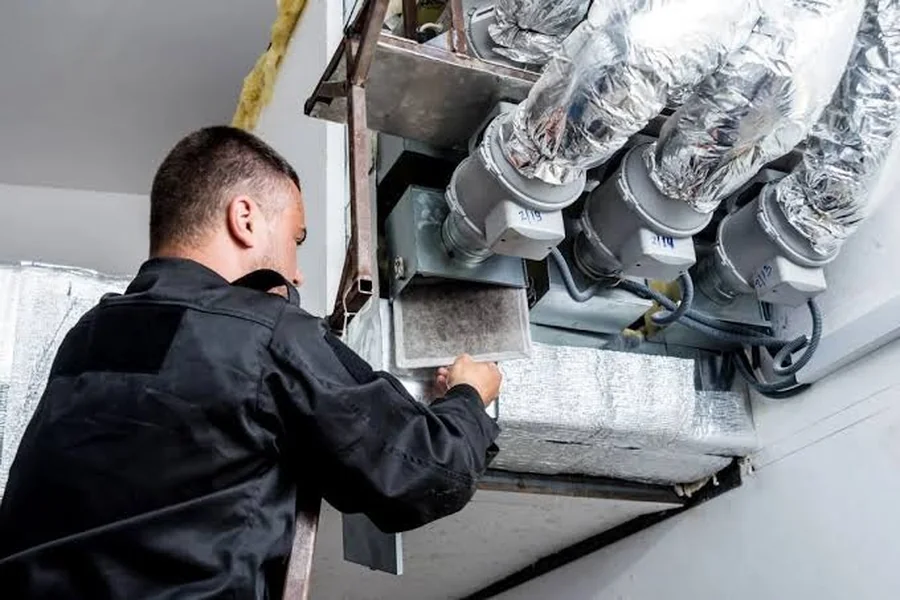
Every Columbus homeowner knows the script. The AC gives up mid July heat wave, or the furnace dies on the coldest night in January, never a mild Tuesday. Most people blame rotten luck. It is not luck. A system breaks down when it is grinding hardest, and odds are it was quietly begging for an HVAC repair service for weeks, dropping hints nobody bothered to read. Furnaces and air conditioners almost never just die. They warn, then they fail.
1. It Almost Never Breaks Without Warning
Ask any technician and the story is the same. By the time a unit finally quits, it has been throwing off signals for days, even weeks. Airflow gets weak. One room bakes while another stays chilly. The thing cycles funny, or the bill ticks up for no real reason. Any one of these is easy to brush aside. Stack them together and they are a slow countdown to a dead system. Catching them early is the entire ballgame.
2. The Sounds and Smells That Spell Trouble
A system in good shape just hums along, easy to forget. The day it starts making racket, it is trying to say something. Banging or clanking usually means a part is loose or broken. A sharp squeal points at a belt. A hiss often means a refrigerant leak. Smells count too. Something burning means a part is overheating, a musty whiff suggests mold in the ducts, and a rotten-egg reek off a gas furnace means a leak, so kill it and get out.
3. Short Cycling Is the Quiet Wrecker
One symptom earns real dread: short cycling. That is the system clicking on, running a couple minutes, snapping off, then again and again. Looks like nothing. It is the opposite of nothing. All that start-stop pounding wears out the compressor, the priciest part in the whole rig, usually nine hundred to twenty-eight hundred dollars to swap. It is also the symptom most likely to blow up into total failure right as demand peaks.
4. Why It Quits on the Worst Day
Here is the cruel part. A worn part can coast through a mild afternoon, but hand it a ninety-five-degree scorcher or a single-digit night, and the strain finishes it off. Columbus chews up equipment because it asks both brutal cooling all summer and brutal heat all winter. That back-to-back demand is why a trusted HVAC repair service in Columbus, OH, which homeowners keep on speed dial, earns its keep, since emergency calls almost always land at the worst moment.
5. Early Repair Beats Emergency Repair
The numbers are not close. A small problem caught in time might cost a hundred and fifty bucks. Let it ride until the system dies on a holiday weekend, and that same fault becomes a panicked after-hours emergency in the thousands. Safety matters too: HVAC means high-voltage electricity, pressurized refrigerant, and gas, so it is no spot for guesswork or a DIY gamble. A trained tech finds the real fault and fixes it before a cheap repair snowballs into a replacement.
An HVAC system hardly ever dies out of the blue. For days or weeks it drops hints, weak airflow, odd noises, strange smells, short cycling, a creeping bill, then quits at the worst moment, when summer heat or winter cold leans on it hardest. Reading those early signs separates a cheap fix from a costly emergency. In a town as rough on equipment as Columbus, calling a pro at the first symptom keeps a home comfortable and a wallet intact.
Hearing strange noises or watching the bill climb? Do not wait for it to die on the hottest day. Eco Plumbers, Electricians, and HVAC Technicians can hunt down the trouble early. Call (855) 326-7586 before it turns into an emergency.
FAQs
Q1: When do most heating and cooling systems break down in Columbus, OH?
In Columbus, OH, failures bunch up on the hottest summer days and the coldest winter nights, when systems run flat out. That peak strain is what shoves a worn part over the edge, so dealing with it beforehand pays off.
Q2: Is fixing an older system worth it, or better to replace?
It comes down to age and cost. Once a unit is past ten to fifteen years and a repair runs over half the price of a fresh one, replacing it often wins. A technician can walk through both options honestly before any money changes hands.

