
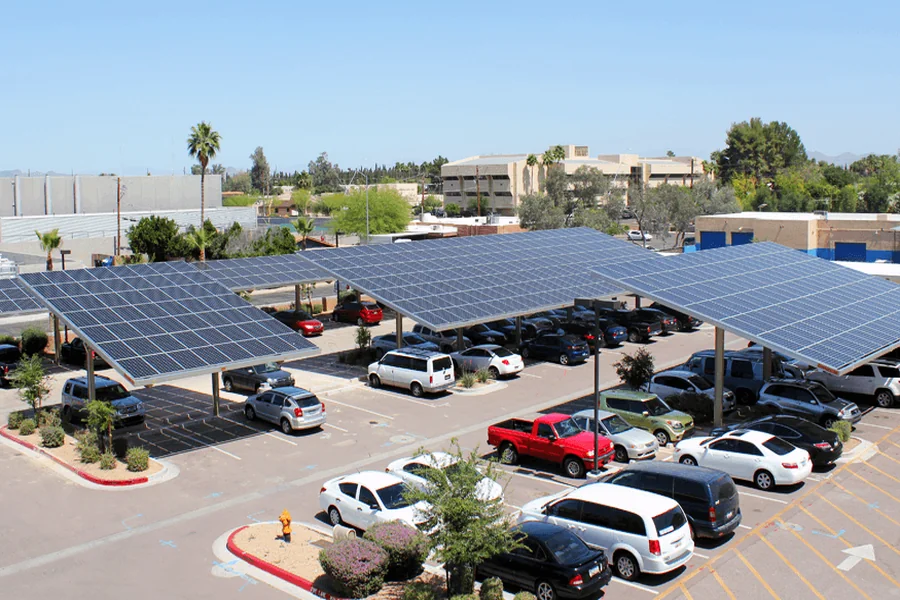
For many Arizona businesses, parking lots take up a significant amount of property space. A solar parking canopy offers a way to make that area more useful by generating electricity above parked vehicles. Before investing in a solar parking lot canopy installation in Arizona, business owners should understand how these systems work, what installation involves, and which site conditions can affect the project.
What Is a Solar Parking Lot Canopy?
A solar parking lot canopy is an elevated canopy that is fitted with solar panels over parking spaces. The panels generate electricity, and the space below is still available for use by vehicles.
This is not a rooftop solar system, as a parking area is used instead of the roof of the Solar building. It may be worth considering for businesses where roof space is limited, conditions on the roof are unsuitable or where businesses require extra solar capacity. Employees, customers and visitors can also benefit from shade from the canopy.
Benefits of Solar Parking Canopies for Businesses
One of the key benefits is that parking spaces can be utilized for two functions. Parking remains as always, while the electricity produced from the solar panels is used for the business.
Covered parking can also help prevent direct sunlight from reaching parked cars. In commercial buildings with significant parking areas, like office buildings, retail centres, and industrial buildings, a canopy can provide useful infrastructure without having to take up an additional spot for the solar array.
The actual benefits are dependent, however, on the energy requirements of the property, the design of the system and installation costs! These are all things to consider before investing in a canopy.
What Should Be Evaluated Before Installation?
The first step is a site assessment. The parking configuration, space, sun exposure, electrical supplies and the condition and placement of the support structures must all be considered.
The design must consider the clearance space required for vehicles, traffic flow, pedestrian access and positioning of structural supports. The layout may also be impacted by existing lighting, drainage and underground utilities.
Construction should be taken into account in the business, as it would impact the daily operations. A phased program of installation can help maintain accessibility to a portion of the parking lot during the installation process.
Understanding the Installation Process
Site assessment and system design are the first steps of a typical project. This could involve engineering, equipment procurement, permitting, panel installation, electrical wiring and tie-ins to the property’s electrical system.
Solar canopies necessitate structural and electrical installation; therefore, collaboration between project teams is crucial. The contractor should provide information on the anticipated schedule, responsibilities and site preparation required before work is commenced.
The cost will vary based on the various variables, including system size, structural requirements, electrical changes, site conditions and project complexity. A proposal based on the specifics of the site is much more helpful than a general price estimate.
Maintenance and Long-Term Planning
All commercial solar systems require routine checks and monitoring, including parking canopies. As part of an appropriate maintenance plan, electrical connections, inverters, mounting structures and panels should be checked.
Designing for access for inspections/repairs when planning can help make maintenance easier in the future. It is also important to question the installer if he/she provides maintenance and repair service after commissioning.
Choosing the Right Solar Installer
When comparing providers for solar carport installation in Phoenix, look beyond the initial quote. Review commercial project experience, engineering capabilities, electrical integration services, installation scope, and post-installation support.

