
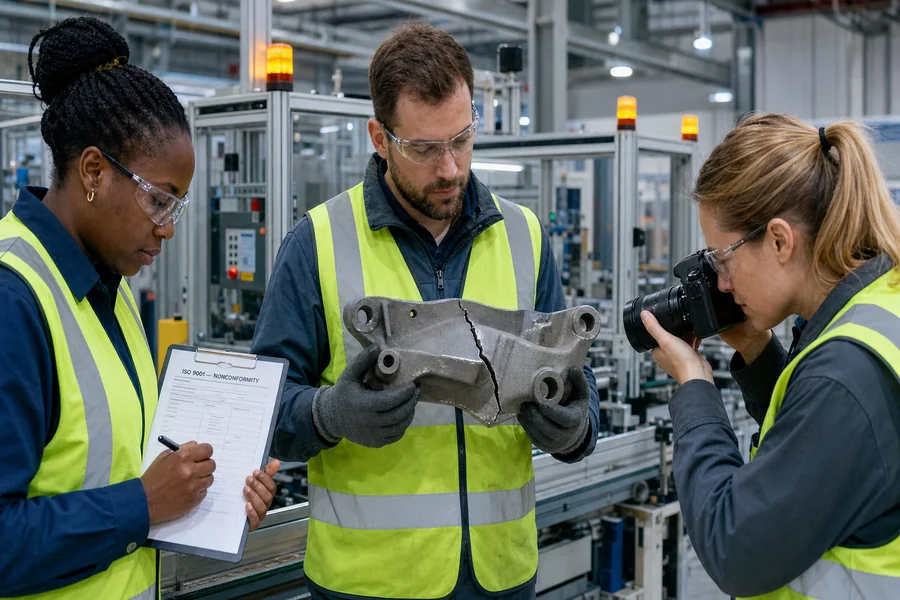
Industrial teams need shared evidence because each department sees a different part of an operational problem. Production records show lost output, maintenance logs describe equipment faults, and safety observations capture exposure to hazards. Reviewing those sources together helps teams establish what happened, test explanations, and select corrective actions that address the conditions behind a recurring loss.
Agree on the Problem Before Discussing Solutions
A corrective action meeting can move too quickly from a reported event to a proposed fix. Operations may request additional staffing, maintenance may recommend replacing a component, and safety may propose a layout change. Each suggestion needs to be assessed against an agreed description of the problem.
Write that description using observable facts. Record the affected process, location, time, duration, and operational consequence. “Packing stopped while completed pallets occupied the discharge area” gives the investigation a clearer starting point than “poor coordination.” Keep suspected causes separate until the team has examined supporting evidence.
Distinguish immediate containment from action intended to prevent recurrence. An obstructed route may require prompt clearance while the investigation continues. Record that response, then examine how the obstruction developed. Immediate protection should proceed through established site procedures without waiting for agreement on the underlying cause.
Build an Event Sequence From Relevant Sources
Create a timeline that includes the period before the disruption, the event itself, and the recovery. Production counts, material transactions, maintenance entries, and shift notes can help establish the sequence. Check timestamp alignment and confirm that different systems use consistent names for equipment and locations.
Suitable camera evidence can add context about physical activity between recorded events. Establish the review purpose, authorized access, retention period, and configurable privacy protections before examining footage. Check coverage and blind spots, and focus observations on process conditions. A camera view should be interpreted alongside records and employee accounts.
Keep the evidence available in a form that participating teams can review together. Preserve the original records and identify any gaps, estimates, or conflicting accounts. A short timeline with clear source references is more useful in a review meeting than a collection of disconnected screenshots and spreadsheets.
- Record when the first abnormal condition appeared.
- Identify the activity immediately before and after it.
- Separate observed facts from proposed explanations.
- Note missing records and uncertain timestamps.
- Include relevant context from affected operators.
Test Explanations Across Department Boundaries
Ask each department to explain how its proposed cause fits the sequence. If a component fault is suspected, examine fault records and the conditions under which the equipment stopped. If staffing is questioned, check task coverage and work demands during the affected period. Identify what additional observation could support or weaken each explanation.
Include employees who perform the work on the affected shifts. They can explain required checks, temporary arrangements, or material conditions that formal records omit. Give them an opportunity to challenge interpretations and add context before the investigation assigns actions.
Similar events may have different causes, so compare examples carefully. A discharge queue during a product change may differ from one caused by delayed collection. Record the conditions attached to each event and keep unresolved explanations open. The team can then agree on a focused check or trial to resolve the remaining uncertainty.
Choose Actions That Address the Observed Conditions
Consider a hypothetical plant where finished pallets repeatedly block a marked crossing near a packing line. Production sees lost output when the discharge area fills. Safety records crossing obstructions, while logistics reports that pallet collections follow the agreed schedule. Each department initially proposes a different response.
A shared review could compare packing completion times, collection records, and floor observations. Suppose it shows that short production bursts fill staging space between scheduled collections. The team could then test a revised collection frequency and staging limit, subject to a safety review, instead of approving separate changes without examining their interaction.
Define the action precisely enough to implement and check. Record the condition it addresses, the responsible owner, the required approval, and the completion date. In the pallet scenario, use consistent observation criteria for crossing obstructions before and after the trial. This also gives future audits a traceable record of the finding, response, and result.
Verify Results Before Closing the Action
Agree on success measures before implementation. For the pallet example, relevant measures could include discharge waiting time and crossing obstruction frequency. Compare periods with similar production volumes and product conditions. Record other changes that might affect the result, including staffing adjustments or altered dispatch demand.
Check neighboring processes as well as the original problem area. More frequent collections could affect vehicle movements elsewhere, so review traffic conditions and pedestrian access alongside output. Ask operators about new difficulties and confirm that the revised process works across the shifts covered by the action.
Keep implementation and verification as separate milestones. Installing equipment, changing a schedule, or completing training confirms that work was done. Close the action after the agreed review shows its effect. If the problem persists, revisit the explanation and record what the trial established before selecting another response.
Make Shared Evidence Part of Every Corrective Action Review
Teams reviewing approaches to operational visibility and root cause analysis should assess how findings can be traced to supporting records and relevant floor activity. Check how departments can review the same event, contribute context, and follow the result of an approved change. Include access controls and evidence quality in that assessment.
Bring one recurring issue into the next review with a defined problem statement, an event sequence, and clearly marked uncertainties. Agree on the next action and its verification measure together. Retain the evidence behind the decision so future teams can see why the action was chosen and how its outcome was assessed.

