
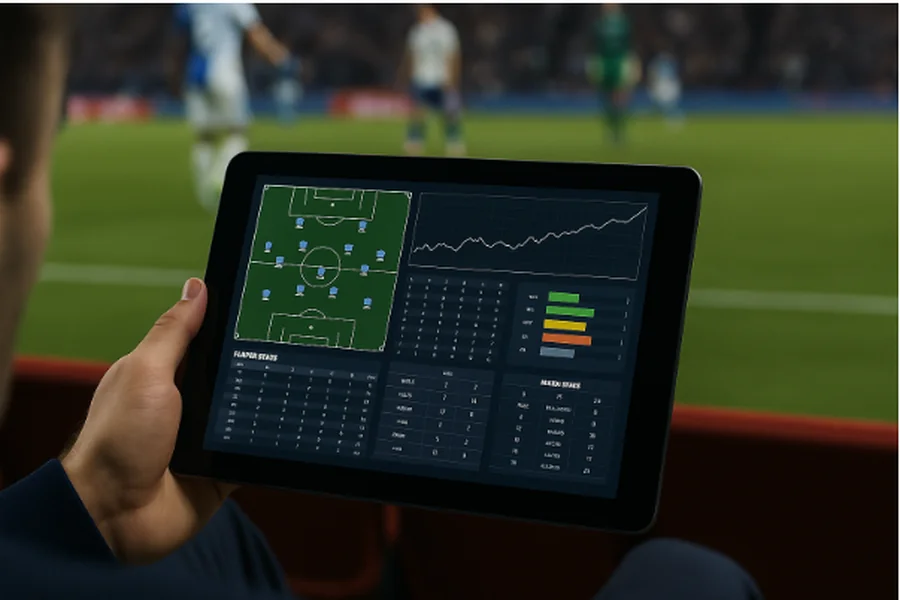
Tension was palpable at the Santiago Bernabéu when Real Madrid’s starting XI against Manchester City dropped a bombshell—no Kroos, no Modrić. Instead, a 19-year-old academy graduate found his name on the team sheet. The decision sparked immediate debate. But this wasn’t just Ancelotti’s hunch. There was a machine learning model predicting fatigue thresholds and matchup advantages using terabytes of performance data.
Algorithmic algorithms use data to make decisions tailored to outperform traditional ones.
All Across the Footballing World
Premier League clubs, along with other leagues, invested more than $1 billion in machine learning and AI technologies, and for good reason. Programs such as Hudl, StatsBomb, and SciSerts offer simulation models, which use algorithmic game theory to predict the most optimal tactics and logic to achieve the best possible outcomes with the least possible resources.
Algorithms Considered in Lineup Selection:
- The player’s GPS monitored workload for the past 7 to 10 days.
- The opposing team’s tendencies and general style of play.
- Injury risk assessment with biometric and musculoskeletal data.
- Statistical compatibility based on tactical shape in previous matches.
- Mindset as determined by sentiment analysis of training footage via the School of Athens AI.
Statistical modelling isn’t confined to football; it also plays a role in other major sports. The same kind of predictive analysis that is used to determine NBA betting odds — factoring in player matchups, momentum trends, and historical performance curves — now informs decisions such as which players take the pitch for Bayern and whether Arsenal maintains a high press against Newcastle. This crossover in data application is no coincidence; it reflects a deeper alignment in the decision-making processes of elite athletes in both sports.
When Data Carries the Cost of an Athlete’s Recovery
Liverpool’s bout with Aston Villa in early March 2025 came on the heels of the previous weekend’s surprise decision to bench Darwin Núñez. No one could wrap their heads around this change. Especially when the rest of the team seemed to have the same form, scoring a brace the week before. But in the post-match presser, assistant manager Pepijn Lijnders sought to clarify: the reasoning was suffocated with a machine learning tool that thought that isolation had, and I quote, ’62 percent drop anaerobic recovery compared to the average for the team.’ From a qualitative perspective, Núñez looked fit. From a quantitative one, he was a code red.
Numbers Behind The Change
To appreciate the extent to which teams rely on algorithms to make lineup determinations, think about the organization of the table below:
| Club | Tech System Used | First Implemented | Key Features |
| Manchester City | SAP Sports One | 2019 | Injury prediction, match load forecasting |
| Bayern Munich | SciSports + Smartabase | 2021 | AI matchup models, chemistry scoring |
| PSG | Zone7 | 2020 | Real-time fatigue detection |
| Ajax Amsterdam | In-house analytics lab | 2017 | Lineup simulations, youth integration |
| LA Galaxy | STATSports + IBM AI | 2023 | Fitness modeling and substitution timing |
The use of these systems is associated with reductions of up to 23% in soft-tissue injuries and measurable improvements in high-intensity performance metrics during congested fixtures.
Analyzing Sportsbook Metrics
Algorithms managing lineups have now gone a step further to reshape sportsbooks and their odds structure. Once data-driven considerations disrupt the expected lineups, particularly with shocking omissions or late additions, the cascading effect will surely be felt in the betting markets. These surprise elements can lead to immense changes in the odds offered pre-match, which is contrary to conventional bettor intuition.
A clear example can be highlighted from the Saudi Pro League’s winter transfer window. The Melbet Indonesia site showcased stratospheric sensitivity to performance algorithms driven by lineup changes. The platform`s odds did not just rely on static pre-match expectations, but rather, dynamically adjusted to changes based on rotational fatigue selections logic. Many users were already appreciative of this dynamic modeling that sharpened their betting experience when the subdued players actually produced results that controllable stats had already forecasted.
More Than Just Fitness: Tactical Customization
While many are convinced these tools act just as fitness trackers, the algorithms are created to identify how specific players tend to counter specific formations, such as the use of a false nine against teams with a flat back four. The algorithm simulates a mixture of different game states and lineup combinations over thousands of permutations, with each combination yielding a calculated probability of scoring first or conceding.
Borussia Dortmund evaluated multiple formations against RB Leipzig three months ago with the aid of tactical AI. The model estimated a 17% improvement in possession, while xGA was 9% lower with the inclusion of a double pivot. Troubleshooter Edin Terzić confirmed that his pivot suggestions were optimistic. Dortmund managed to win 2-0.
The Risk of Over-Automation
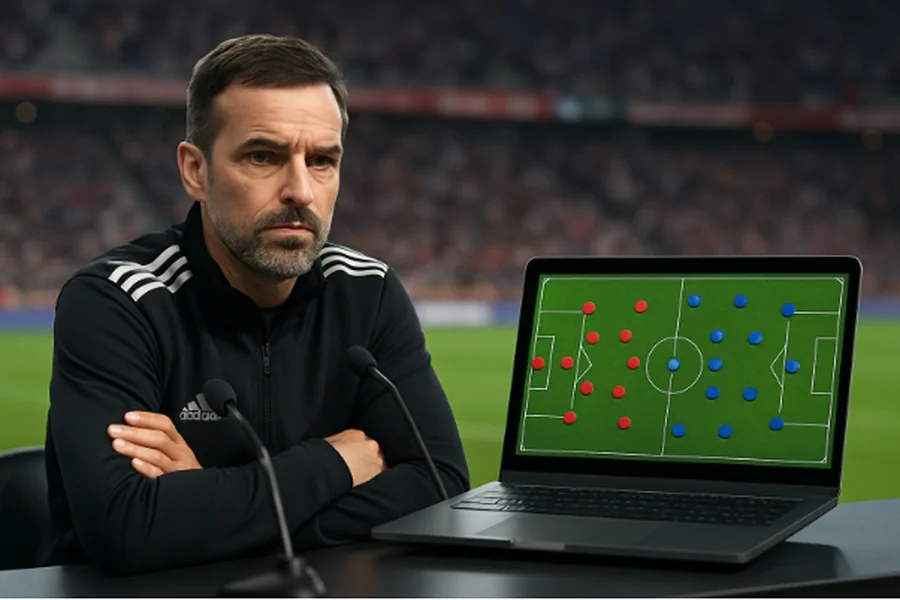
Arguments in favor of fully automated strategies are met with staunch opposition. With data-assisting approaches gaining prominence in football, the aforementioned emotion, locker room chemistry, or skill is often lost. The primary criticism regarding forecasting through data centers is that in attempting to uplift sports predictability, they erase the underlying charm that makes sports, well, charming.
Mentors like Jürgen Klopp and Xavi have talked about how important ‘feeling’ a game or a match is, which includes understanding momentum shifts, player confidence, and rival psychology, all of which don’t capture datasets. Intuition is still reliable in some matches more than a graph.
Algorithm-Driven Lineups Illustrating Pay-off
Many experts have taken bold moves driven by calculations with no regard for ‘the old way.’ Here are two cases:
- Chelsea vs. Tottenham, February 2024: Chelsea defeated Spurs 3-1 after a fitness model flagged Reece James as a high injury risk. Gusto replaced him and ended up scoring two assists.
- Napoli vs. Roma, April 2025: AI simulations preferred Osimhen starting wide left rather than the center. He ended up assisting Anguissa in scoring the winning goal after pulling two defenders out of position.
These scenarios are not isolated situations. They are fueled by millions of put-through data points, mathematical certainty, and sporting instincts combined into one.

