
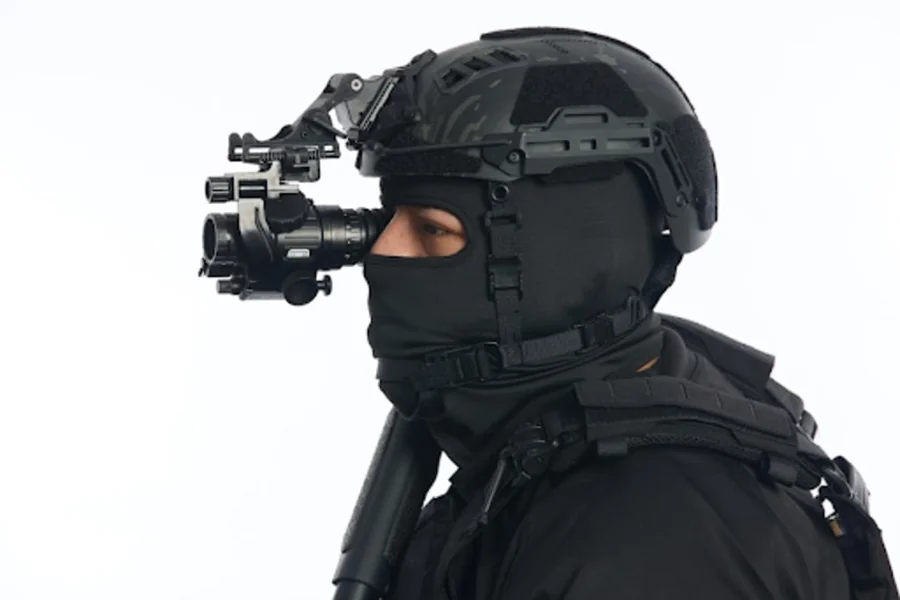
An Introduction to Modern Night Vision Devices
Night vision once was reserved for special elite military or scientific applications. Times and technological innovations have made it available to the common camper, nature buff, even nighttime photographer. Modern night vision gear picks up whatever ambient light—moonlight, starlight, even distant lights reflected off surfaces—electrically boosting it to create a perceivable image, usually displayed in green or in grey scales. That would be a blurred stream of light now magnified into an HD scene.
Such breakthroughs enable even amateurs and Sunday explorers to share in the thrill of the night with confidence. Formerly specialist-only night vision has become universal and completely reliable when it comes to user-friendliness, with designs to match every activity and budget. Outdoor people have celebrated the dramatic impact that these devices have made possible, from easier nighttime navigation to unforgettable animal encounters.
Main Features and Advantages of PVS-14 Night Vision Devices
Most current night vision gear are certified for their portable functionality, versatility, and sturdiness. To those who can hardly wait to get out come nighttime hours, versatility for the PVS 14 excels. It can be used in a hand-held mode and strapped to a helmet or headgear to have hands free for critical tasks at hand, such as climbing, gear manipulation, or aiding others. Its comfort-friendly construction can be easily carried and used even for longer hikes or overnight trips.
- Hands-Free Options: It’s a godsend when one has to have freedom of movement and protection, i.e., when climbing rocky outcroppings or hiking rocky-slick trails.
- Flexibility: Since it can be used as a monocular, a helmet-mountable device, and even weapon-mountable equipment, it can be customized for a variety of applications from navigation to observation of animals.
- Rugged Construction: Nighttime adventures typically mean being out in bad weather or high usage. Units constructed of water-proof and impact-resistant components function best in the real world.
- User-Friendly Controls: Convenient brightness and focus adjustment are desirable when dexterity can be inhibited as a result of gloves or numb hands.
The ultimate product is that even non-experts can have refined technology. The equipment can allow groups, families, or lone adventurers to share in the excitement of the great outdoors in the evening in a setting that’s only regarded to be accessible and safe.
Enhancing Safety and Awareness During Nights
Vision in the dark greatly increases situation awareness—the ultimate component of being safely outdoors. Survival research verifies that remaining in close contact with one’s environment can avoid accidents, guide around unexpected wildlife animals, and move with increased agility. Night vision gear increases this awareness to see subtle motion in underbrush, discern hard-to-spot distant trail blazes, identify moving terrain before it’s too perilous.
This extra visibility particularly comes in handy when parents or group leaders are guiding children at night. The ability to keep track of partners, communicate easily, and anticipate changes reactively can cause an evening outing’s mood to swing from tense to tranquil.
Environmental Issues and Responsible Use
While technology amplifies enjoyment and protection, it’s vital to maintain in perspective the delicate balance with nature. Appropriate utilization of night vision gear makes it that human beings are conservationists and not disruptors of the nighttime universe. Excessive lighting can upset animals’ rhythms, their cycles of breeding, or create confusion in animals that rely on darkness for shelter.
It’s important to respect rules of conduct for national parks conservation agencies. That involves minimizing artificial lighting to a minimum, remaining only on designated trails, and affording space to wildlife. Applied with caution, night vision gear provides us with a low-impact mode of interaction with nature while reducing danger—maintaining not only your individual safety but the cycles of nature with which you come in contact.
How to Choose and Run Night Vision Devices
The right choice of night vision equipment can make all the difference. In making a decision, key considerations are clarity, magnification, battery life, and comfort. Clarity with an expanded field of view keeps you oriented and reduces visual fatigue.
- Optics: Good peripheral vision and crisp images are essential to moving naturally and safely.
- Power source: Pack additional batteries and choose gear with efficient consumption designs.
- Ergonomics: Make it light and snug-fitting when setting it up to avoid straining your neck.
- Weather Resistance: Devices will be waterproof and robustly constructed to endure drastic changes in external conditions.
For best performance, care for lenses with special cloths and store your device in a padding, dry container. Periodically inspect manufacturer updates and recommendations that can extend equipment longevity and effectiveness.
Nighttime adventure tech trends for the future
Night vision and related outdoor tech has a bright future. There are signs that in coming years digital displays will combine with navigation with AI and even thermal with standard night vision for added functionality. Some of the new equipment actually interfaces directly with phones to facilitate sharing in real time or for navigation overlays so that one would be able to mark a trail and see warm-blooded animals simultaneously.
Such innovations are rapidly making inexpensive, exhilarating nighttime forays and high-technology equipment accessible to the mass public. Market analysts predict that in years to come small, light, and progressively user-friendly designs will be standard issue equipment on every serious adventurer’s list.
Real-Life Success Stories and Practical Applications
Backcountry communities are full of stories in which night vision made the difference between success and failure for an adventure. Groups have used night vision to make their way back safely when lost in unexpected weather. Nature photographers speak of taking photographs of rare nocturnal animals with minimal disruption. Campers speak of how with these tools making one’s way to a bathroom or heap of firewood no longer means stumbling about in the dark or risking a chance encounter with wildlife.
These personal histories reveal not just the feeling of security but the enriching of existence that becomes possible. Improved vision lets you experience the beauty and hidden marvels of nature in the post-work hours. With humanity eager to experience the great outdoors in an entirely new manner, nocturnal vision is unlocking doors—creatively, quietly, and with deference—while everybody else rests.

