
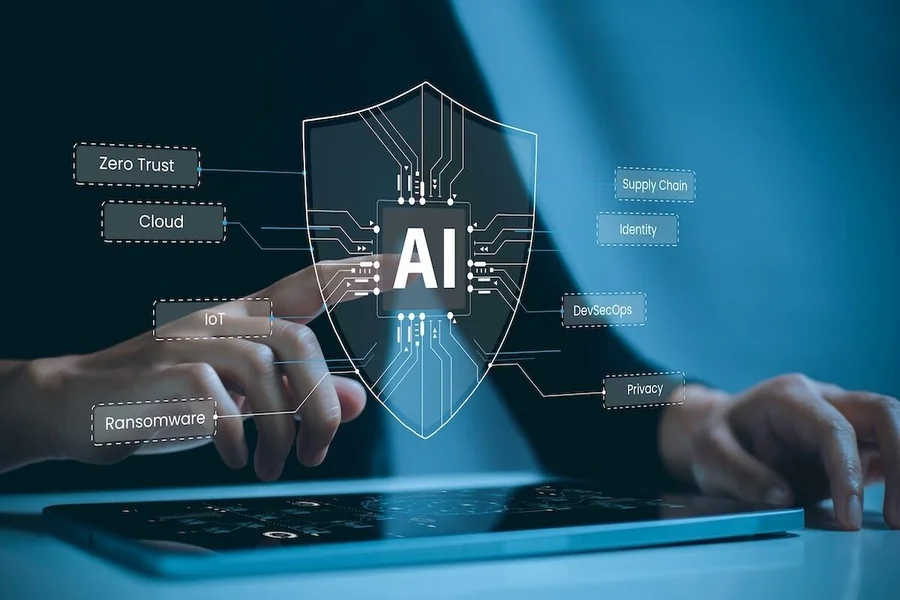
In today’s hyperconnected world, cybersecurity threats are growing in both scale and sophistication. Traditional defense mechanisms often struggle to keep up with increasingly complex attacks, leaving individuals, businesses, and even governments vulnerable. This is where AI cybersecurity comes into play, transforming the way digital defenses are built, deployed, and managed. Artificial intelligence has quickly become one of the most powerful tools in identifying, preventing, and responding to cyber threats, shaping the future of cybersecurity defense.
The Rising Complexity of Cyber Threats
Hackers and cybercriminals are no longer limited to simple phishing scams or brute-force attacks. Modern threats include advanced persistent threats (APTs), ransomware campaigns, social engineering attacks, and zero-day vulnerabilities. These methods are designed to bypass traditional firewalls and antivirus software, often targeting human error as much as technological weaknesses. To address this growing complexity, cybersecurity solutions must not only be reactive but also predictive. To meet this demand for foresight, Horizon3.ai emphasizes in anticipating attacker behavior and continuously assessing exposure so organizations can identify and mitigate risks before advanced threats exploit them.
The Role of AI in Cybersecurity
Artificial intelligence provides exactly that predictive capability. By analyzing vast amounts of data in real time, AI systems can detect suspicious behavior, flag anomalies, and even take automatic action before an attack escalates. Unlike older security software that relies heavily on signatures of known threats, AI cybersecurity uses machine learning and pattern recognition to identify never-before-seen threats.
Some of the most impactful ways AI is being applied in cybersecurity include:
- Threat Detection and Prevention: AI algorithms analyze user behavior, system traffic, and network activity to identify unusual patterns. This helps detect potential intrusions much faster than traditional methods.
- Incident Response: Automated AI systems can isolate compromised devices, block malicious IPs, and notify security teams immediately, reducing the damage caused by breaches.
- Fraud Prevention: In industries like banking and e-commerce, AI models track transaction histories and flag unusual activity, reducing fraudulent activity.
- Phishing Detection: AI scans emails, websites, and attachments to spot suspicious links or content, providing users with real-time warnings.
How AI Strengthens Defense
The real strength of AI cybersecurity lies in its adaptability. Unlike static defenses, AI continuously learns from new data and adapts to emerging threats. For example, when a new strain of ransomware appears, AI systems can recognize unusual file encryption activity and halt the process before it spreads across a network.
Additionally, AI helps reduce the burden on cybersecurity professionals. With thousands of alerts generated daily by traditional systems, human teams often face “alert fatigue.” AI filters through these alerts, prioritizing the most critical issues, which enables faster and more effective responses.
Challenges of AI in Cybersecurity
While AI offers tremendous benefits, it also introduces new challenges. Cybercriminals themselves are beginning to use AI to develop smarter attacks, such as deepfake-based social engineering or automated malware that adapts in real time. This creates a technological arms race, pushing defenders to stay one step ahead.
Another challenge is the risk of false positives. AI systems can sometimes misinterpret legitimate activity as malicious, leading to unnecessary disruptions. This is why human oversight remains essential—AI can enhance defense, but it cannot fully replace human judgment.
The Future of AI-Powered Cyber Defense
As the digital world expands with cloud computing, the Internet of Things (IoT), and remote work, cybersecurity will only grow in importance. Future advancements in AI cybersecurity are expected to include:
- More accurate predictive analytics to stop threats before they begin.
- Integration with blockchain to improve data integrity and verification.
- Enhanced collaboration tools that allow AI systems from different organizations to share threat intelligence.
- Greater automation in both detection and response, reducing the time it takes to neutralize attacks.
Conclusion
Artificial intelligence is not just a trend—it is the future of digital defense. By enabling faster detection, smarter prevention, and more efficient responses, AI cybersecurity is reshaping the way organizations protect their most valuable assets. While challenges remain, the potential benefits far outweigh the risks. As technology continues to evolve, AI will play a central role in building a more secure digital landscape, ensuring that defenses stay ahead of increasingly sophisticated cyber threats.

