
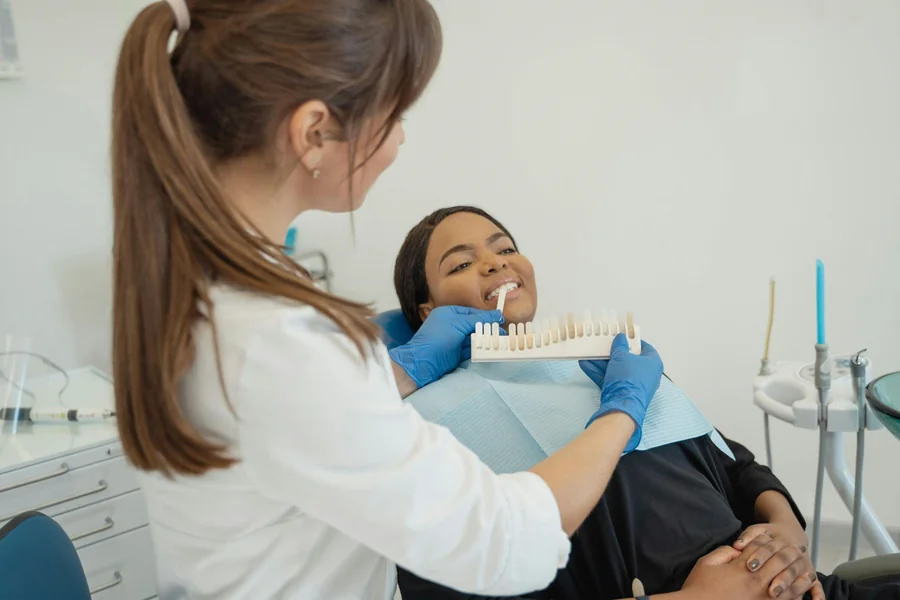
Seattle residents have access to a refined menu of cosmetic dentistry options designed for natural-looking results. Professional whitening lifts stubborn stains. Porcelain veneers correct shape, color, and symmetry. Clear aligners straighten discreetly. Bonding repairs chips quickly, while tooth-colored fillings and inlays blend seamlessly. Gum contouring sculpts balanced smile lines. Digital smile design previews outcomes, and implants restore missing teeth with precision. Selecting trusted cosmetic dental care in Seattle—along with smart financing—can make all the difference, but there’s one factor many overlook.
Professional Teeth Whitening in Seattle
Few cosmetic enhancements deliver faster, more visible impact than professional teeth whitening in Seattle. In-office systems use high-concentration gels activated by calibrated light or heat to lift deep stains from coffee, wine, and aging within about an hour. Results are immediate, often brightening teeth several shades while preserving enamel integrity through controlled application and protective barriers.
Clinics prioritize whitening safety considerations by screening for decay, cracks, and exposed roots, then tailoring gel strength and exposure time. Desensitizing agents such as potassium nitrate and fluoride varnishes are applied to promote teeth sensitivity reduction during and after treatment. Custom cheek retractors, gingival shields, and precise isolation prevent soft-tissue irritation, ensuring uniform whitening from incisal edge to cervical margin.
Patients typically leave with shade-matched photos, aftercare plans, and optional take-home trays for calibrated maintenance. When executed by trained clinicians, this approach balances rapid aesthetic gains with predictable shade stability and patient comfort.
Porcelain Veneers for a Flawless Finish
While whitening can refresh a smile’s brightness, porcelain veneers in Seattle deliver meticulous refinement by reshaping form, color, and symmetry in a single treatment. Thin ceramic shells are crafted to mask stains, chips, uneven edges, and disproportioned teeth, producing a balanced, light-reflective surface that mimics natural enamel. Customizable veneers allow control over shade, translucency, and contour, aligning the final result with facial features and lip dynamics.
Treatment typically involves careful planning, minimal enamel preparation, digital smile design, and precise bonding with high-strength resin cements. Porcelain’s glass-ceramic structure resists discoloration and offers long lasting durability, maintaining luster against coffee, wine, and everyday wear. Patients value the immediate transformation—uniform margins, enhanced symmetry, and a polished finish that photographs beautifully under varied lighting.
Seattle providers emphasize conservative design, occlusal harmony, and gingival health to support longevity. With proper hygiene and periodic professional maintenance, veneers reliably preserve their color, fit, and refined aesthetic for years.
Clear Aligners for Discreet Teeth Straightening
Clear aligners use a series of custom, transparent trays that apply gentle, targeted pressure to move teeth with precision. Compared to braces, they offer nearly invisible wear, fewer office visits, easy removal for eating and cleaning, and reduced irritation from wires or brackets. Patients in Seattle can expect a tailored timeline—often 6 to 18 months—guided by digital scans, periodic refinements, and disciplined daily wear.
How Clear Aligners Work
Ever wondered how nearly invisible trays can guide teeth into harmonious alignment without brackets or wires? The process begins with a digital scan of the smile and bite, capturing millimeter-level details. Using this 3D model, a dentist maps micro-movements for each tooth, then fabricates a series of invisible aligners—custom fit trays engineered to apply controlled, directional forces.
Each set is worn for a prescribed period, typically one to two weeks, progressively repositioning teeth according to the plan. Strategic attachments—small, tooth-colored shapes—may be placed to enhance grip and torque where needed. Patients switch trays at home while attending periodic check-ins to validate tracking and refine staging. The result is orchestrated movement that respects facial symmetry, occlusion, and aesthetic contours.
Benefits Over Braces
After mapping tooth movement with precision trays, the advantages over traditional brackets become apparent: nearly invisible aligners preserve a natural smile in photos and daily interactions, remove cleanly for meals and brushing, and minimize plaque traps that can stain enamel around brackets. Their reduced visibility suits client-facing roles and special events, maintaining confidence without reflective metal. Smooth, custom-trimmed edges lessen lip and cheek irritation, improving day-to-day comfort. Controlled force application can enable accelerated treatment for suitable cases, supported by planned staging that targets movements efficiently. Oral hygiene stays straightforward: uninterrupted flossing and regular brushing help protect enamel luster and gum health. No emergency wire pokes or bracket failures means fewer unplanned visits, and aligner compliance indicators assist accountability without interrupting aesthetics.
Treatment Timeline Expectations
Most patients can anticipate a thoughtfully paced journey that balances discretion with measurable progress. A typical treatment duration ranges from 6 to 18 months, determined by crowding, bite relationships, and cosmetic goals. Providers in Seattle often employ a phased approach: digital scanning and simulation, delivery of sequential aligners, midcourse refinements, and precision detailing to polish symmetry.
Patients usually switch trays every 7 to 10 days, wearing them 20 to 22 hours daily for predictable tooth movement. Attachments and interproximal reduction may be scheduled early to accelerate alignment while preserving aesthetics. Quarterly check-ins verify tracking and allow targeted adjustments, minimizing delays. Final steps include refinement aligners and a custom retainer protocol to lock in the new smile line, arch form, and bite harmony.
Dental Bonding for Quick Cosmetic Repairs
While veneers and crowns often take center stage, dental bonding offers Seattle patients a swift, budget-friendly way to correct small cosmetic flaws with striking results. Using tooth-colored composite resin, clinicians reshape chipped edges, close small gaps, and camouflage discoloration in a single visit. Minimal enamel removal preserves structure while delivering a polished, natural finish under carefully matched shades and precise contouring.
The procedure timeline typically ranges from 30 to 60 minutes per tooth, allowing busy professionals to upgrade their smile without disrupting schedules. Cost considerations remain favorable compared to porcelain alternatives, making bonding an attractive entry point for cosmetic refinement. With proper care—nonabrasive toothpaste, avoidance of nail-biting, and routine cleanings—results can look fresh for years.
Key reasons patients choose bonding: 1. Rapid chairside transformation with immediate results 2. Conservative approach that prioritizes enamel preservation 3. Custom shading and micro-contouring for seamless aesthetics 4. Accessible pricing and efficient maintenance for long-term value
Gum Contouring to Enhance Your Smile Line
Gum contouring refines a gummy or uneven smile line by reshaping excess tissue to reveal balanced tooth proportions and cleaner symmetry. Patients in Seattle can choose precision laser sculpting for minimal bleeding and crisp margins or a traditional scalpel approach tailored to complex cases. With proper aftercare—gentle hygiene, anti-inflammatory guidance, and short recovery timelines—the tissue heals smoothly, showcasing a more harmonious smile.
What Gum Contouring Fixes
Although teeth often take center stage in a smile, excess or uneven gingival tissue can quietly disrupt harmony—and gum contouring corrects these imbalances with precision. This treatment reshapes the gingival frame to reveal balanced tooth proportions, improving symmetry and smile line flow. It specifically addresses bulky tissue that shortens clinical crown length, uneven margins that make teeth appear misaligned, and asymmetries that distract from tooth form. As an adjunct to gum health maintenance, contouring can also reduce plaque-retentive niches along irregular gum edges through minimally invasive procedures.
- Corrects “gummy smile” by refining excessive display.
- Levels uneven gum heights for symmetrical incisal edges.
- Reveals proper tooth length for proportional aesthetics.
- Smooths scallop contours to enhance balance and cleanability.
Results look natural, spotlighting enamel while preserving soft-tissue integrity.
Laser vs. Scalpel
Because technique shapes both healing and aesthetics, the choice between laser and scalpel for gum contouring deserves careful attention. In Seattle practices, diode and CO2 devices offer laser precision, vaporizing excess tissue with controlled depth and minimal collateral impact. The beam cauterizes as it contours, helping maintain a clean field and crisp scallops around each tooth. By contrast, a fine periodontal blade provides scalpel accuracy, enabling tactile feedback along the gingival margin and sharp, architectural lines—especially useful when reshaping thicker tissue or blending with osseous recontouring.
Candidate selection hinges on tissue type, symmetry goals, and the extent of redefinition required. Experienced cosmetic dentists frequently combine modalities, using lasers for delicate refinements and scalpels for definitive symmetry, achieving balanced gingival zeniths that enhance tooth proportions and smile harmony.
Healing and Aftercare
How does a meticulously planned recovery elevate the final smile line? Post-contouring healing determines gingival symmetry, tissue tone, and the crisp reveal of enamel. A Seattle clinician guides patients through targeted pain management, gentle hygiene, and behavior cues that prevent micro-trauma and accelerate epithelial closure, minimizing discomfort while protecting sculpted margins.
Key aftercare priorities include:
- Controlled pain management and cold compress intervals to limit edema and bruising.
- Ultra-soft brushing and alcohol-free rinses to keep the margin clean without disrupting the clot.
- Nutritional choices—cool, soft foods—and hydration to support collagen remodeling.
- Activity moderation: no smoking, limited exercise, and zero probing of the site.
Follow-ups verify contour stability and detect high-risk irritants. Diligence during week one preserves scalloped harmony, ensuring a refined, camera-ready smile line.
Tooth-Colored Fillings and Inlays/Onlays
A confident smile often depends on seamless restorations, and tooth-colored fillings along with inlays/onlays offer Seattle patients a refined, durable solution. Carefully shade-matched composite resins blend with natural enamel, preserving healthy structure while restoring function. Meticulous bonding seals margins to aid tooth staining prevention and reduce sensitivity, producing a smooth, light-reflective surface that looks authentic in every setting.
For small to moderate cavities or chipped edges, composite fillings provide conservative repair with excellent composite resin longevity when placed with proper isolation and finishing. For larger restorations, custom-crafted inlays and onlays—often fabricated from high-strength porcelain or hybrid ceramics—deliver superior contour, precise occlusion, and crack-resistant reinforcement compared to traditional large fillings. Their polished glaze resists discoloration and wear, maintaining luster over time.
Seattle practitioners typically use digital shade analysis, rubber dam isolation, and layered placement techniques to optimize bond strength and esthetics. The result is a restoration that protects integrity, supports natural translucency, and elevates the overall harmony of the smile.
Smile Makeovers and Digital Smile Design
From subtle refinements to complete transformations, smile makeovers in Seattle leverage Digital Smile Design (DSD) to plan results with precision before any treatment begins. Using high-resolution photos, facial scans, and a cosmetic smile analysis, clinicians map tooth proportions, smile symmetry, and gingival contours to orchestrate balanced aesthetics. A digital smile simulation previews proposed changes on-screen, allowing objective discussion and measurable adjustments to shade, length, and width.
DSD coordinates treatments such as veneers, bonding, whitening, and orthodontic alignment to achieve harmony with facial features. The process minimizes guesswork, aligns expectations, and compresses timelines by sequencing procedures efficiently. Patients preview their outcomes through mock-ups and provisional restorations that mirror the approved design.
- Thorough records: photos, scans, and bite data inform accurate planning.
- Predictable outcomes: digital smile simulation validates esthetic targets.
- Collaborative design: patient and dentist co-create the ideal look.
- Efficient sequencing: fewer revisions, streamlined chair time, cohesive results.
The result is a personalized, photogenic smile crafted with technical rigor and artistic intent.
Cosmetic Dental Implants for Missing Teeth
While preserving natural facial harmony remains the priority, cosmetic dental implants in Seattle offer a lifelike, long-term solution for single or multiple missing teeth. Titanium or zirconia posts integrate with the jaw, creating a stable foundation for custom-crafted crowns that mimic natural translucency and contours. The result restores smile symmetry, phonetics, and bite efficiency while preventing bone resorption that can age facial features.
The dental implant procedure typically includes digital imaging, guided placement, and a healing phase for osseointegration, followed by precise abutment and crown fabrication. Meticulous shade matching and emergence profile design guarantee seamless blend with adjacent teeth. Key dental implant advantages include durability, preservation of neighboring enamel, and improved comfort compared to removable options. Maintenance mirrors natural tooth care—routine brushing, flossing, and professional cleanings. For candidates with adequate bone density and healthy gums, implants deliver predictable esthetics and function, supporting confident expression without the mobility or bulk associated with traditional prosthetics.
Choosing a Seattle Cosmetic Dentist and Financing Options
With implants and other cosmetic options mapped out, selecting the right Seattle cosmetic dentist—and a smart payment plan—determines how seamlessly vision becomes reality. A discerning patient evaluates credentials, technology, and artistry with equal rigor. Board certifications, before-and-after galleries, and 3D smile design signal precision; digital scanners and in-house milling shorten timelines. Transparent consultations should itemize cost considerations, outlining sequence, materials, and maintenance so outcomes stay stunning and sustainable.
A structured approach helps narrow choices and align budgets with expectations: 1) Verify training in cosmetic procedures and memberships in AACD or similar bodies. 2) Review case portfolios matching skin tone, lip line, and facial symmetry to desired aesthetics. 3) Compare written treatment plans, warranties, and follow-up protocols for clarity. 4) Evaluate dental financing plans—0% promotional APR, extended terms, and in-house membership discounts.
Seattle practices often coordinate phased care and insurance preauthorizations, pairing design expertise with payment flexibility to make a polished, photogenic smile attainable.
Frequently Asked Questions
Are Cosmetic Dentistry Procedures Safe During Pregnancy?
Cosmetic dentistry during pregnancy is largely limited; diagnostics and cleanings are safe, while elective procedures are deferred. Tooth whitening safety remains uncertain, so cosmetic treatment timing typically targets the second trimester or postpartum for aesthetic precision with minimized maternal-fetal risk.
How Do Cosmetic Treatments Affect TMJ Disorders?
Cosmetic treatments can help or harm TMJ disorders. When designed to optimize temporomandibular joint function and correct bite alignment issues, symptoms may ease; poorly planned veneers, crowns, or orthodontics may exacerbate pain, clicking, and muscle tension. Meticulous diagnostics guarantee aesthetic, functional harmony.
Can Cosmetic Dentistry Trigger Metal Allergies?
Yes. Certain restorations can provoke metal content concerns, leading to allergic reactions to materials like nickel, cobalt, or chromium. A meticulous, aesthetic-focused dentist verifies histories, orders patch testing, and selects hypoallergenic ceramics, titanium, or resin alternatives to safeguard comfort and beauty.
What’s the Typical Downtime After Multiple Combined Procedures?
Typical downtime after multiple combined procedures ranges from 24 hours to two weeks, depending on procedure combinations. A tailored recovery timeline includes swelling control, soft-food shifts, gentle hygiene, and follow-ups—prioritizing comfort, symmetry, and seamless aesthetics while minimizing interruptions to daily routines.
Are Results Impacted by Bruxism or Teeth Grinding?
Yes, bruxism can compromise outcomes; continuous jaw clenching and poor sleep habits accelerate wear, microfractures, and veneer debonding. Meticulous planning—occlusal guards, bite equilibration, durable materials, and follow-up—protects aesthetics, prolongs longevity, and preserves symmetry, translucency, and surface luster under nocturnal grinding forces.
