
Indian homes have 2 common things: frequent power cuts, rising appliance usage. This is because the power consumption has increased drastically. In contrast, the power production hasn’t kept up, which is why, especially problematic in urban areas.
This is why inverter battery technology came into the market in the early 1950s and has been a game-changer for most people who have chosen to adapt it. But have you ever wondered how it came to what it is today?
In this article, we’ll dive deep into these battery systems and understand the evolution of these batteries.
Early Battery Technology
When inverter batteries first came into the market, they were rechargeable, but were mostly of the flat-plate lead-acid type. While they cost super low, they required a tedious maintenance routine.
They needed:
- Cleaning oftentimes
- Checking electrolyte levels
- Regular water topping
This made the whole maintenance process so tedious that a lot of people simply chose to avoid getting an inverter battery and inverter power system in the first place.
And even then, the ROI was just not good enough; these batteries provided a shorter duration of power backup, especially in an era where electricity was not there for around 8-9 hours. A 3-hour backup simply didn’t cut it, and also these batteries had to be changed frequently, which a lot of buyers didn’t consider a worthy purchase.
The Rise of Tubular Lead-Acid Batteries
While it was Gaston Planté who invented the first lead-acid battery in 1859, it was Camille Alphonse Faure (coating lead sheets with paste in 1873) and Sellon (lead-antimony grids) that improved the technology further. This improvement in technology led to the rise of Tubular lead acid batteries, a much more reliable variant of the initial flat lead acid battery that has vertical spines for better current flow and longer life. They emerged mainly because there was a need for deeper discharge cycles and longer backup times, and this tubular design also made the batteries much more durable, which seemed like a better ROI. They had some key improvements from their predecessors:
- Better heat resistance.
- Higher cyclic life.
- Stronger grid structures and the use of advanced alloys.
- Lower maintenance compared to early designs.
Smart Inverter Era
This era of Tubular lead-acid batteries continued, and a lot of people didn’t understand that this inverter battery system, though much more efficient than its predecessor, had one major problem.
You never knew if it would charge properly or not.
- Are you overcharging?
- Are you undercharging?
You never know, which is why, through multiple innovations, came the smart inverters. They came with awesome features like microcontroller-based charging. This technology made charging much more efficiently.
Now, users can see how much their battery has charged, prevent it from overcharging or undercharging, and they come with sensors like thermal sensors, overload protection, and optimised power conversion. This paved the way for better battery health, smoother backup, and quieter operation, making inverter technology adapted at a large scale.
Growing Demand for Compact, Clean, Fast-Charging Solutions
As time went on, demands grew, and demands are what drive innovation in every sector; the inverter battery sector wasn’t any different either.
| What Changed | Why It Mattered | Where Lead-Acid Struggled |
| Homes got busier and more “plugged-in.” | People started working from home, attending online meetings, streaming, gaming, and running multiple devices all day. | Lead-acid batteries weren’t designed for constant, high-frequency usage. They’re slow to recharge and lose efficiency over time. |
| Apartments needed quieter, cleaner backups. | In compact urban spaces, nobody wants humming noises, acid fumes, or huge battery boxes taking up a corner. | Lead-acid units are bulky, heavy, and often need ventilation because they release gases during charging. |
| People preferred “install it and forget it” systems. | Modern lifestyles don’t leave room for monthly water-topping or frequent servicing. | Lead-acid batteries require regular maintenance, which can be messy and time-consuming. |
| Power cuts became unpredictable. | A battery that recharges quickly is crucial, especially when outages come back-to-back. | Lead-acid batteries recharge slowly, so they may not be full before the next power cut hits. |
Lithium-Ion Enters Home Backup
All these growing demands led to innovation in this sector, and with the falling prices of lithium cells, experimentation began with the usage of lithium-ion batteries in inverters. After all, they provided better energy density and compact form factor. They also had long cycle life and fast charging capabilities.
They had 4 core advantages over traditional battery systems:
- 3× faster charging compared to traditional batteries.
- Maintenance-free operation.
- Consistent output voltage suitable for sensitive electronics.
- Lighter and more compact designs are ideal for modern apartments and small spaces.
You could also monitor the temperature, load, protection limits, etc., when combined with smart inverters, and as a result improve safety against deep discharge, overheating, and short circuit.
Solar Compatibility & Energy Storage Systems
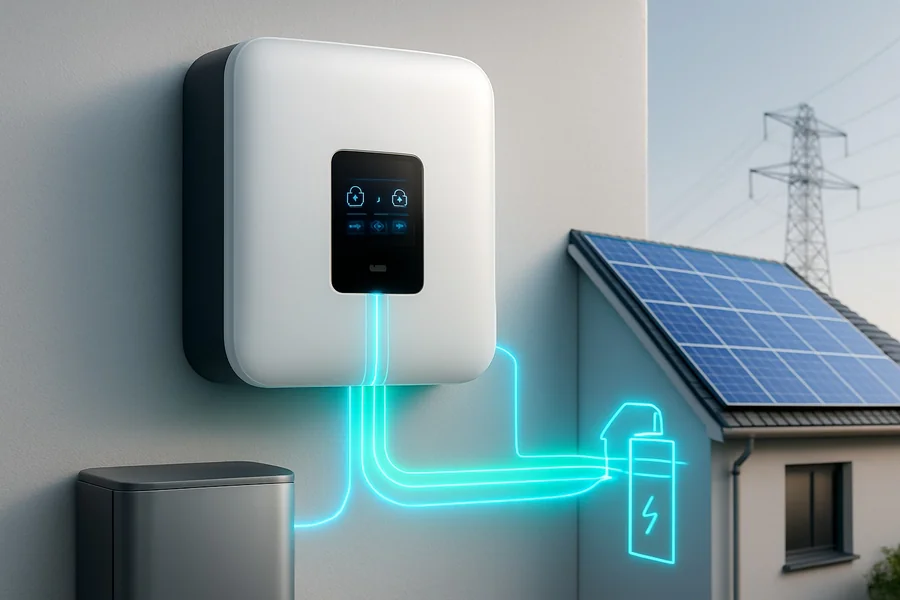
However, the world in the modern day has seen a global shift; consumers are now demanding more and more eco-friendly options. Something that keeps pollution safe while simultaneously providing energy security. This is when innovators decided to use the scorching summer of India to their advantage and introduced solar-powered inverter battery systems.
They are eco-friendly, and also come with a government subsidy, which substantially made the solar panel installation far cheaper and had a capacity range from modular units ranging from small home backups to multi-kWh systems. This is because customers value a lower carbon footprint over the lifecycle, and also a growing focus on recyclability and responsible disposal.
How These Innovations Benefit Today’s Homeowners
So, how do these innovations benefit homeowners?
| Benefit Category | Why It Helps Homeowners |
| Better Performance & Lower Long-Term Costs |
|
| Safer & More Reliable Backups |
|
| Better Fit for Modern Lifestyles |
|
Conclusion
The inverter battery, while not much on its own, has its own story to tell, and how it became a reliable partner in your home. The current smart options serve a great deal for the electric power conditions prevailing in certain parts of the country.

