
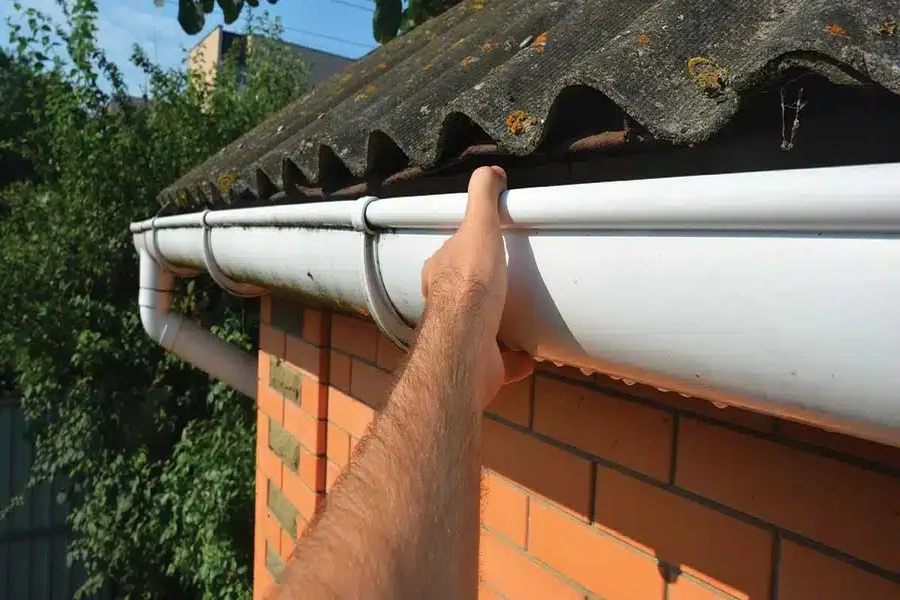
A gutter system looks simple from the ground: a few channels along the roofline and some downspouts to move water away. But gutter installation is one of those jobs where “close enough” can quietly turn into expensive damage. A small pitch error, a poorly placed downspout, or the wrong fasteners can send water behind fascia boards, stain stucco, ruin landscaping, and even contribute to foundation problems.
This matters even more in the Southwest. Rain gutters Las Vegas properties face intense, fast-moving storms that dump a lot of water in a short time. When a gutter system is installed incorrectly, those bursts expose every weakness—overflow points, backflow, seam leaks, and downspout bottlenecks.
Below are the most common gutter installation mistakes that cost homeowners (and building owners) thousands, plus practical ways to avoid them—whether you’re planning a new install, replacing an older system, or evaluating existing Residential Gutters Las Vegas setups.
Mistake #1: Incorrect Pitch (Slope) That Causes Standing Water
Gutters need a subtle slope so water flows toward the downspouts. If the pitch is too flat, water pools, debris settles, and corrosion speeds up. If it’s too steep, water rushes past the outlet during heavy rain and overshoots the downspout opening.
What it looks like
- Water remains in the gutter hours after rain
- Mosquito activity near the roofline (standing water)
- Visible “low spots” or sagging sections
Why it gets expensive
Standing water adds weight and stress to hangers, pulls gutters out of alignment, and causes overflows that rot fascia boards and stain exterior walls.
Tip: During an inspection, look for water lines or sediment buildup in long runs—both can signal improper pitch.
Mistake #2: Undersized Gutters and Downspouts for Local Rain Intensity
Sizing isn’t just about home size. It’s about roof area, roof pitch, and how quickly water will be delivered to the gutter during a storm. In areas with sudden downpours, undersized gutters can overflow even when they’re perfectly clean.
This is a frequent issue for homeowners upgrading Residential Gutters Las Vegas properties after discovering that builder-grade systems don’t handle peak flow well.
Common sizing problems
- Gutters too narrow for the roof’s runoff volume
- Too few downspouts for long gutter runs
- Downspouts placed far from valley runoff areas
Practical insight: If one corner of your home consistently overflows first, it may not be a “clog problem”—it may be a capacity problem.
Mistake #3: Poor Downspout Placement (and Bad Discharge Direction)
Downspouts should be placed where they can efficiently drain the system and discharge water safely away from the building. A downspout that dumps water next to the foundation can create erosion, pooling, and moisture intrusion—especially during repeated storm cycles.
Watch for these red flags
- Downspouts ending right at the base of the wall
- Splash blocks missing or positioned incorrectly
- Water carving channels in soil or gravel
Tip: Discharge should direct water away from the foundation line. If your property has drainage constraints, that’s when it helps to consult a gutter company las vegas for proper water-management planning.
Mistake #4: Over-reliance on Seams and Caulk (Instead of Proper Design)
Seams are natural weak points. The more seams, the more opportunities for leaks—especially in high-heat environments where expansion and contraction happen daily.
A common mistake is trying to “seal the problem away” with caulk rather than reducing seams or correcting alignment. Caulk fails over time, and leaks return—often worse than before.
Better approach
- Use longer continuous runs where possible
- Ensure proper overlap and fastening at corners
- Avoid forcing pieces to fit when the fascia line is uneven
Mistake #5: Wrong Hanger Spacing and Fastener Choice
Hangers and fasteners don’t just hold gutters up—they keep them in the correct position under load. If hangers are spaced too far apart, the gutter can sag, creating low spots where water and debris collect. If fasteners aren’t appropriate for the fascia material, sections can loosen over time.
Why it costs thousands
Sagging gutters lead to:
- Overflow and fascia rot
- Detached sections in high winds
- Water behind stucco and trim
- Damage to roof-edge materials
Quick check: If you can see dips or waves when viewing the gutter line from an angle, hanger spacing or fastening may be an issue.
Mistake #6: Ignoring Roof Details Like Valleys, Drip Edge, and Flashing
Roof valleys concentrate water flow. If gutter placement doesn’t account for valleys, you get localized overflow—often the same corner every storm.
Also, if the drip edge and flashing details aren’t working with the gutter, water can run behind the gutter rather than into it. That’s how you end up with hidden rot behind the fascia and paint failure on trim boards.
Practical ways to reduce risk
- Make sure valleys feed into high-capacity sections
- Confirm drip edge directs water into the gutter
- Keep gutters aligned with the roofline (no gaps behind)
Mistake #7: Treating Commercial Systems Like Residential Systems
For business owners, gutter mistakes scale fast. Commercial Gutters often serve larger roof areas with more runoff volume. If a system isn’t designed correctly, overflow can impact entrances, signage, walkways, loading zones, and even indoor areas near exterior walls.
Common commercial-specific mistakes include:
- Too few downspouts for roof size
- Poorly planned discharge that creates slip hazards
- Materials that don’t match building requirements
- Skipping expansion considerations on long runs
A proper Commercial Gutter Installation plan considers water volume, safety, drainage pathways, and building code requirements—because the stakes are higher when public access is involved.
A Quick “Do This Before You Sign Off” Checklist
Whether you’re installing new gutters or reviewing a completed job, these steps can prevent major headaches:
- Run water through the system (hose test) and watch for overflow points
- Check for standing water after flow stops—pooling suggests pitch issues
- Verify downspouts discharge away from the foundation and walkways
- Inspect seams and corners for drips during active flow
- Look along the gutter line for waves or dips indicating sagging
If you’re also trying to reduce future clogs and maintenance, learning about gutter protection options can help you understand how different systems support cleaner, more consistent flow.
About Southwest Seamless Rain Gutters
Southwest Seamless Rain Gutters provides professional gutter installation, repair, and drainage solutions for residential and commercial properties throughout Las Vegas. Specializing in seamless gutter systems, proper pitch alignment, downspout planning, and long-term water management, the team focuses on preventing common installation mistakes that lead to costly structural damage. Whether upgrading an aging system or planning a new install, Southwest Seamless Rain Gutters helps ensure gutters are built to handle sudden desert downpours while protecting roofs, fascia, foundations, and landscaping.
Conclusion: The Install Matters as Much as the Gutter
Most costly gutter problems don’t start with a dramatic failure—they start with small installation shortcuts: a flat pitch, a missing downspout, a sagging run, or water discharging in the wrong place. Over time, those “minor” mistakes can lead to fascia rot, foundation issues, exterior staining, landscaping damage, and avoidable repairs.
In a climate where rain gutters Las Vegas homes and buildings must handle sudden heavy runoff, correct installation isn’t optional—it’s protection. If you’re planning upgrades or evaluating existing gutters, focus on pitch, capacity, fasteners, roofline integration, and downspout strategy. Getting those details right is how you prevent the hidden costs that show up later.

