
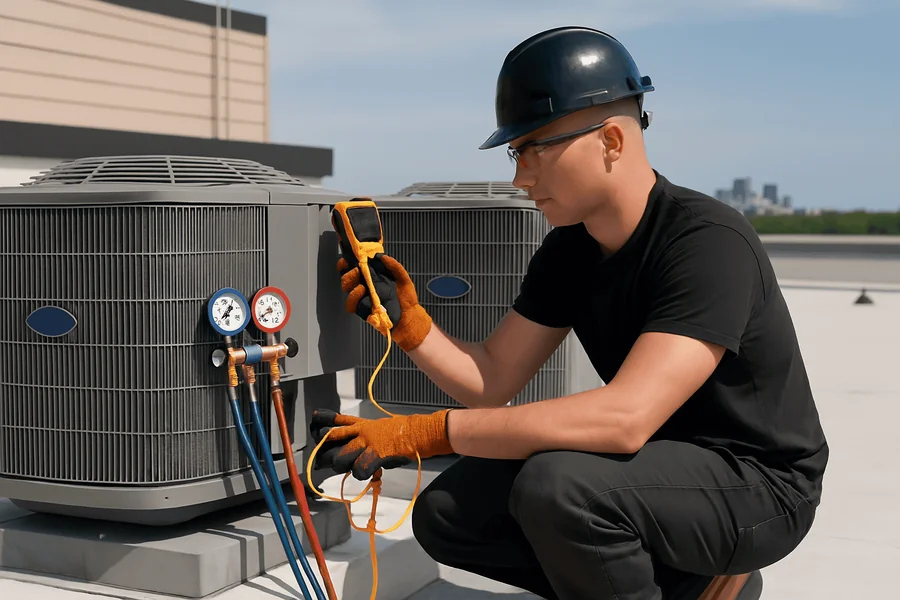
Running a successful restaurant requires balancing delicious food, excellent service, and a comfortable atmosphere. Behind the scenes, your heating, cooling, and airflow systems work incredibly hard to keep everything operating smoothly. Without proper temperature control, your kitchen staff struggles in extreme heat, and your dining guests leave due to discomfort. Securing reliable HVAC services for restaurants in Red Deer is essential to keep your business operating at peak performance. When harsh Alberta winters strike or summer heat waves roll in, a failing system quickly leads to lost revenue. Proper maintenance ensures your commercial space remains safe, compliant, and inviting year-round.
What Makes Reliable HVAC Services for Restaurants in Red Deer Vital?
Restaurants face unique climate control challenges that standard commercial spaces never encounter. An active kitchen generates massive amounts of heat, smoke, and airborne grease. At the same time, your dining room needs to remain cool, calm, and fresh.
Standard air conditioning units simply cannot handle the heavy load required by a busy food service establishment. You need specialized commercial systems designed specifically to balance extreme temperature differences. Finding reliable HVAC services for restaurants in Red Deer ensures your equipment matches the specific demands of your building footprint and customer volume.
A properly calibrated system maintains a perfect thermal boundary between the back of house and the front of house. This keeps the dining area pleasant while pulling excess heat away from the cooking line. Without expert installation and servicing, your business risks unhappy customers and exhausted employees.
Mastering Restaurant Ventilation and Airflow
Proper ventilation forms the backbone of any safe commercial kitchen. Exhaust hoods pull dangerous smoke, grease particles, and intense heat away from the cooking stations. However, pulling air out of the building creates a negative pressure environment if you do not replace that air.
Make-up air units work directly alongside your exhaust systems to pump fresh air back into the building. If these two systems fall out of sync, you will notice heavy doors slamming, unpleasant drafts, and cooking odors drifting into the dining room.
Expert technicians know exactly how to balance this airflow to create a neutral pressure environment. They measure the exact volume of air entering and exiting your facility. Balancing this pressure keeps your environment comfortable and prevents your heating and cooling equipment from overworking.
Keeping Commercial Kitchen Requirements in Check
Food service establishments must adhere strictly to local building codes and health regulations. Health inspectors and fire marshals regularly check your ventilation systems to ensure they meet strict commercial kitchen requirements. Failing an inspection can result in immediate closure and heavy fines.
Your exhaust hoods, ductwork, and fire suppression systems all tie into your overall HVAC infrastructure. Grease buildup inside poorly maintained ducts poses a severe fire hazard. Regular professional cleaning and maintenance keep your business compliant with all safety standards.
Professional technicians monitor your safety switches, check exhaust fan belts, and ensure grease traps function correctly. Staying proactive with these commercial requirements protects your staff, your customers, and your physical property from catastrophic events.
The Link Between Refrigeration and HVAC Efficiency
Your commercial kitchen relies heavily on walk-in coolers, freezers, and prep-line refrigeration to keep ingredients safe. These large cooling units generate significant heat as their compressors work to keep the internal temperatures low. This exhaust heat dumps directly into your kitchen environment.
Your HVAC system must work harder to remove the heat generated by your refrigeration equipment. If your air conditioning struggles, your coolers must work harder, creating a dangerous cycle of inefficiency. Working with experts like McMullen’s Refrigeration & Heating helps you align both systems so they operate harmoniously without driving up utility costs.
Proper placement of exhaust vents and strategic cooling zones prevent your equipment from burning out prematurely. When your heating, cooling, and refrigeration systems work together, your entire kitchen operates much more efficiently.
Enhancing Indoor Air Quality for Diners and Staff
Indoor air quality directly impacts how people perceive your restaurant. Diners do not want to smell frying oil or heavy garlic when they first walk through your doors. Furthermore, poor air quality leads to respiratory irritation and fatigue for your kitchen staff.
High-quality HVAC systems use advanced filtration to scrub the air of particulates, allergens, and odors. Regularly replacing these heavy-duty commercial filters keeps the air smelling fresh and clean. It also stops microscopic grease particles from settling onto your dining room tables and floors.
A well-maintained system regulates humidity levels alongside temperature control. Controlling humidity prevents mold growth in damp areas and stops condensation from dripping onto food prep surfaces. Clean air creates a superior dining experience that keeps guests returning.
Preventing Costly Breakdowns with Preventative Maintenance
Restaurant margins are notoriously tight, making unexpected repair bills highly stressful. When an air conditioning unit fails on a busy Friday night, you risk losing your entire dining crowd. Emergency repair calls also cost significantly more than routine maintenance visits.
Implementing a preventative maintenance schedule is the smartest way to protect your equipment investment. Technicians catch worn belts, failing motors, and low refrigerant levels long before they cause a complete system failure.
Routine checkups extend the overall lifespan of your expensive rooftop units and exhaust fans. By addressing small wear-and-tear issues early, you keep your equipment running reliably throughout the busiest seasons of the year.
Boosting Energy Efficiency to Protect Your Bottom Line
Heating and cooling account for a massive portion of a restaurant’s monthly overhead. Older, poorly maintained systems consume significantly more electricity and natural gas to produce the same results as newer, optimized units.
Cleaning coils, lubricating moving parts, and calibrating thermostats directly reduce your monthly energy consumption. Technicians can also install programmable thermostats that lower energy usage during your closed hours.
Investing in energy-efficient upgrades often qualifies businesses for local rebates and tax incentives. Ultimately, an optimized system lowers your carbon footprint while putting more money back into your operating budget.
Conclusion
Maintaining a comfortable, safe, and efficient environment is critical for any successful food service business. Your heating, cooling, and ventilation systems protect your equipment, ensure staff safety, and keep your guests happy. Ignoring these systems leads to costly breakdowns, poor indoor air quality, and uncomfortable dining experiences. Securing reliable HVAC services for restaurants in Red Deer gives you the peace of mind to focus on what you do best—serving great food. By prioritizing preventative maintenance, balancing your airflow, and optimizing your energy usage, you build a stronger, more profitable restaurant that thrives in any season.

