
The printing industry has always been a landscape of innovation. From the traditional screen printing presses to modern Direct-to-Garment (DTG) machines, the quest for faster, more versatile, and high-quality printing has never stopped. Today, a new technology is making waves: Direct-to-Film printing. Combining vibrant colors, durability, and versatility, DTF printing is reshaping how businesses and creatives approach custom apparel and merchandise.
What is DTF Printing? A Simple Explanation
DTF printing is an advanced method that prints designs onto a special film, which is then transferred to fabric using adhesive powder and heat. Unlike DTG, which prints directly onto garments, DTF allows you to print on a wide range of fabrics—including cotton, polyester, blends, and even materials that are difficult to print with traditional methods.
The process is straightforward but innovative:
- Print the Design: The design is printed onto a PET film using specialized DTF inks.
- Apply Adhesive Powder: A hot-melt adhesive powder is applied to the printed film.
- Cure the Powder: The powder is cured to make it ready for transfer.
- Heat Transfer: The design is transferred from the film to the fabric using a heat press.
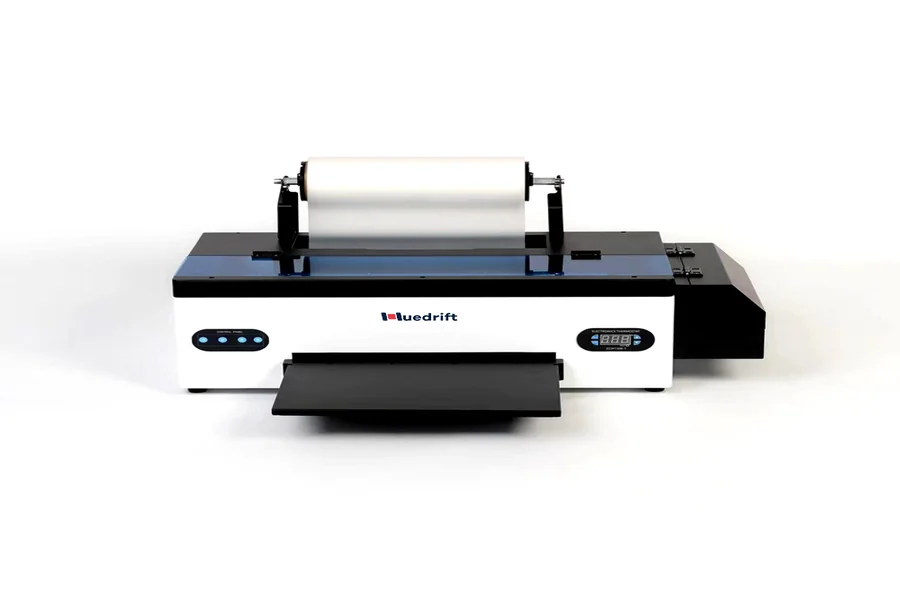
Huedrift Pro Max DTF Series make this process in vibrant, long-lasting prints that feel soft and smooth on the garment—an advantage over some other printing techniques.
Why DTF Printing is a Game-Changer
DTF printing isn’t just another method—it’s an innovation that addresses many challenges of traditional printing:
- No Pretreatment Needed: Unlike DTG printing, many fabrics do not require pretreatment. This reduces preparation time and chemical usage.
- Versatility Across Fabrics: Cotton, polyester, nylon, blends—you name it. DTF can handle materials that other printing technologies struggle with.
- High-Resolution, Vibrant Colors: DTF delivers sharp, detailed prints with bright colors that last through repeated washes.
- Cost-Effective for Small Runs: Screen printing is expensive for small batches, while DTF enables on-demand printing with minimal setup.
- Durable and Wash-Resistant: The heat-cured adhesive ensures designs stay intact and vibrant even after many washes.
In short, DTF combines the best of speed, quality, and flexibility—a trio that has historically been difficult to achieve in apparel printing.
Applications and Use Cases of DTF Printing
DTF technology is not limited to t-shirts. Its versatility opens doors for a variety of applications:
- Apparel: Custom t-shirts, hoodies, sweatshirts, and more.
- Merchandise: Tote bags, hats, and promotional items.
- Small Businesses: On-demand printing allows small brands to offer personalized products without maintaining large inventory.
- Creative Projects: Artists and designers can print complex, colorful designs without worrying about fabric type limitations.
Businesses adopting DTF often report faster turnaround times, reduced waste, and greater creative freedom—making it ideal for both established brands and emerging entrepreneurs.
DTF vs. Other Printing Methods
Understanding how DTF compares to other printing methods highlights its advantages:
| Feature | DTF Printing | DTG Printing | Screen Printing | Sublimation |
| Fabric Compatibility | Wide range | Mostly cotton | Limited | Mostly polyester |
| Color Vibrancy | High | Medium | High | Medium-High |
| Durability | Excellent | Good | Excellent | Medium |
| Setup Cost (Small Runs) | Low | Medium | High | Medium |
| Pretreatment Needed | Rarely | Often | No | Yes |
| Production Speed | Fast | Medium | Medium | Fast |
From this comparison, it’s clear why DTF is gaining traction—offering the flexibility and quality that many businesses need, without the limitations of older technologies.
Challenges and Considerations
While DTF is revolutionary, it’s not without its learning curve:
- Equipment Costs: Initial investment in DTF printers and heat presses can be significant.
- Material Supply: Adhesive powders and films must be sourced reliably.
- Skill Development: Operators need to learn proper curing and transfer techniques to ensure optimal results.
Despite these challenges, the benefits of DTF often outweigh the initial hurdles, particularly for businesses focusing on customization and on-demand production.
The Future of Printing is DTF
DTF printing represents a major step forward in the evolution of printing technologies. With ongoing improvements in ink quality, films, and automated systems, it’s poised to become a standard for custom apparel and merchandise.
For small businesses owner, creatives, and large brands alike, DTF opens new opportunities: more efficient production, higher-quality prints, and the freedom to experiment with materials and designs that were previously impractical.
As more companies adopt DTF, the industry is likely to see further innovation—bringing us closer to faster, more versatile, and environmentally conscious printing solutions.
Conclusion
In a world where personalization and quality are increasingly important, DTF printing stands out as a game-changing innovation. It combines speed, versatility, and vibrancy, making it ideal for a wide range of applications from small-scale custom projects to large commercial operations.
For anyone in the printing industry—or for creative entrepreneurs looking to offer unique products—DTF represents an exciting frontier. Whether you’re printing t-shirts, tote bags, or specialty merchandise, this technology is redefining what’s possible in the world of printed apparel.

