
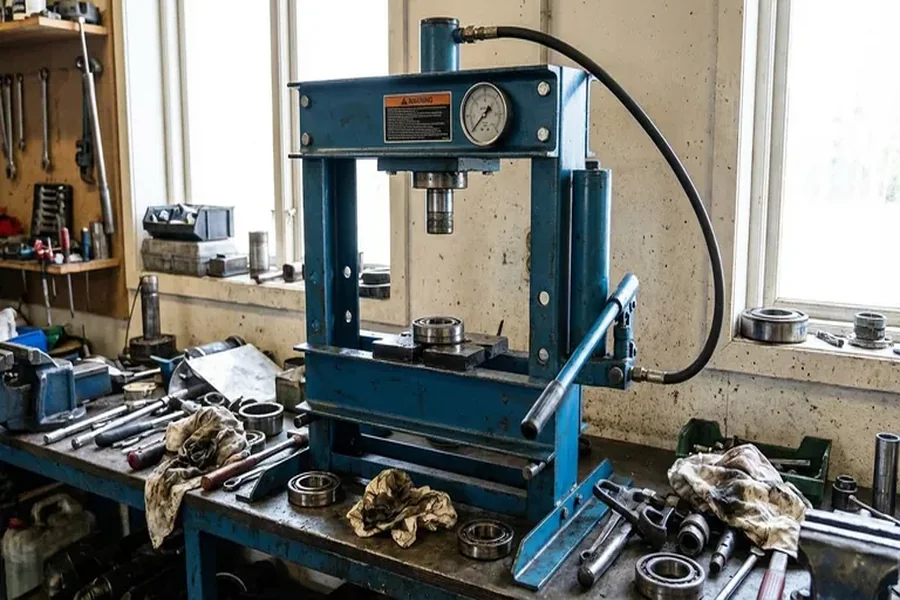
Selecting the right hydraulic press machine requires careful consideration of numerous factors. One of those key aspects is determining the right tonnage for a specific application. It will impact the time taken and the safety and quality of the end products created. Using the incorrect tonnage puts your tooling at risk of damage, wastes material, and costs you more in maintenance. A proper understanding of the procedure and the prerequisites can go a long way in making an assured decision.
Understanding Hydraulic Press Tonnage
Tonnage is a measure of the force exerted by the hydraulic press during use. The press uses this force to form, bend, or cut metal or other material as needed. Diverse applications requiring various force levels for the best results. Having the correct tonnage ensures that the machine is working properly and safely without imposing any strain on the parts. In a heavy-duty hydraulic press machine system, this force level plays a direct role in how smoothly different forming tasks are carried out.
Assessing Material Type and Thickness
Determining the associated tonnage based on material characteristics. High-strength, harder materials like steel or high-end alloys generally will require more force over a softer substance such as Al or plastic. The thickness of the material also influences the required pressure. Thicker sections will demand greater pressure to achieve the required form or slice, and thinner items are prone to breakage if force is applied.
Evaluating Application Purpose
Different purposes will demand different strengths. The pressure requirements can vary depending on the specific application, such as deep drawing, forming, punching, and embossing. Deep drawing typically requires more force, as it involves tensile deformation of the material to achieve a new geometry. However, for just simple punching work, it may require less force to operate depending upon the material and hole size. Understanding the purpose of the paver will help you determine the appropriate tonnage range.
Considering Tooling and Die Requirements
The size and type of tooling or dies used with the press also influence the required force. If bigger dies spread the load over a larger surface, this may affect tonnage as well. Correct tool matching to the capacity of the machine guarantees an exact result and extends both the working life of the press and the tools. Too weak will cause incomplete operation, while too high will destroy the equipment.
Factoring in Production Volume
Selection of hydraulic press tonnage depends on production requirements. For high-volume operations, it helps to have equipment slightly above capacity so that it consistently stays at optimum performance levels over time. Of course, the forces applied by machines must be specific and well-suited for handling different items, which is what keeps downtime to a minimum and maintenance levels sustainable. But for shorter production runs, choosing a press that matches the exact need can help keep expenses down and yield quality results.
Accounting for Safety and Efficiency
The safety of hydraulic-press equipment is the first consideration. Choosing a model with an appropriate force prevents danger to the user and the machine. Pushing a press beyond its rated limits leaves the user at risk of breakage and possible injury. On the other hand, overutilizing a machine with additional capacity can lead us to use more energy than we should and increase operating expenses. Balancing safety with efficiency ensures operations remain disruption-free.
Calculating Tonnage with Formulas
You can utilize numerous formulas to estimate the tonnage required for various applications. In most punching calculations, the perimeter of the shape and the thickness of the material are combined with the shear strength of the material. Industry-standard practices or generic online calculators can be a good starting point. Such a foray into calculations assists users in steering clear of guesswork and helps in dynamic decision-making.
Conclusion
Selecting the tonnage of a hydraulic press machine requires careful consideration of the material type, thickness, application, tooling requirements, and safety. To bring this level of uncertainty down, established methods for the calculation of the required force and consultations with experts have to be resorted to when selecting the plant. It allows you to plan for future business needs and thus maximize the value of the investment.

