
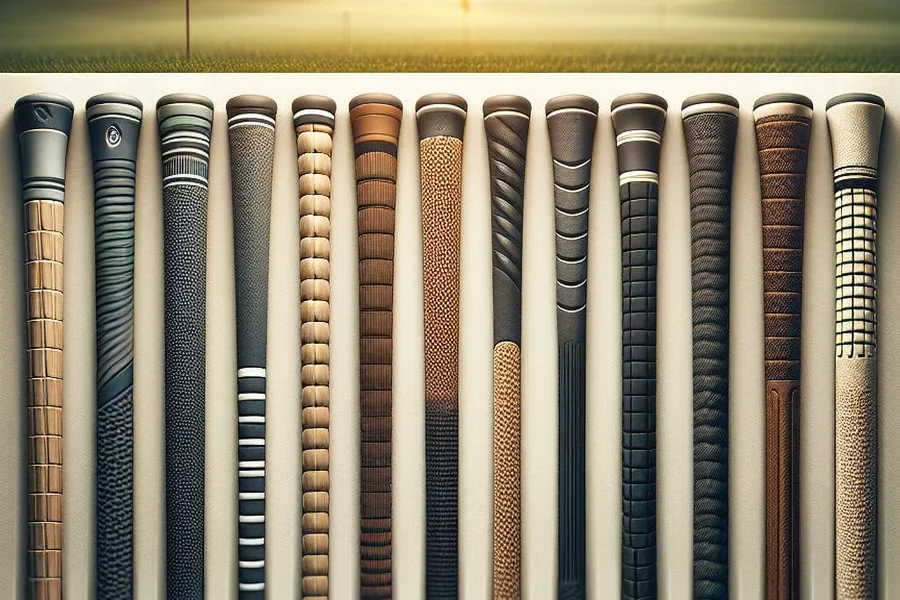
Most golfers spend considerable time choosing the right club but give little thought to what their hands actually touch. Grip texture directly affects pressure, control, and consistency throughout a round. Gaucho-style grips have earned serious attention from players looking for a tactile upgrade over conventional rubber. The surface pattern is genuinely different, and once a golfer understands why, the performance reasoning becomes hard to ignore.
What Defines the Gaucho Texture
The gaucho pattern is multi-directional, which immediately sets it apart from the uniform ribbing found on most standard rubber grips. Rather than repeating a single design across the surface, the gaucho layout creates varied contact points that engage different parts of the hand simultaneously. Pressure spreads more evenly across the fingers and palm as a result.
Golfers exploring golf grips for sale in this style tend to notice the difference the moment they pick one up. The surface interacts with both gloved and bare hands in a way that standard rubber rarely achieves. That tactile distinction influences how the club feels at address and carries through the entire swing, turning grip selection into a genuinely performance-driven choice.
How It Compares to Standard Rubber Grips
Standard rubber grips perform reasonably well in dry conditions, but moisture changes that picture quickly. Sweat, humidity, and light rain reduce friction on a smooth surface, which forces golfers to compensate by tightening their hold.
The deeper texture on gaucho grips maintains reliable contact even when conditions are less than ideal. For players in warm or humid climates, that consistency across a full round is a practical advantage, not just a preference.
Surface Depth and Density
Gaucho grips sit noticeably deeper than standard rubber in terms of surface relief. That depth creates firmer engagement with skin and glove material without requiring the golfer to squeeze. The grip holds its position under light pressure, which is precisely where most rubber options begin to feel unreliable.
The density of the raised elements matters too. They are packed closely enough to prevent slipping but spaced with enough separation to avoid pressure buildup during long sessions.
Material Composition
The compound used in gaucho grips blends firmness with measured flex. Standard rubber tends to fall to one extreme or the other, either compressing too easily under pressure or feeling rigid enough to dull feedback. The gaucho material occupies a middle ground that preserves feel while holding its shape consistently across repeated swings.
The Tactile Advantage for Swing Control
Grip pressure is one of the least discussed but most influential factors in shot consistency. A textured surface gives the hands precise feedback about where contact is occurring, which helps golfers make micro-adjustments without consciously analyzing their hold.
Smooth rubber grips tend to mask small shifts in hand position. A more detailed surface makes those shifts detectable earlier. Over multiple rounds, that kind of feedback builds more reliable grip habits in a natural, low-effort way.
Comfort Over Extended Rounds
Hand fatigue is a real performance factor, particularly in the back nine. A grip that holds securely without demanding active squeezing reduces cumulative strain on the hands and forearms. Players often notice this benefit most on longer rounds or in warm weather when grip security would otherwise require more physical effort.
The varied surface also minimizes hot spots, which are localized pressure points that cause irritation over time. Distributing contact across a broader area keeps comfort consistent from the first hole through the last.
When to Consider a Gaucho-Style Grip
Warm-climate golfers are the most obvious candidates, but the benefits extend further. Players who notice their club feel shifting mid-round, or who frequently re-grip between shots, often find that the gaucho texture addresses the root cause. Those moving on from worn rubber grips also tend to report a noticeable improvement in control after making the switch.
The style suits players who value tactile feedback over a neutral grip feel. It is not the right fit for everyone, but for golfers who have felt limited by standard rubber, it offers something meaningfully different.
Conclusion
Gaucho-style golf grips bring a texture profile that standard rubber has never quite matched. The surface depth, material balance, and contact distribution work together to produce a grip that holds up across real playing conditions. For golfers prioritizing consistency and hand comfort, this is a practical upgrade worth evaluating seriously. Better grip performance is one of the more straightforward ways to support more accurate, repeatable ball-striking across every round.

