
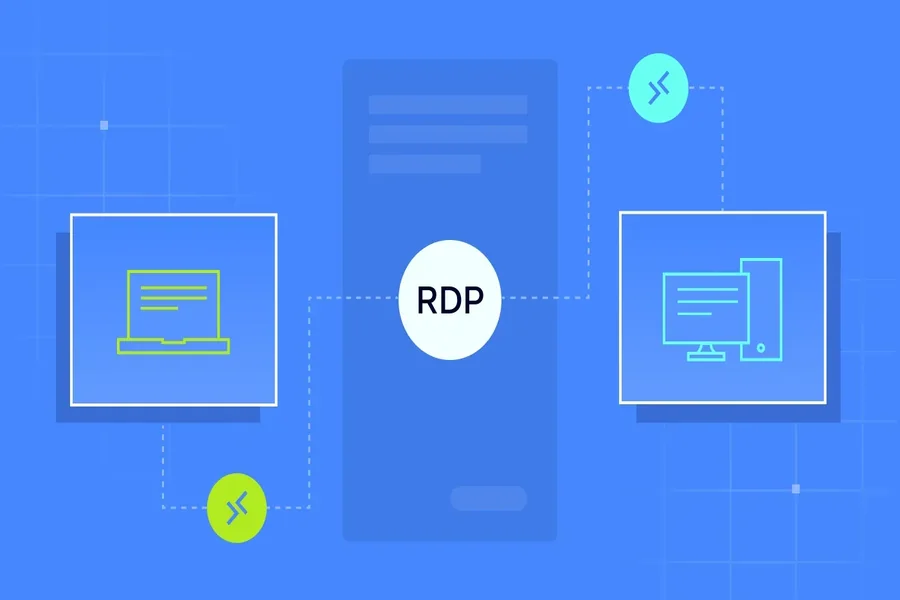
A multitude of technical processes happen in milliseconds when someone at home opens a laptop and connects to a file server in a corporate data center hundreds of miles away. By understanding how those processes work, IT professionals, security architects and informed users can learn about which aspects of remote access are by nature reliable – and where vulnerabilities lurk. This guide details the fundamentals of remote access mechanisms as the protocols which transfer data, encryption securing that data and methods by which connections are initiated and maintained.
What Protocols Actually Do
A Protocol is a standard that defines how devices communicate with each other. Protocols define how a client machine initiates contact with a remote resource, how the two parties authenticate each other, how data is formatted for transmission and how the session comes to an end in terms of remote access.
Various remote access technologies depend on different protocol stacks. The choice of protocol directly influences performance, security and compatibility. Some are network layer, others transport layer and more still application layer. Often there are multiple protocols layered on top of each other, where each protocol is responsible for its part in the communication.
For organizations and individuals seeking to understand how remote access works at a deeper technical level, grasping these layered relationships is the foundation. The user experience of clicking a button and connecting to a remote desktop is the surface; beneath it lies a carefully orchestrated sequence of handshakes, verifications, and data exchanges.
Tunneling and the Transport Layer
A concept known as tunneling is used for many remote access connections. In tunneling, data packets are taken from one network protocol and can be encapsulated inside packets of another protocol. This establishes a secured channel, or tunnel, within a public or untrusted network and permits the private traffic to traverse without being viewable by anyone eavesdropping along the way.
Internet Protocol Security (IPsec) is the most commonly used tunneling protocol utilized for enterprise remote access. Location IPsec is a network layer suite and provides authentication, integrity checking and encryption of IP packets. IPsec can operate in two modes: transport mode, whereby only the payload of each packet is encrypted, and tunnel mode that encapsulates whole IP packets into new outer packets. In a tunnel mode, which is generally used for VPN connections forms an extension of your private network to the public internet.
The other protocol often deployed is SSL/TLS (Secure Sockets Layer or Transport Layer Security). TLS is the protocol that underlies HTTPS web traffic at the application level, operating above the transport layer. For remote access, TLS-based VPNs and remote desktop connections rely on the TLS handshake to negotiate a secure session prior to sending application data. The TLS handshake is the process in which cryptographic algorithms are negotiated, certificates exchanged for authentication, and session keys derived that will encrypt future data flow.
The Role of Encryption in Safeguarding Data in Transit
Encryption changes readable data into a ciphertext which cannot be understood unless decrypted with the right key, This is encryption in simplest forms. Encryption has two related functions in remote access: preventing third parties from being able to read traffic that they may capture, and verifying the integrity of the information passed back and forth between the computers.
Symmetric encryption is the cornerstone of modern remote access implementations, responsible for securing almost all data and first steps into making this even more widespread were made. Due to its use of the same key for encryption and decryption, symmetric encryption can operate at a fast enough speed to accommodate uninterrupted input streams without adding noticeable latency. For this, AES (Advanced Encryption Standard) with a key length of 128 or 256 bits is the de facto standard used. Its immunity to brute-force attacks coupled with hardware acceleration on modern CPUs making it ideally suited to the throughput needs of remote access sessions.
The main problem with symmetric encryption is the distribution of the shared key itself. Before two parties who have not previously communicated can secure a symmetric key over an untrusted channel, they must first do something else. Asymmetric, or public-key, cryptography (which is recorded in the mathematical form of two keys—one that any user can use to encrypt data [the public key] and one that only the holder can decrypt [the private key]) fits the bill nicely in this scenario. At the connection handshake both parties can mutually negotiate on a common symmetric key using asymmetric cryptography this is done securely while their communications are being monitored.
The IETF specification covering the architecture for IP-layer security protocols describes the technical framework underlying these mechanisms. Reviewing the IPsec security architecture provides insight into how authentication, integrity, and confidentiality are formally defined and applied at the network level.
The Connection Establishment Process
There are a few phases before the user can interface with the remote system and this means that creating a connection involves multiple interactions. Learning about these stages also clears up why some connections take so long and gives clues as to where the connection might fail.
Network reachability is the first aspect in this process. A network path must exist for the remote gateway or server to be reachable by the client. DNS resolution is a process that converts what you entered to an IP address (which commonly only displays as a series of numbers). Routing tables is how packets get from the client to the destination. Nahroot a connection is even allowed by firewalls and network access controls.
The second phase is authentication. In other words, the remote server must confirm that the client is who they say they are before access is granted. It could be username and password credentials, certificate based or multi-factor authentication tokens or a combination of these for the verification. The server also presents its own certificate to the client, enabling the client to prove that they are connected to, in fact, their desired destination and not another entity posing as it.
The third phase for session negotiation. They agree on the precise cryptographic algorithms to be used, derive the session keys that will protect the connection, and define all of the parameters of this session. For TLS-based connections this occurs in the sequence of messages during the TLS handshake, from ClientHello, ServerHello, through certificate exchange and key agreement to Finished before any protected application data can be exchanged.
The TLS 1.3 specification, which defines the current version of this protocol, formalizes each of these steps. Consulting the TLS protocol specification provides a precise account of how the handshake works, what each message contains, and how session keys are derived from the agreed-upon parameters.
Session Maintenance and Termination
When a remote access session is in place, the protocols underlying it still operate in the background. In my case, messages are being sent over time intervals, keepalive messages indicating that each side is still here and the connection exists. In the event of a network interruption, the protocol stack will identify that connection lost and try to reconnect or orderly close it.
The session security does not stop at just the initial handshake. Fast forward secrecy: many protocols implement this feature, meaning that session keys are generated freshly for every connection derived independently from any long-term secret material. If an attacker captures encrypted traffic and later acquires a server’s private key, forward secrecy ensures that they could not decrypt earlier sessions, since the session keys were never saved and only exist in memory while a secure connection is live.
Termination is equally important. A well-closed session contains some sign that both parties are explicitly ending the connection. This defeats an attack in which a malicious party attempts to inject data into a session after the legitimate parties have concluded that it has terminated.
Frequently Asked Questions
Today, what protocols are used most often for enterprise remote access?
Local area IPsec and TLS are the two most popular protocol families deployed in wide. Many of the most common VPN implementations are based off of IPsec, while TLS is often the basis for web-based remote access portals and even some modern remote desktop solutions. The decision between them is often driven by the use case, existing infrastructure and performance requirements.
Why do we use two types of cryptography in encryption for remote access
This means asymmetric cryptography to get the keys exchanged securely at the beginning of a session and symmetric cryptography to encrypt (and, by extension, decrypt) the actual data stream once those keys have been agreed on. This yields the advantages of publickey cryptography without the performance burden that would arise from encrypting continuous data with it.
But first, what is forward secrecy?… And why does it matter for remote access?
Forward secrecy is an attribute of a cryptographic protocol that derives session keys so they cannot be retroactively compromised even if long-term credentials used in establishing the secure connection are later compromised. It is also significant regarding remote access because it reduces the amount of damage an attacker can do with captured encrypted traffic, rendering past sessions immune to future key exposure.

