
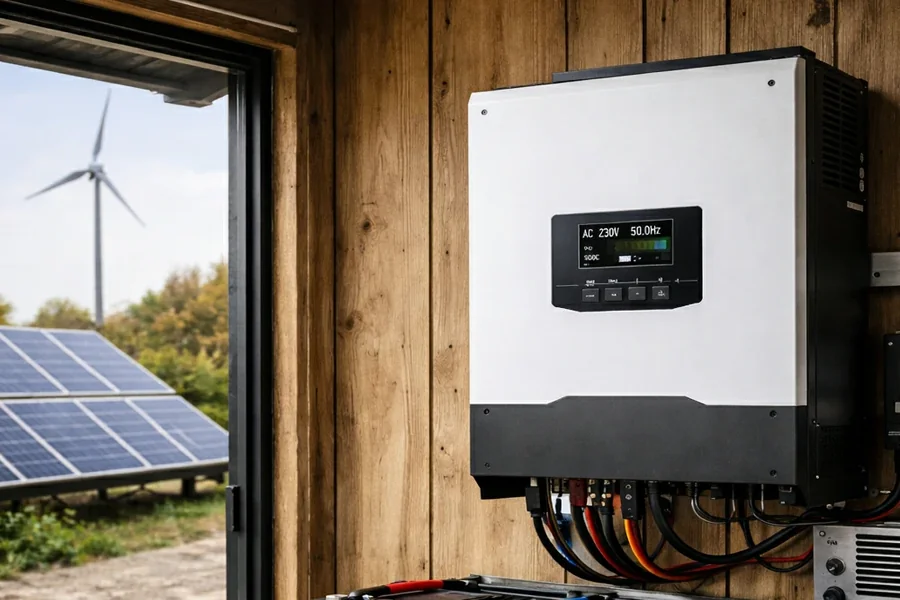
Solar power can support far more than lights, fans, and mobile chargers. With the right system design, it can also operate refrigerators, washing machines, water pumps, air conditioners, and kitchen appliances.
However, heavy appliances place greater demands on a solar setup. Their power needs may rise sharply during start-up, while some appliances require a stable electricity supply throughout operation. An off-grid solar inverter can manage these loads safely, provided every system component is selected and installed correctly.
Understanding appliance demand, inverter capacity, battery output, and essential protections can help homeowners plan a dependable system. Let us examine what makes heavy appliance operation safe and practical.
What Determines Safe Operation for Heavy Appliances?
A well-designed off-grid solar inverter can safely run heavy home appliances. However, its rated output must match the combined power demand of all connected equipment.
The system must also provide enough additional capacity for appliances with motors or compressors. Refrigerators, air conditioners, and water pumps usually draw higher power when starting than during normal operation.
This brief rise is known as start-up surge or inrush current. If the inverter cannot manage it, the appliance may not start properly. The inverter may also trigger overload protection and shut down.
Therefore, safe operation depends on the complete solar system, not only the inverter rating.
Key Factors That Support Safe Heavy Appliance Operation
Running heavy appliances safely requires more than selecting an inverter with a high power rating. Each part of the solar setup must work together to manage appliance demand, start-up surges, daily energy use, and electrical risks.
The following factors can help create a balanced and dependable system.
Understand Running Watts and Starting Watts
Every appliance has a running wattage, which indicates its normal power consumption. Some appliances also have a higher starting wattage.
A refrigerator may consume moderate power during regular use. However, its compressor needs considerably more power for a few moments during start-up. Air conditioners and water pumps create similar demands.
Homeowners should record both ratings before selecting equipment. The inverter must support the appliance running load and its temporary starting surge.
Starting watts are particularly important for:
1.Air conditioners
2. Refrigerators and freezers
3. Washing machines
4. Water pumps
5. Mixers and grinders
6. Power tools
7. Vacuum cleaners
Ignoring this difference can lead to repeated shutdowns, reduced performance, or unreliable appliance operation.
Choose the Right Inverter Capacity
The capacity of an off-grid solar inverter is usually stated in watts, kilowatts, or volt-amperes. The selected capacity should exceed the total expected load.
Begin by listing every appliance that may operate simultaneously. Add their running wattages and identify the appliance with the highest starting demand. This calculation provides a practical estimate of the required capacity.
For example, consider a home operating a refrigerator, water pump, television, lights, and fans together. The inverter must support their combined running load and the temporary surge created when the pump starts.
A reasonable reserve helps the system manage changing demand without constantly operating at maximum capacity. It may also support future additions to the household load.
However, simply buying a much larger inverter does not guarantee better performance. The batteries, cables, panels, and protection devices must support its capacity.
Check Whether the Battery Bank Can Supply the Load
The battery bank plays a central role in an off-grid system. Solar panels generate energy, but batteries often supply the immediate power needed by appliances.
A correctly sized off-grid solar inverter cannot perform reliably when connected to an undersized battery bank. Heavy loads can draw substantial current, especially in low-voltage battery systems.
Battery capacity affects how long an appliance can operate. Battery discharge capability determines how much power it can provide at one time. Both factors require attention.
The planned depth of discharge, battery chemistry, voltage, and conversion losses also influence usable energy. A professional system calculation should account for each factor.
Select a Pure Sine Wave Inverter
Waveform quality matters when operating modern household equipment. A pure sine wave inverter produces electricity that closely resembles a standard mains supply.
For heavy or sensitive appliances, a pure sine wave off-grid solar inverter is generally the suitable choice. It supports smoother motor operation and reliable performance from electronic controls.
Air conditioners, refrigerators, washing machines, and variable-speed equipment may include sophisticated circuit boards. Stable output helps these components operate as intended.
Modified sine wave models may suit certain basic loads. However, they can be unsuitable for some motors, compressors, timers, and sensitive electronics. Homeowners should also check voltage, frequency, power factor requirements, and manufacturer recommendations before connecting an appliance.
Match the Solar Array to Daily Energy Use
Inverter capacity determines how much power the system can provide at once. Solar panel capacity influences how much energy the system can generate during the day.
A large inverter with an insufficient solar array may run heavy appliances temporarily. However, the batteries may not receive enough energy to replace what those appliances consume.
Estimate daily consumption in watt-hours or kilowatt-hours. Multiply each appliance wattage by its expected operating time, then add the results.
Solar generation varies with location, season, panel orientation, temperature, shading, and weather. The design should account for realistic local conditions rather than ideal laboratory output.
Running energy-intensive appliances during strong daylight can reduce battery dependence. It allows available solar generation to serve part of the load directly.
Build Essential Electrical Protection Into the System
A powerful off-grid solar inverter requires suitable electrical safeguards. These measures protect people, appliances, batteries, wiring, and other system components.
A professionally designed installation may include:
1. Correctly rated circuit breakers and fuses
2. Battery-side overcurrent protection
3. Suitable cable sizes and secure terminals
4. Earthing arrangements
5. Residual current protection
6. Surge protection devices
7. Safe battery isolation
8. Adequate inverter ventilation
9. Separate circuits for priority loads
A qualified solar installer or electrician should complete the system design and installation. Homeowners should never modify high-current DC wiring without appropriate training.
Practical Ways to Manage Heavy Appliance Loads
Careful load management can improve performance without compromising everyday comfort.
1.Avoid starting several motor-driven appliances at the same moment. Run washing machines, water pumps, and other flexible loads during strong solar-generation hours. Where practical, stagger their operating times.
2. Energy-efficient appliances can also reduce both running demand and daily battery consumption. Check actual product ratings instead of relying on broad appliance estimates.
3. Monitor the off-grid solar inverter for overload warnings, low-battery alerts, unusual temperature, or repeated shutdowns. These signs may indicate incorrect sizing, excessive demand, weak batteries, or unsuitable wiring.
Routine inspections can identify loose terminals, obstructed ventilation, cable damage, and battery issues before they affect performance.
Power Heavy Appliances With the Right System Design
An off-grid solar inverter can run heavy home appliances safely when the entire system works as one balanced unit. Inverter capacity, surge handling, battery output, solar generation, waveform quality, wiring, and protection must align with household demand.
Professional installation can further support safe operation through correct equipment selection and system coordination. Solar solution providers like Eastman Solar & Power Limited offer solutions designed around varied household energy needs.
With careful planning and responsible use, homeowners can confidently power demanding appliances while maintaining stable and dependable energy access.

