
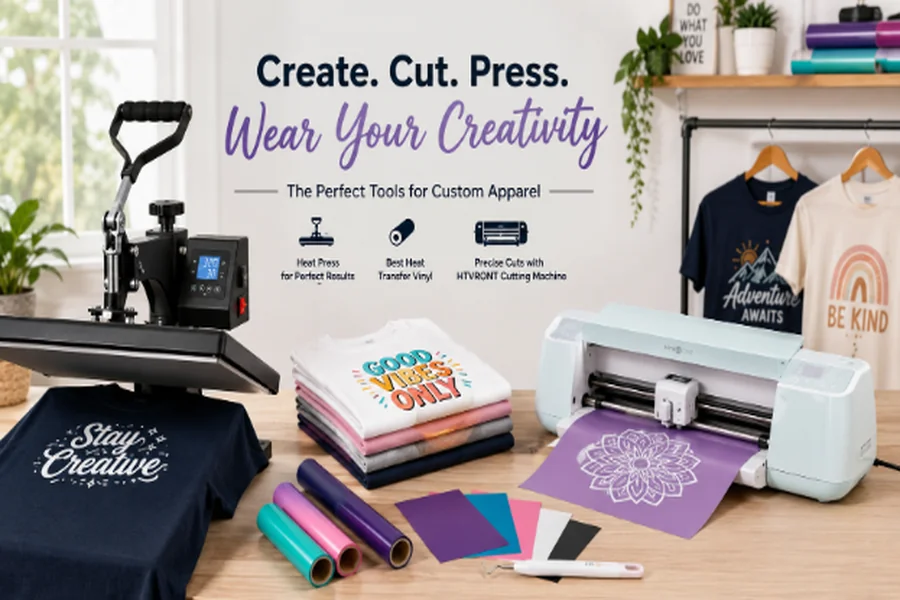
Custom clothing has become one of the most popular ways for small businesses, hobby creators, and even large brands to express creativity and build identity. From personalized t-shirts to branded uniforms, heat printing offers a simple and cost-effective way to produce professional-looking apparel without needing industrial-level equipment. What once required large-scale manufacturing can now be done at home or in a small studio with the right tools and a bit of practice.
At the center of this growing trend are three essential components: a reliable heat press machine for clothes, high-quality vinyl materials, and precise cutting equipment. When these elements work together, they create clean, durable, and visually appealing designs that can compete with store-bought products. Many beginners are surprised at how accessible this process has become, especially with modern tools designed for ease of use.
As demand continues to grow, more creators are searching for the best heat transfer vinyl and efficient cutting machines like the htvront cutting machine to improve their workflow. Understanding how each part of the process works is the key to producing long-lasting designs and avoiding common beginner mistakes.
Understanding heat printing and modern apparel customization
Heat printing is a technique that uses heat and pressure to transfer designs onto fabric. This process allows users to apply graphics, text, and logos onto clothing in a way that is both durable and visually sharp. Unlike traditional printing methods, it does not require complex machinery or large production spaces, making it ideal for small businesses and home users.
The popularity of heat printing has grown because it gives complete creative control. Designers can experiment with colors, fonts, and patterns without worrying about high production costs. Whether someone is creating personalized gifts or starting a clothing brand, this method offers flexibility and scalability.
Modern advancements have also made the process more accessible. Tools like a heat press machine for clothes provide consistent temperature and pressure, ensuring that each design bonds properly with the fabric. Combined with improved vinyl materials and digital cutting tools, heat printing has become a reliable method for producing professional results.
Choosing a heat press machine for clothes effectively
Selecting the right heat press machine for clothes is one of the most important decisions for anyone entering the custom apparel space. The machine is responsible for applying heat evenly across the design, which directly affects durability and finish quality. A poor-quality press can lead to uneven transfers, peeling designs, or faded prints over time.
When choosing a machine, users often consider size, temperature control, and pressure adjustment features. A stable and consistent heating system ensures that vinyl adheres properly to different types of fabrics, including cotton, polyester, and blends. For beginners, a simple clamshell design is often easier to use, while more advanced users may prefer swing-away models for greater precision.
Another important factor is long-term reliability. A good heat press machine for clothes should maintain consistent performance even after repeated use. This is especially important for small businesses that handle multiple orders daily. Investing in a dependable machine reduces production errors and increases customer satisfaction, making it a critical foundation for any apparel customization setup.
Working with best heat transfer vinyl for quality results
The quality of vinyl plays a major role in how the final product looks and lasts. Choosing the best heat transfer vinyl ensures that designs remain vibrant, flexible, and resistant to washing and wear. Poor-quality vinyl may crack or fade quickly, which can damage the reputation of a small business or reduce the lifespan of a personal project.
There are different types of heat transfer vinyl available, each suited for specific applications. Some are designed for stretchy fabrics, while others work better on cotton or polyester blends. Understanding these differences helps users select the right material for each project. Color options, texture, and finish also matter when aiming for a professional look.
Working with the best heat transfer vinyl also improves efficiency during the pressing process. High-quality vinyl cuts cleanly, weeds easily, and adheres smoothly under heat. This reduces production time and minimizes errors, especially when creating detailed designs or bulk orders. When combined with a reliable heat press machine for clothes, it significantly enhances overall output quality.
Role of design tools and HTVRONT cutting machine in workflow
Before any design reaches the heat press stage, it must be accurately cut and prepared. This is where digital cutting tools play a vital role. The htvront cutting machine has become a popular choice among beginners and small business owners due to its precision and user-friendly interface. It allows creators to convert digital designs into physical vinyl cuts with minimal effort.
Accuracy in cutting is essential because even small mistakes can affect the final product. Clean edges and precise shapes ensure that designs align properly during the pressing process. A machine like the htvront cutting machine helps reduce manual errors and speeds up production, especially when working with intricate patterns or lettering.
When paired with quality design software, cutting machines open up endless creative possibilities. Users can experiment with complex graphics, layered designs, and personalized artwork. This level of control makes it easier to produce professional-grade apparel without outsourcing production, giving creators more independence and profit potential.
Step by step process of creating custom clothing at home or small business
The process of creating custom clothing begins with design preparation. This stage involves selecting or creating artwork that will be applied to the fabric. Many users start with simple designs before moving on to more complex compositions as they gain experience. The design is then sent to a cutting machine, where it is precisely cut into vinyl material.
Once the design is cut, the next step is weeding, which involves removing excess vinyl from around the design. This step requires patience and attention to detail, as it directly affects the final appearance. After weeding, transfer tape is often used to move the design onto the fabric in the correct position.
The final stage involves using a heat press machine for clothes to apply heat and pressure. This step bonds the vinyl to the fabric, creating a permanent design. After pressing, the garment is allowed to cool before removing the transfer layer. When done correctly, the result is a smooth, durable, and professional-quality product suitable for personal use or sale.
Common mistakes, maintenance, and long term success tips
One of the most common mistakes beginners make is using incorrect temperature or pressure settings. Even small variations can affect how well the vinyl adheres to the fabric. Another frequent issue is rushing the weeding or alignment process, which can lead to misaligned or damaged designs. Taking time at each stage ensures better results and reduces material waste.
Proper maintenance of equipment is also essential. A heat press machine for clothes should be cleaned regularly and checked for consistent temperature output. Similarly, cutting blades in devices like the htvront cutting machine should be replaced when dull to maintain precision. Neglecting maintenance can lead to poor-quality output and increased production costs.
Long-term success in custom apparel depends on consistency, practice, and material selection. Using the best heat transfer vinyl ensures durability and customer satisfaction, while reliable tools improve workflow efficiency. As skills develop, creators can expand into more complex designs and larger production runs, turning a simple hobby into a profitable business.
Conclusion
Heat printing has transformed the way custom apparel is created, making it accessible to individuals and small businesses around the world. With the right combination of tools, including a dependable heat press machine for clothes, high-quality vinyl, and precise cutting equipment, anyone can produce professional-grade designs from a small workspace.
The key to success lies in understanding each part of the process and investing in reliable materials and machines. Choosing the best heat transfer vinyl ensures long-lasting results, while tools like the htvront cutting machine help maintain accuracy and efficiency throughout production.
As the industry continues to grow, opportunities for creativity and entrepreneurship are expanding. Whether for personal projects or business ventures, mastering these tools opens the door to a rewarding and scalable craft.

