
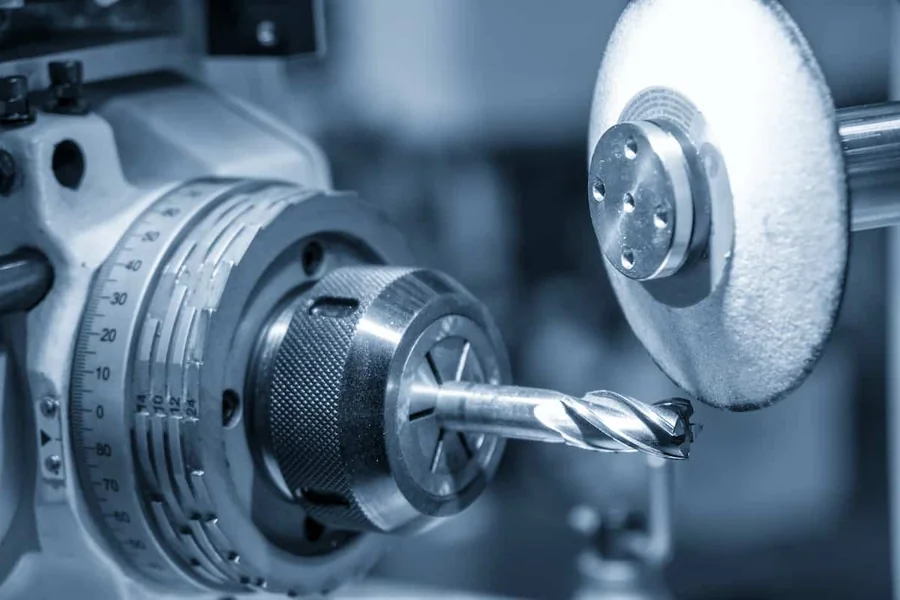
The concept of precision in manufacturing is fundamental to the production of superior, highly specific products across Australia. Cutting tools play a crucial role in this process, directly influencing the accuracy of production and productivity. In this post, we dive into both of these tools and how they add to precision, mentioning a few aspects that make them a sought-after combination in manufacturing.
Cutting tools are essential, directly related to the process of shaping other materials. They are employed to take additional details of a workpiece, producing precise dimensions and forms. These tools come in a wide variety, depending on the specific process, such as drilling, milling, or turning. The design and material of the tools help improve their performance. A quality cutting tool ensures consistent results in manufacturing operations.
Materials and Design
Material selection for cutting tools: Cutting tool materials tend to be a very, very important choice. High-speed steel plays ceramics because of their hardness and heat resistance. These substances keep the tool sharp and durable, even in the most extreme conditions. The geometry and construction of the tool contribute to effective cutting. Good design cuts back on the wear and keeps it functioning as new. Ausoptic provides high-quality tools designed for precision manufacturing applications.
Precision and Accuracy
Manufacturing accuracy relies on cutting tools generating repeatable and correct cuts. A good tool provides a better way and leaves less room for error, so parts that are made to exact specifications end up fitting together snugly without a lot of adjustment needed. The sharpness and stability of the tool play a direct role in the surface finish and dimensional accuracy of the product. This guarantees the unique fit between parts, thereby minimising any further adjustment or correction.
Technological Advancements
Technological advancements have played a key role in the evolution of cutting tool systems to a new level. New tools utilise CAD/CAM, which allows more precision than ever before. From laser-guided cutting to automated tool changers, innovations have improved efficiencies, virtually eliminating human error and accelerating production times. These innovations enable manufacturers to create intricate yet extremely precise parts.
Cost Efficiency
In manufacturing, it also saves costs, as exact pieces mean a lot less waste. Precision cutting minimises material wastage, since parts are produced to exact dimensions. This efficiency reduces the amount of rework or scrap that is necessary to recoup losses, thereby lowering production costs overall. Moreover, durable cutting tools reduce replacement and maintenance frequency.
Environmental Impact
Not only does the tool provide more accurate precision, but the manufacturing technique contributes to a more sustainable process. According to the Australian Government Department of Industry, Science and Resources, sustainable manufacturing practices are essential for reducing industrial environmental footprints. Manufacturers will be able to lessen their footprint by reducing wastage. More efficient tools often consume less energy, leading to fewer emissions. Such closeness to traffic in establishments suits the global step for ecological industrial actions.
Safety and Reliability
In a manufacturing environment, safety is a paramount issue. High-precision cutting tools also improve safety, thereby reducing the risk of defects leading to equipment failure or accidents. Reliable tools guarantee that machines run smoothly, and there is little to no downtime from a system failure. Such consistency not only safeguards the workforce but also streamlines the production process more efficiently.
Training and Skill Development
Skilled operators are required to utilise these advanced cutting tools. We offer training programmes to ensure that workers are able to use these tools effectively. Cutting tools used properly can function to their full capacity, resulting in favourable production results if there are skilled personnel available. With continuous learning and development, operators stay current with new technologies, which is key to maintaining accurate manufacturing.
Future Prospects
The future of techniques continues to develop, and so do welding and cutting tools. New materials and methods are also allowing more exact and effective control. Those who develop these innovations will remain dominant in the market, providing high-quality solutions for the modern consumer.
Conclusion
A cutting tool plays an important role in finding precision in manufacturing. They immensely contribute to shaping materials with precision, effortlessly. These tools are also important in cost-effectiveness, environmental protection, and safety, applicable in everything from material selection to technological development. The advancements in cutting tool technology will continue to improve manufacturing precision, delivering products that meet increasing demands on quality and performance as the industry evolves over time.

