
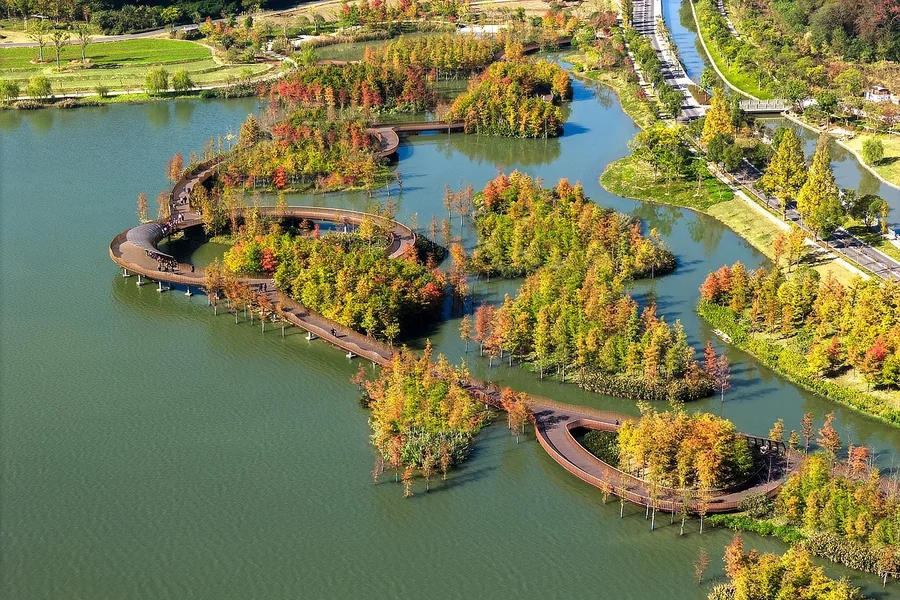
Successful habitat restoration requires more than planting and rebuilding. It depends on expertise, long-term vision, and tailored strategies grounded in science and structure. Through environmental design services, restoration teams bring precision, planning, and adaptability to evolving ecological challenges. Every restored site tells a storyof coordination, commitment, and resilient recovery.
Site Assessment And Mapping
Every project starts with detailed observation and spatial understanding.
- Evaluate physical landforms and terrain features
- Identify existing plant species and soil structure
- Assess water pathways and hydrology flow
- Map impacted zones and boundaries clearly
Site assessments are essential for directing effective actions. Teams make smart choices that help them reach their specific restoration goals without wasting time or money by studying the land’s shape, natural drainage, and soil activity.
Design Integration With Ecology
Ecological function is blended seamlessly with design strategies from the ground up.
- Prioritize natural hydrologic patterns and flow
- Create layouts that mimic local systems
- Use native species as a design tool
- Incorporate buffer zones into project boundaries
This step makes sure that restoration doesn’t feel forced. Combining design with ecology makes the site look and work better, which helps it grow in line with local systems.
Long-Term Restoration Planning
Proper planning transforms temporary efforts into enduring outcomes. Strategic vision is crucial.
- Set measurable recovery targets over time
- Define specific success benchmarks clearly
- Phase construction to support adaptive response
- Schedule routine follow-ups after initial recovery
Adding environmental design services to these structured plans is particularly important because they make sure that the schedules for technology fit with the natural cycles of recovery in the environment. Milestones aren’t just dependent on dates; they’re also based on variables that show how well the environment is doing and how strong it is.
Managing Water Movement Effectively
Hydrology must be restored to support plant and land recovery efforts.
- Redirect stormwater to recharge soil naturally
- Minimize unnatural runoff through graded contours
- Use detention areas for controlled flow
- Prevent erosion with stabilized channels
Water may be both a danger and a resource. Taking care of it properly keeps the site from becoming damaged in the future and helps the soil stay moist and the plants live. Proper flow builds structural integrity and supports biological revival.
Structural Features That Support
Physical structures offer long-term durability and function across restored sites.
- Install berms to manage slope transitions
- Build swales to guide stormwater across terrain
- Use logs and boulders to form barriers
- Reinforce banks with anchored root layers
Well-designed features are subtle yet vital. They reduce risk, increase success rates, and support system self-repair. These structures enhance site recovery without drawing attention from natural elements.
Vegetation As A Foundation
Plants stabilize soil, improve function, and guide ecological succession naturally.
- Choose native species adapted to local soil
- Group plants by functional roles and coverage
- Space species to encourage growth balance
- Use plant layering to support wildlife
It’s not random that plants are chosen; they’re part of the design. The appropriate choice improves microclimates, helps pollinators, and stops erosion. Over time, careful planting brings back the function of a habitat with little upkeep.
What Makes A Project Successful?
Success depends on consistency, structure, and long-term alignment with design goals.A restoration project achieves its purpose when it restores balance without needing repeated interventions. The presence of key species, stable structures, and improved water behavior signals strong progress.
A Path Toward Lasting Impact
Restoration projects are not just built; they evolve through time. With direction from precise planning and experienced execution, they develop into self-sustaining systems. The role of environmental design services is not limited to installation; it extends through every phase, building a path toward results that last well beyond initial implementation. The future of recovery lies not in control, but in carefully guiding nature back to form.

