
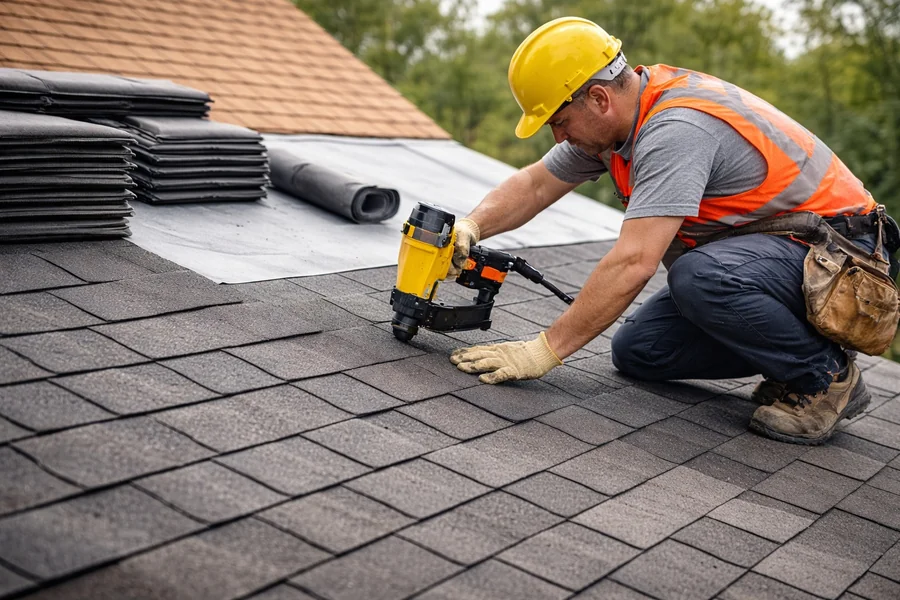
A roof going up looks simple from the driveway. Crews on ladders, shingles stacked, a dumpster out front — done in a couple days, easy. What actually happens underneath that surface is a lot more involved than most people realize. Anyone looking into roof installation lakeland quickly finds out there’s a huge gap between a rushed job and one done right, and that gap shows up years later as leaks, warped decking, or shingles that lift in the first big storm. Picking materials, prepping the deck, flashing every seam properly — none of that is optional, even if it’s tempting to skip corners nobody will notice right away.
Why the Deck Underneath Matters More Than the Shingles
Nobody gets excited about plywood, but it’s the part that actually holds everything together. Rotted or soft decking under old shingles doesn’t fix itself once fresh shingles go on top — it just hides the problem for a while. A good crew pulls up the old material, checks every section of the deck, and replaces anything soft or water-damaged before laying a single shingle. Skip that step and the roof looks fine for maybe a year, then starts sagging in spots nobody expected. It’s the boring part of the job, but it’s also the part that decides how long the whole thing lasts, twenty years or five.
Choosing Materials That Fit Florida’s Weather
Standard asphalt shingles get the job done and cost less upfront, but they wear faster under constant sun than they would somewhere cooler. Metal roofing costs more going in, yet it shrugs off wind and heat in a way asphalt just can’t match, which matters when storms roll through every summer like clockwork. Underlayment matters just as much as the visible layer — a cheap one lets moisture creep through during driving rain, while a better synthetic barrier keeps water out even if a few shingles get damaged later. Color counts too. Darker shingles soak up heat and can push attic temperatures higher, driving up cooling costs during the hottest months.
What a Proper Installation Timeline Looks Like
A single-family home usually takes one to three days for a full tear-off and reinstall, weather depending. Day one is tear-off and deck inspection — that’s when hidden damage shows up, sometimes pushing the timeline out if repairs are needed. Day two is usually underlayment and the bulk of the shingle work. A final day handles flashing, ridge caps, and cleanup, since nails left in the yard are a real hazard for kids and pets. Rushing any of these stages to finish faster is where corners get cut, and it’s usually the flashing around chimneys and vents that gets shortchanged first.
What Happens After the Roof Goes Up
Installation day isn’t the finish line, even though it feels that way once the dumpster’s gone. Fresh shingles still need periodic checks, especially after the first big storm season, since settling and thermal expansion can loosen fasteners nobody would notice by just glancing up. Working with a roof maintenance company in lakeland after installation catches small issues, like a lifted shingle or a clogged valley, before they turn into leaks that void whatever warranty came with the job. Manufacturers usually require some proof of upkeep anyway, so skipping maintenance can quietly cancel coverage without anyone realizing it until a claim gets denied.
Questions Worth Asking Before Signing a Contract
Getting three quotes is standard advice for a reason, but the real value comes from comparing what each quote actually includes, not just the bottom-line number. Does it cover deck repair if rot turns up? What’s the warranty on labor versus materials, and who’s on the hook if something fails in year three? Asking for proof of licensing and current insurance takes a few minutes and avoids a legal headache later if a worker gets hurt on the property. A contractor who answers all this clearly, without dodging or padding the estimate, is usually the one worth hiring over someone who just quotes the lowest price.
A freshly installed roof is only as good as the work nobody sees — the deck underneath, the flashing around every seam, the underlayment quietly doing most of the real protecting. Materials matter, but so does the timeline, and so does what happens after installation wraps up. Cutting corners anywhere in that chain shows up eventually, usually as a leak nobody expected. Asking sharp questions before signing, and staying on top of upkeep afterward, is what actually makes a roof last.
CTA: A roof done right the first time saves money for years afterward. High Tower Roofing handles installation and upkeep with straight pricing and real accountability. Call 863-510-5477 to get a solid estimate and start the project off on the right foot.
FAQs
Q: How long does a freshly installed roof typically last before it needs replacing?
A: Asphalt shingles usually hold up for 20 to 25 years, while metal options can stretch past 40, depending on how well the roof gets maintained along the way.
Q: What should homeowners in Lakeland, FL expect to pay for a full roof job?
A: Costs in Lakeland, FL vary widely based on square footage and material choice, but getting several written estimates gives a realistic price range before committing to any contractor.

