
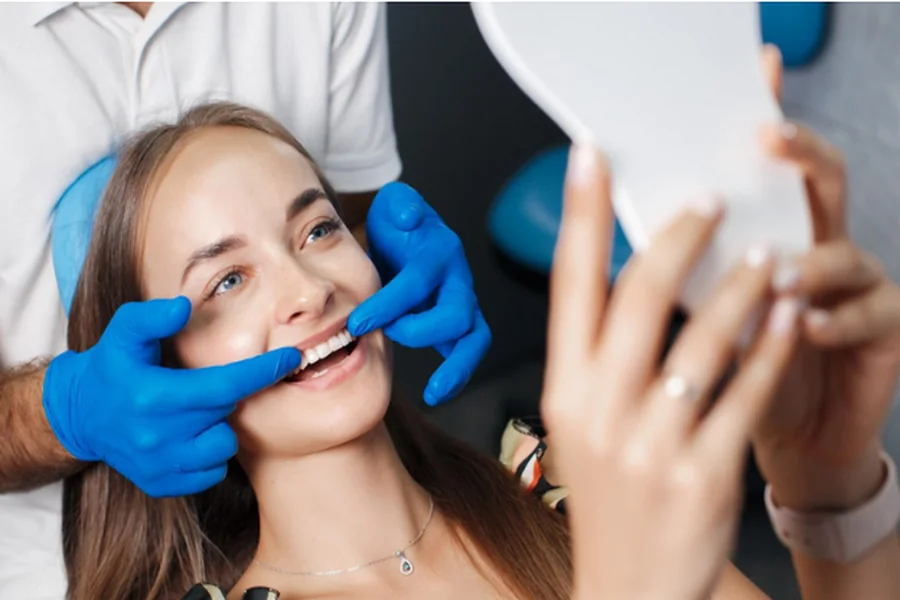
Most people who brush twice a day assume their teeth are well looked after. In many ways they are — but brushing alone leaves significant gaps. Plaque accumulates in areas a toothbrush cannot reliably reach, and once it mineralizes into tartar, no amount of home care can remove it. Professional cleaning addresses exactly what home hygiene cannot, and it remains one of the most impactful preventive steps available in modern dentistry. If you’re looking for a dental clinic in Fort Lauderdale, understanding what professional cleaning involves — and why it matters — is a useful starting point.
What is professional teeth cleaning?
Professional teeth cleaning, clinically known as prophylaxis, is a structured procedure performed by a dental hygienist or dentist to remove deposits from the tooth surfaces that home care leaves behind. The process begins with scaling — the careful removal of plaque and hardened tartar from above and below the gumline using either hand instruments or an ultrasonic scaler, which loosens deposits through gentle vibration and water irrigation. Polishing follows, using a mildly abrasive paste that removes surface stains and leaves the enamel smooth. In many appointments, a fluoride treatment is applied at the end to strengthen the enamel and provide additional protection against decay.
The procedure is routine, well-established, and performed millions of times annually without complication. For most patients with healthy gums, it is entirely comfortable and takes between 45 and 60 minutes.
Why brushing alone is not enough

A toothbrush cleans the broad, accessible surfaces of teeth effectively. What it cannot consistently reach are the contact points between teeth, the narrow pockets where the gum meets the tooth, and the areas along the gumline where plaque tends to accumulate most aggressively. Flossing addresses some of these gaps, but even diligent flossing leaves residual biofilm in locations that are simply inaccessible with home tools.
The critical problem is what happens when plaque is not fully removed. Within 24 to 72 hours, undisturbed plaque begins to absorb minerals from saliva and hardens into calculus — commonly called tartar. Calculus cannot be removed by brushing or flossing. Once formed, it adheres firmly to the tooth surface and can only be eliminated through professional instrumentation. It also creates a rough surface that attracts further plaque accumulation, accelerating the cycle.
Even patients with excellent home hygiene routines develop some calculus over time, particularly in areas like the back of the lower front teeth where salivary glands are most active. Professional cleaning is not a reflection of inadequate brushing — it is a necessary complement to it.
Key benefits of professional cleaning
Regular professional cleaning delivers several distinct benefits, each addressing a different aspect of oral health.
-
Plaque and tartar removal
Eliminating calculus stops it from serving as a platform for further bacterial colonization, directly reducing the risk of both decay and gum disease in the areas most vulnerable to them.
-
Prevention of gum disease
Gingivitis — the reversible early stage of gum disease — is driven by bacterial buildup at the gumline. Left unaddressed, it progresses to periodontitis, which causes irreversible bone loss and is a leading cause of tooth loss in adults.
-
Fresher breath and aesthetics
Persistent bad breath is most commonly caused by bacterial activity in the mouth. Professional cleaning removes the bacterial deposits responsible, while polishing lifts surface staining from coffee, tea, and food.
-
Early problem detection
Every cleaning appointment includes a dental examination. Issues identified early — a small cavity, early bone loss, a crack — are consistently easier and less costly to treat than the same problems discovered months later.
How often should you get professional cleaning?
The standard recommendation for adults with healthy gums is twice yearly — once every six months. For most people, this interval is sufficient to prevent significant tartar accumulation and catch any developing issues before they become complex.
Certain factors may make more frequent cleaning advisable: a history of gum disease, a tendency to build up calculus quickly, diabetes or other systemic conditions that affect gum health, smoking, or orthodontic appliances that make thorough cleaning more difficult. Your dental provider is best placed to recommend a schedule based on your individual circumstances rather than a generic rule.
Does professional cleaning hurt?
For patients with healthy gums, professional cleaning is typically painless. The scaling instruments produce vibration and pressure, and the experience is generally described as mildly uncomfortable rather than painful. For patients who have not had a cleaning recently, or who have some degree of gum inflammation, there may be mild sensitivity during scaling around the gumline — this is normal and resolves quickly.
For patients who experience significant dental anxiety, most clinics offer numbing gel for the gums, and the procedure can be paced to allow breaks. Communicating any concerns to your hygienist before starting makes a meaningful difference to the experience.
What happens if you skip it?
Skipping professional cleaning does not mean nothing changes — it means changes accumulate unobserved. Tartar builds up around the gumline, inflammation becomes chronic, and the early stages of gum disease progress silently. By the time symptoms appear — sensitivity, visible recession, bleeding that becomes persistent — the condition has typically advanced beyond the point where simple cleaning resolves it.
A routine cleaning appointment costs a fraction of what gum disease treatment, root canal therapy, or a dental implant requires. The financial case for prevention is straightforward: treating problems early is consistently less expensive than treating them late.
Beyond the clear economic advantages, regular maintenance preserves the biological structural integrity of your teeth and supporting tissues. According to this expert dentist in Fairfield NJ, allowing a professional to clear away hardened deposits twice a year ensures that microscopic decay never gets the chance to develop into a severe, painful infection that threatens your long-term oral health.
How to maintain results after cleaning
Professional cleaning resets the baseline — it removes everything that has accumulated and gives the gum tissue a chance to recover. Maintaining that baseline is a home responsibility. Brushing for two full minutes twice daily, flossing every evening, and using a fluoride toothpaste addresses the ongoing accumulation of plaque between appointments. An antibacterial rinse adds a useful supplementary layer, particularly for patients prone to gum inflammation.
Diet also plays a role. Frequent exposure to sugars and acids — including fruit juice, carbonated drinks, and snacks between meals — sustains the conditions in which plaque bacteria thrive. Reducing that frequency, staying well hydrated, and eating a diet that includes calcium-rich foods all contribute to a healthier oral environment. Returning for your next scheduled cleaning on time ensures that any new buildup is addressed before it can cause lasting effects.
Conclusion
Consistent brushing and flossing are essential. They are also incomplete on their own. Professional cleaning removes what home care cannot, identifies problems before they escalate, and provides the kind of regular professional oversight that keeps small issues from becoming large ones. It is not a luxury or an optional extra — it is a core component of maintaining oral health across a lifetime.
If it has been more than six months since your last cleaning, or if you have never had one, now is a good time to schedule. A single appointment can clarify exactly where your oral health stands and set you up for the months ahead. Book a consultation at Millennium Aesthetics — and give your teeth the professional attention that brushing alone cannot replace.
