
There is a particular kind of stress that comes with realizing your roof may need to be replaced. It is not the sharp, immediate stress of a burst pipe or a broken furnace where the problem is obvious and the solution is straightforward. It is a slower, more uncertain kind of concern that builds as you notice things that do not look quite right, hear a contractor use the word replacement for the first time, and begin to grasp the scale of the decision and the investment that lies ahead. For Austin homeowners navigating that moment, having a thorough and honest guide to what roof replacement actually involves, how to evaluate your options, and how to find the right contractor to trust with the project can make an enormous difference in both the quality of the outcome and the experience of getting there.
For homeowners who have already begun searching for roof replacement near me after an inspection revealed more deterioration than expected, the range of contractors and material options available in the Austin market can feel overwhelming without a clear framework for evaluating what actually matters. Understanding what a qualified Austin Roofing Company brings to a replacement project, from honest initial assessment through material selection guidance and professional installation oversight, is the foundation of a decision-making process that produces outcomes homeowners are genuinely satisfied with across the full lifespan of the new roof rather than just in the weeks immediately following installation.
This article covers the full arc of a residential roof replacement project in Austin from the initial signs that replacement may be necessary through material selection, contractor evaluation, the installation process itself, and the steps that protect your investment after the new roof is in place. Every section is written with Austin’s specific climate demands and roofing market realities in mind, because the decisions that produce the best outcomes here are not always the same as the decisions that would be right in a different market with different weather and different contractor dynamics.
Recognizing the Point Where Repair No Longer Makes Financial Sense
The transition from repair thinking to replacement thinking is one that many Austin homeowners resist for understandable reasons. Replacement costs more, takes longer, and requires a level of decision-making and contractor engagement that a simple repair does not. But a roof that has crossed the threshold into genuine systemic failure does not respond to repairs the way a structurally sound roof does, and continuing to invest repair dollars into a failing system is a financial pattern that delays the inevitable while adding cost to the total project without delivering any meaningful extension of the roof’s protective capacity.
The signals that indicate replacement rather than repair is the appropriate path forward include widespread shingle deterioration distributed across the full roof surface rather than isolated damage in specific sections, multiple active leak points that are not traceable to single contained failures, significant decking deterioration discovered beneath surface materials during an inspection, and a combination of age and accumulated weather stress that has brought the roof to the end of its realistic service life for Austin’s demanding climate conditions. When a thorough professional inspection reveals two or more of these conditions simultaneously, the replacement conversation deserves to be taken seriously rather than deferred in favor of another round of targeted repairs that will not address the underlying systemic condition driving the recurring problems.
How Austin’s Climate Shapes the Replacement Decision Timeline
Austin’s weather does not give roofing systems the extended grace periods that milder climates sometimes allow between the point where deterioration begins and the point where failure becomes unavoidable. The intensity of UV radiation from spring through fall, the sustained heat that pushes roof surface temperatures well above ambient air temperature during summer, the frequency of hailstorm activity across Travis County and the surrounding areas, and the thermal stress of temperature swings between seasons all accelerate the progression from early deterioration to functional failure in ways that make the replacement timeline in Austin shorter than manufacturer ratings and general industry averages might suggest.
A roof that might deliver 28 years of service in a cooler, less storm-prone climate may reach the end of its realistic Austin service life at 20 to 22 years, and the final years of that lifespan in Central Texas tend to involve increasing repair frequency and declining weather resistance that make the cumulative cost of continued maintenance approach the replacement cost relatively quickly. Understanding this compression of the effective lifespan helps Austin homeowners make replacement decisions at the right time rather than either rushing unnecessarily or waiting past the point where continued repair investment makes financial sense for their specific situation.
Choosing the Right Roofing Materials for Austin’s Specific Demands
Material selection for a roof replacement in Austin deserves more deliberate attention than many homeowners give it, because the performance differences between material options are more consequential in Austin’s demanding environment than they would be in a more forgiving climate. The right material choice for your home depends on a combination of your home’s structural characteristics, your long-term ownership plans, your budget framework, and a clear-eyed assessment of what Austin’s weather will demand from whatever goes on your roof over the next several decades.
Architectural asphalt shingles with Class 4 impact resistance ratings have become increasingly popular across Austin’s residential market as hailstorm frequency and severity have made impact resistance a genuine priority rather than an optional upgrade. Class 4 rated products perform measurably better than standard shingles in actual hail events, and many Texas insurance carriers offer premium discounts for homes with Class 4 rated roofing systems that can offset a meaningful portion of the higher product cost over time. For homeowners whose Austin neighborhoods have experienced repeated hail events, the long-term financial case for impact-resistant shingles is worth calculating carefully before defaulting to a standard product on price alone.
Metal roofing systems offer the longest available service life of any commonly installed residential roofing material in the Austin market, with properly installed standing seam systems routinely performing for 40 to 50 years with minimal maintenance requirements. The higher upfront investment is real, but when calculated across a lifespan that may be twice that of an asphalt shingle system and factored against energy savings from reduced cooling load, insurance discounts for impact-resistant metal systems, and the elimination of the second replacement project that an asphalt roof will eventually require, the total ownership cost comparison often favors metal significantly for homeowners with long-term Austin ownership plans.
What to Look for When Evaluating a Roofing Contractor for Your Replacement Project
Finding the right contractor for a full roof replacement requires more thorough vetting than a minor repair project, because the stakes are proportionally higher and the decisions made during contractor selection will affect the quality of the outcome you live with for the next two to three decades. Start the evaluation process by verifying that every contractor you are seriously considering carries current general liability insurance and workers compensation coverage with policy limits appropriate for a project of your roof’s scope and value.
Ask for manufacturer certifications for the specific roofing products being proposed, because certified installers have been trained on correct installation techniques for those products and their certification status typically unlocks extended warranty terms that provide significantly stronger long-term protection than the standard warranty available through non-certified contractors. A contractor who cannot provide current insurance documentation and manufacturer certification should not advance further in your evaluation regardless of how competitive their pricing appears on the surface.
The Questions That Reveal Whether a Contractor Is Truly Qualified
Beyond the baseline credential verification, the conversations you have with prospective contractors during the estimate and proposal process reveal information about their expertise and professional approach that documentation alone cannot provide. Asking the right questions and listening carefully to the quality and specificity of the answers is one of the most valuable things you can do during the contractor selection process for a replacement project of this scale and consequence.
Ask your prospective roofing contractor Austin homeowners have found that experienced contractors will speak confidently and specifically about how they handle the decking inspection and repair process once existing materials are removed, because this is one of the most consequential steps in a replacement project and one of the most commonly minimized by contractors who are optimizing for speed and margin rather than quality outcomes. A contractor who commits to a fixed price before the deck condition has been assessed is either planning to skip that assessment or planning to add significant charges once work is underway and your negotiating position has weakened considerably.
Ask about the underlayment products being specified and why those products are the right choice for Austin’s climate. Ask about the flashing installation approach at all penetration points and transitions, because flashing failures are one of the leading causes of post-replacement leaks and the quality of the flashing work is directly related to the installer’s attention to detail and material knowledge. Ask about the project supervision structure and whether a qualified project manager will be present on site during active installation rather than simply dropping by periodically to check progress.
Understanding What the Replacement Process Involves Day by Day
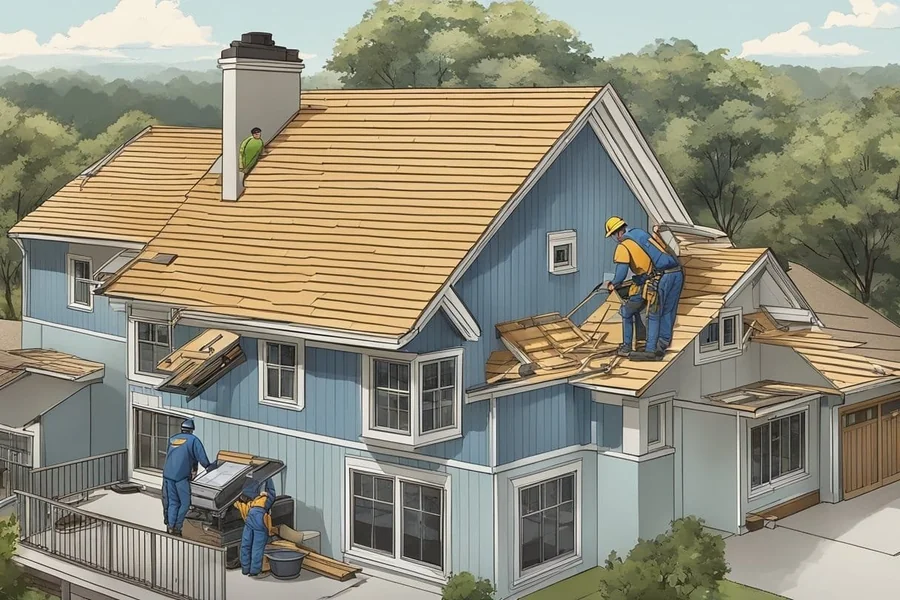
A residential roof replacement in Austin typically unfolds across one to three days depending on the size and complexity of the roof, the materials being installed, weather conditions during the installation window, and the crew size the contractor deploys on the project. The project begins with complete tear-off of all existing roofing materials down to the deck surface, which should be followed immediately by a thorough deck inspection before any new materials are installed.
Soft spots, delaminated sections, rot, and areas of moisture damage in the decking need to be identified and repaired with appropriate replacement materials properly secured to the framing below. Underlayment installation follows deck preparation and repair, with quality synthetic underlayment products offering meaningfully better moisture protection and durability than traditional felt paper alternatives. Flashing installation at all ridges, eaves, rakes, valleys, and penetration points follows underlayment, and new flashing should be installed at every point rather than reusing existing components whose sealants have aged along with the materials being replaced.
How to Protect Your Investment After the New Roof Is Installed
The decisions that protect a new roof investment begin before the installation crew leaves your property and continue across the full lifespan of the new roofing system. Before the project is marked complete, walk the property with your contractor and verify that all debris has been removed and disposed of properly, that all flashing points look clean and correctly finished, that gutters and downspouts are clear and properly reattached, and that the roof surface presents a consistent, uniform appearance without visible irregularities in the shingle alignment or surface texture.
Obtain all warranty documentation before the contractor leaves, including both the manufacturer’s product warranty for the roofing materials installed and the contractor’s workmanship warranty covering the installation quality. Choosing a qualified roofing contractor Austin TX residents can rely on means selecting someone who will still be available and accountable in Austin years after the installation is complete, because a workmanship warranty is only as valuable as the contractor’s ongoing presence and willingness to honor it when problems arise.
Making a Replacement Decision You Will Be Confident About for Decades
Altair Austin Roofing Company has guided Central Texas homeowners through the full roof replacement process across a wide range of residential roofing situations, bringing the combination of honest assessment, material expertise, and installation quality that a decision of this magnitude genuinely requires. For homeowners navigating a replacement project for the first time, understanding what a qualified Austin Roofing Company actually brings to the process makes the difference between a project that delivers lasting value and one that creates ongoing problems because the right questions were never asked and the right standards were never applied during contractor selection and installation oversight.

