
The traditional 9-to-5 office grind is dying, and nowhere is this transformation more evident than in Australia’s major metropolitan hubs. Over the past five years, we’ve witnessed a seismic shift in how professionals approach their workday, where they choose to work, and what they expect from their professional environments. This isn’t just about working from home in your pajamas—though that’s certainly part of it. We’re talking about a fundamental reimagining of what a workplace can and should be.
The pandemic accelerated changes that were already bubbling beneath the surface, but it didn’t create them. Australian workers were already questioning the logic of commuting two hours a day to sit in a cubicle farm, answering emails they could just as easily handle from a beach café in Bondi or a quiet corner of a local library. What COVID-19 did was force employers to actually test these theories at scale, and the results surprised everyone. Productivity didn’t collapse. In many cases, it soared. Employees reported higher job satisfaction, better work-life balance, and reduced stress levels. The cat was out of the bag, and there was no putting it back in.
But here’s where things get interesting. As we move further away from those chaotic lockdown days, we’re discovering that the answer isn’t as simple as “everyone works from home forever.” Humans are social creatures. We crave connection, spontaneous collaboration, and the energy that comes from being around other driven professionals. The challenge facing Australian businesses today isn’t choosing between remote work and office work—it’s figuring out how to blend the best of both worlds into something entirely new.
The Death of the Corporate Campus (And Why That’s Actually Good News)
Remember those sprawling corporate campuses with their endless rows of identical desks, fluorescent lighting, and soul-crushing beige walls? They’re going the way of the fax machine, and good riddance. The traditional office model was built on outdated assumptions about productivity, surveillance, and control. It assumed that the best way to get work done was to have everyone in the same building, during the same hours, regardless of individual work styles, personal obligations, or actual job requirements.
This model was particularly absurd for Australia’s major cities, where housing costs have pushed workers further and further from city centers. A Sydney professional might spend three hours commuting each day, leaving home before sunrise and returning after sunset, all to sit at a desk answering emails and joining video calls with colleagues in other offices anyway. The mathematics of this arrangement never made sense, but it persisted because “that’s how we’ve always done it.”
The economic implications of this shift are staggering. Commercial real estate values in Australia’s CBD areas have fluctuated wildly as companies reassess their space needs. Some major corporations have shed millions of square feet of office space, while others are completely reimagining what their remaining footprint looks like. The winners in this new landscape aren’t the companies with the biggest offices—they’re the ones who’ve figured out how to create spaces that people actually want to come to.
Smart organizations are downsizing their permanent footprint while investing heavily in making that smaller space exceptional. They’re prioritizing natural light, ergonomic furniture, quiet zones for focused work, and collaborative areas for team projects. They’re adding amenities that actually matter to employees: quality coffee, comfortable breakout spaces, wellness rooms, and technology that actually works the first time you try to connect to it.
The Rise of Flexibility: Why One Size Never Fit All
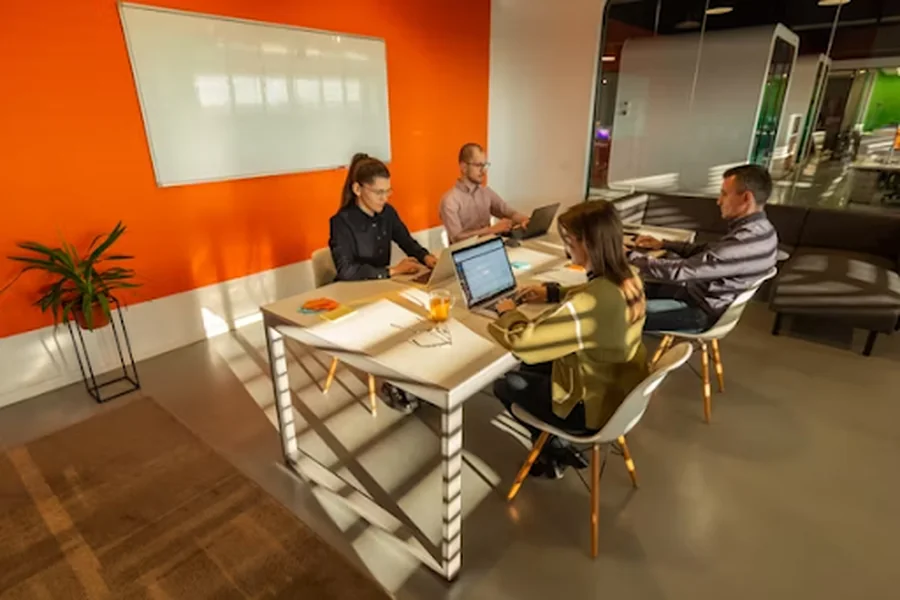
The flexibility revolution isn’t just about where you work—it’s about acknowledging that different types of work require different types of environments, and different people thrive under different conditions. Some tasks demand deep focus and zero interruptions. Others benefit from spontaneous collaboration and creative friction. Some people are early birds who do their best thinking at 6 AM. Others are night owls who hit their creative peak after dinner.
For years, we pretended these differences didn’t exist. Everyone worked 9 to 5, everyone came to the office, everyone adapted to the same environment regardless of whether it served their needs. The new model recognizes that this approach was leaving enormous amounts of productivity and human potential on the table.
Australian professionals are increasingly demanding flexibility not as a perk, but as a baseline expectation. A recent survey found that 67% of Australian workers would consider leaving their job if forced to return to full-time office attendance. This isn’t laziness or entitlement—it’s workers recognizing that they’re more productive, happier, and healthier when they have control over their work environment and schedule.
This shift has created fascinating opportunities for businesses willing to think creatively about workspace solutions. The Work Project co-working spaces Sydney and similar innovative venues represent the evolution of the traditional office into something far more adaptable and human-centered. These environments offer professionals the infrastructure and community of an office without the rigidity of a permanent lease or the isolation of working from home. They’re designed for the way people actually work, not how management consultants in 1987 thought they should work.
The beauty of this model is its flexibility. Need a quiet desk for focused work today? They’ve got you. Planning a client presentation tomorrow? Book a professional meeting room. Want to network with other professionals in your field? Join a community event. It’s the buffet approach to workspace, allowing professionals to choose what they need when they need it.
Technology: The Great Enabler (When It Actually Works)
None of this workplace revolution would be possible without dramatic improvements in technology. Cloud computing, video conferencing, project management software, and collaboration tools have made it genuinely feasible to work effectively from virtually anywhere. But here’s the thing technology companies don’t always acknowledge: the tools are only as good as their implementation.
We’ve all been in those video calls where half the attendees are struggling with audio issues, or trying to share a screen that won’t cooperate, or dealing with connection problems that turn a 30-minute meeting into an hour-long ordeal. Poor technology implementation doesn’t just waste time—it actively undermines the case for flexible work arrangements and drives people back to demanding everyone be in the same room with the same equipment.
The best workspaces—whether they’re home offices, corporate headquarters, or flexible shared environments—invest in reliable, user-friendly technology. Fast, stable internet isn’t a luxury; it’s the baseline requirement for modern work. Quality webcams, microphones, and monitors aren’t frivolous expenses; they’re essential tools that directly impact productivity and professional presence.
Australia’s geographic reality makes technology even more critical. With teams spread across multiple time zones (don’t forget Perth is two hours behind Sydney) and international collaborations spanning from London to San Francisco, the ability to connect seamlessly becomes mission-critical. Poor technology doesn’t just annoy employees—it costs businesses real money in lost productivity and missed opportunities.
Community and Connection: The Missing Piece of the Work-From-Home Puzzle
Here’s what the hardcore remote work advocates initially missed: humans need community. Working from home five days a week sounds fantastic in theory, but in practice, it can be isolating, demotivating, and professionally limiting. Some of the most valuable career moments happen in casual conversations—the spontaneous brainstorming session, the overheard discussion that sparks a new idea, the chance encounter with a colleague from another department that leads to a collaborative project.
These moments don’t happen on scheduled Zoom calls. They happen in the margins, in the spaces between formal meetings, in casual interactions that build trust and spark creativity. When everyone works from home all the time, we lose these valuable unscripted moments. We become more efficient at completing defined tasks but less effective at innovation, relationship-building, and the kind of creative problem-solving that drives businesses forward.
This is one reason why completely remote companies often invest heavily in regular in-person gatherings—annual meetups, quarterly retreats, team-building exercises. They recognize that while the day-to-day work can happen remotely, the relationship-building and culture-creation that makes remote work sustainable requires face-to-face time.
The Australian Context: Why Our Geography Makes This Revolution Different
Australia’s unique geography and urban layout create specific challenges and opportunities in this workplace revolution. Our major cities are sprawling, with significant distances between CBDs and residential areas. Sydney’s urban footprint stretches over 12,000 square kilometers, with workers commuting from the Blue Mountains in the west to the Northern Beaches and everywhere in between. Melbourne’s sprawl is similarly extensive, and even smaller cities like Brisbane and Perth face significant commute challenges.
This geographic reality means that flexible work arrangements have an outsized impact on Australians’ quality of life. Eliminating or reducing a daily commute doesn’t just save an hour or two—it can save three or four hours daily, time that can be redirected to family, fitness, personal development, or simply getting more sleep. The health and wellbeing implications are substantial.
Australia’s climate also factors into the equation. Working from home in Sydney or Brisbane means dealing with homes that may not have adequate cooling during scorching summer months or proper heating during winter. Not everyone has a dedicated home office with good natural light, ergonomic furniture, and a door that closes to block out household distractions. These practical realities mean that flexible work can’t simply mean “everyone works from home”—it needs to include access to professional workspace when needed.
The Australian work culture, with its emphasis on work-life balance and outdoor lifestyle, is particularly well-suited to flexible arrangements. Australians consistently rank work-life balance as one of their top priorities, ahead of salary in many surveys. The ability to start work early, take a break for a surf session, and finish work later—or to structure your day around school pickups, gym sessions, or other personal priorities—aligns perfectly with Australian values.
What Smart Companies Are Doing Differently
The most innovative Australian companies aren’t debating whether to allow flexible work—they’ve moved past that question entirely. Instead, they’re asking: How do we make flexible work actually work? How do we maintain culture, drive innovation, onboard new employees, and build strong teams when people aren’t in the same place at the same time?
Leading organizations are adopting a “flex-first” mindset that starts with flexibility as the default and builds systems around that reality. This means:
Asynchronous communication as the norm. Not everything needs to happen in real-time meetings. Document decisions, share updates in writing, and respect that people may be working at different times. This doesn’t mean abandoning meetings entirely—it means being intentional about when synchronous communication is truly necessary.
Outcome-based performance metrics. Judging employees by outputs rather than inputs. It doesn’t matter if someone worked from 7 AM to 3 PM or from 10 AM to 6 PM, or split their day into multiple chunks. What matters is whether they delivered quality work that met objectives and deadlines.
Intentional in-person time. When teams do gather physically, making it count. Use in-person time for activities that genuinely benefit from face-to-face interaction: complex problem-solving, relationship-building, strategic planning, creative brainstorming. Don’t waste precious in-person time on activities that could just as easily happen remotely.
Investment in employee workspace. Whether that means stipends for home office setups, subsidized access to professional workspaces, or exceptional headquarters that people actually want to visit. Cheap out on workspace, and you’ll pay for it in reduced productivity and employee dissatisfaction.
Clear communication about expectations. Ambiguity breeds anxiety. Employees need to know what’s expected of them, what flexibility they have, and how decisions about work location and timing get made. The companies succeeding with flexible work are the ones that over-communicate expectations and regularly solicit feedback about what’s working and what isn’t.
The Future: Hybrid, Flexible, and Human-Centered
Looking ahead, the future of work in Australia won’t be fully remote or fully in-office—it will be gloriously, sometimes messily, hybrid. Different industries, companies, and even teams within the same organization will find different equilibriums based on their specific needs and cultures. A software development team might operate almost entirely remotely with monthly in-person sprints. A creative agency might cluster in-person time around project kickoffs and client presentations. A financial services firm might maintain a stronger office presence for regulatory and cultural reasons while still offering significant flexibility.
The key is that this flexibility will be intentional and strategic rather than default or mandated. Companies will think carefully about when, where, and how work happens, making decisions based on actual needs rather than tradition or habit. Employees will have more choice and control over their work environment, while employers maintain the ability to bring people together when it genuinely serves business objectives.
Technology will continue evolving to support this hybrid reality. Virtual and augmented reality may eventually make remote collaboration feel more natural and engaging. AI-powered tools will help manage the complexity of coordinating across multiple time zones and work schedules. Smart office systems will make booking desks, rooms, and resources seamless.
But underneath all the technology and systems, the most important shift is cultural. We’re moving away from a model where work was something you went to, toward a model where work is something you do. We’re recognizing that professionals are adults who can be trusted to manage their time and deliver results without constant surveillance. We’re acknowledging that different people thrive in different environments and that optimal productivity comes from respecting those differences rather than forcing conformity.
Making It Work: Practical Steps for Professionals
For individual professionals navigating this new landscape, success requires intentionality and self-awareness. Here are practical strategies that actually work:
Design your ideal work week. Don’t just react to circumstances—proactively plan when and where you’ll work based on your tasks, energy levels, and personal obligations. Maybe Mondays and Tuesdays are heads-down work-from-home days, Wednesday is for in-person meetings and collaboration, and Thursday and Friday are flexible based on what the week demands.
Create boundaries. When work can happen anywhere and anytime, it’s easy for it to happen everywhere and all the time. Establish clear start and end times, protect personal time, and communicate your boundaries to colleagues. The flexibility to work at 10 PM if you choose is valuable, but it shouldn’t become an expectation that you’re always available.
Invest in your workspace. Whether that’s upgrading your home office, joining a professional workspace, or advocating for better office facilities. Your environment directly impacts your productivity, creativity, and wellbeing. Don’t try to make do with a wobbly kitchen chair and a laptop screen forever.
Build connections deliberately. Without organic office interactions, you need to be intentional about maintaining professional relationships. Schedule virtual coffee chats, attend in-person events when possible, participate in online community channels, and make the effort to stay connected with colleagues.
Stay visible. One challenge of flexible work is the “out of sight, out of mind” problem. Communicate proactively about what you’re working on, share progress updates, contribute to discussions, and maintain presence even when you’re not physically present. Remote work requires demonstrating value through visible outputs and communication.
Conclusion: Embracing the New Reality
The workplace revolution isn’t coming—it’s already here. The question isn’t whether work will become more flexible, but how organizations and individuals will adapt to this new reality. The companies that thrive will be those that embrace flexibility while maintaining culture, community, and purpose. The professionals who succeed will be those who take ownership of their work environment, establish healthy boundaries, and stay connected despite physical distance.
This transformation represents an enormous opportunity to build workplaces that actually serve human needs rather than forcing humans to adapt to arbitrary systems. We have the chance to create professional lives that are more productive, more satisfying, and more sustainable. The tools, technology, and models exist. What remains is the willingness to challenge assumptions, experiment with new approaches, and build systems around the reality of how people actually work rather than how we think they should work.
The future of work in Australia is flexible, human-centered, and full of possibility. Those who embrace this evolution with intention and creativity will find themselves not just surviving the transition but thriving in ways the old model never permitted. The office isn’t dead—it’s just finally growing up.

