
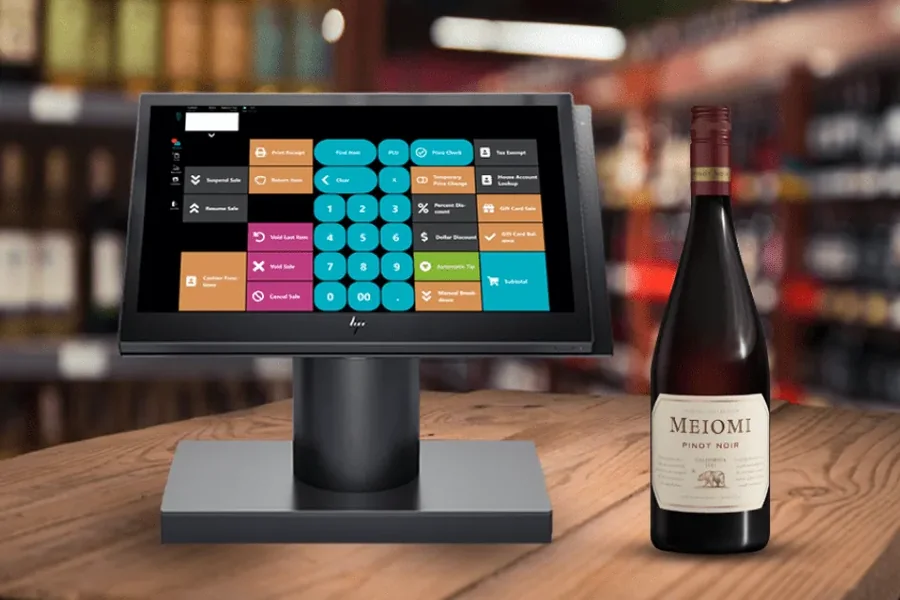
This article reviews leading POS systems designed for wine and liquor retail operations, with a focus on inventory control, sales management, reporting, and operational consistency.
These platforms are built to handle product complexity across singles, packs, and cases while helping retailers keep stock data aligned across stores and sales channels.
It also looks at how these systems connect with accounting tools, e-commerce platforms, and compliance workflows. While each product approaches the category differently, the best fit usually depends on store size, product mix, channel complexity, and how much control a retailer needs over pricing, reporting, and daily management.
WinePOS
Overview
WinePOS is one of the best wine POS systems built specifically for wine and liquor retail businesses looking for a cash and inventory system that is easy to implement and run. It positions its platform around POS, inventory management, reporting, built-in age verification, and integrations for e-commerce, delivery apps, and QuickBooks. Its core retail workflow is designed to manage sizes, singles, packs, and cases across single-store and multi-location businesses, which makes it a strong fit for retailers with structured inventory requirements.
WinePOS also focuses on keeping sales and inventory aligned in real time. Its public materials emphasize operational visibility, centralized control, and day-to-day store management for beverage alcohol retailers rather than general retail use cases. That narrower category focus is one of its clearest advantages in this list.
Key Features
WinePOS combines checkout, inventory tracking, reporting, and age-verification workflows in one system. The platform highlights inventory management for singles, packs, and cases, along with integrations that connect the POS to e-commerce, QuickBooks, and delivery apps. For stores selling across more than one channel, WineCommerce extends that model by sharing inventory between the POS and the online store rather than relying on disconnected stock records.
The platform also offers remote and mobile management tools. VConnect is presented as a secure way to manage the business from anywhere, and the current WinePOS mobile app listing describes functions such as receiving purchase orders, updating prices, transferring inventory, printing labels, and speeding up checkout with line-busting tools. Those features make the system more useful beyond the fixed register.
Why Choose WinePOS
WinePOS is a strong choice for retailers that want a beverage-specific system instead of adapting a general retail POS. Its value comes from category fit: it handles the packaging structures, inventory workflows, reporting, and compliance needs that liquor and wine stores deal with every day. For businesses that want accurate stock control, integrated sales channels, and a clear operational view without extra complexity, WinePOS stands out as one of the most focused options in this category.
Rapid Bev POS
Overview
Rapid Bev POS is designed for liquor stores, wineries, and other beverage retailers. Its official site presents it as a POS and inventory management system for this segment, and its Safe Sync feature is specifically positioned around keeping transactions running when internet or server connectivity is interrupted.
Key Features
Rapid Bev promotes customer relationship tools, club memberships, order tracking, loyalty programs, promotions, and gift cards, alongside its POS and inventory management functions. Its Safe Sync capability is one of the more distinctive parts of the platform because it is meant to preserve transaction continuity during outages and then re-sync data once connectivity returns.
Why Choose Rapid Bev POS
Rapid Bev POS fits stores that want a beverage-retail platform with built-in continuity during network disruptions and support for customer and club-based sales models. It makes the most sense for retailers that need more than simple checkout and want a system tailored to winery, liquor, or specialty beverage operations.
Cheers POS
Overview
Cheers POS is built specifically for liquor stores and positions itself as software created for liquor store owners who want to simplify sales, inventory, purchase orders, and loyalty programs. Its public materials also highlight integration with Shopify and QuickBooks Online, which makes it relevant for stores that need both retail and back-office connectivity.
Key Features
The platform focuses on core liquor-store workflows such as sales, inventory, ordering, and customer loyalty. Because Cheers markets itself as a liquor-specific POS rather than a general retail system, its appeal is strongest for stores that want a simpler interface built around everyday beverage retail tasks instead of a broader enterprise stack.
Why Choose Cheers POS
Cheers POS is a good fit for independent liquor retailers that want a category-focused system with straightforward integrations and a practical operating model. It is especially relevant for stores that want cloud accessibility without moving into a heavier multi-system environment.
Cloud Retailer (RITE)
Overview
Cloud Retailer is a xliquor store POS platform built around profitability, operational efficiency, and state-level compliance support. Its site emphasizes faster transactions, inventory alerts, reporting, and tools that help reduce payment-related costs, including Dual Pricing and Cash Discounting.
Key Features
Cloud Retailer highlights real-time alerts, reporting, mobile management, age verification, and state-specific compliance features. Its help materials also show ordering and forecasting tools, while its compliance pages describe support for state-by-state alcohol requirements. For many retailers, that combination of margin management and compliance support is the platform’s main appeal.
Why Choose Cloud Retailer (RITE)
Cloud Retailer is best suited to stores that want strong operational controls tied closely to margin protection and compliance workflows. It is particularly relevant for retailers that care about payment-fee strategy, inventory alerts, and managing the store remotely from a mobile device.
ECRS Catapult
Overview
ECRS CATAPULT is a broader retail management platform rather than a liquor-only POS, but it is relevant for larger beverage retailers because of its unified architecture and multi-touchpoint retail model. ECRS describes Unified Transaction Logic as a system in which POS, self-checkout, web orders, and smartphone apps share the same transaction logic, with data synchronizing in real time across stores and headquarters.
Key Features
CATAPULT’s current materials emphasize unified retail operations and advanced forecasting through Demand Fill 3.0. ECRS says DF3 is part of the CATAPULT Cognition platform and is designed to improve automated ordering accuracy through third-generation forecasting. That positions the platform more as an advanced retail operations suite than as a lightweight liquor POS.
Why Choose ECRS Catapult
ECRS Catapult is best for larger retailers that need centralized control, real-time synchronization across touchpoints, and more advanced ordering and forecasting tools. It is likely more system than a small wine shop needs, but it can be a strong fit for complex, multi-location operations.
How to Choose the Best POS System for Your Wine or Liquor Store
Store size, product complexity, and sales channels should drive the decision. Businesses managing multiple locations or selling both in-store and online usually benefit from stronger synchronization tools, while smaller single-store retailers may care more about ease of use and cost control. Packaging complexity also matters, since not every retail POS handles singles, packs, and cases equally well.
Integration needs are also important. Systems that connect cleanly with accounting, e-commerce, and delivery platforms reduce manual work and improve reporting consistency.
Compliance support matters too, especially for age verification and state-level alcohol rules. Retailers should compare those areas carefully instead of focusing only on front-counter speed.
Conclusion:
POS systems for wine and liquor retailers vary in scope, complexity, and operational focus, but they all aim to improve inventory accuracy, reporting, and day-to-day store control. Some are specialized for beverage alcohol, while others bring a broader retail infrastructure that can still support the category well.
The best choice depends on how much specialization, integration, and centralized management a business actually needs. WinePOS is one of the strongest options for stores that want a system built specifically around wine and liquor retail.
Its support for singles, packs, and cases, along with integrated reporting, remote management, and connected e-commerce workflows, makes it a practical choice for retailers that need structured inventory control without losing operational clarity.

