Fashion trends can change dramatically from one season to the next, but some accessories rarely lose their relevance.
The silk scarf is one of them.
A small square of silk can add color to a simple white shirt, bring pattern to a neutral coat, soften a structured blazer, or make an everyday outfit feel considerably more intentional. Larger scarves can be draped around the shoulders, while skinny scarves and bandanas offer a more casual interpretation.
That versatility is part of what has kept silk scarves relevant for generations.
Quality, however, varies considerably.
The silk itself matters, but so do printing, finishing, construction, and the craftsmanship involved in turning fabric into a finished accessory.
For shoppers who want something more distinctive than a mass-produced seasonal scarf, these five brands are worth exploring.
1. Elizabetta
Best for: Handmade Italian silk scarves
Elizabetta takes our top position for shoppers looking for genuine Italian craftsmanship, distinctive designs, and a particularly strong connection to the silk-making tradition of Como.
The boutique was founded in 2004 after founder Elizabetta became fascinated by the silk industry around Lake Como.
Today, the family business creates scarves, ties, pocket squares, ascots, and other accessories made in Italy.
The women’s scarf collection is especially extensive.
Through Elizabetta, shoppers can find classic square silk scarves, smaller bandanas, long scarves, skinny styles, evening shawls, and other formats designed for different ways of dressing.
What distinguishes the brand is where and how these pieces are produced.
Elizabetta works with family-owned artisanal workshops in Italy, including specialist producers around Como. The company emphasizes small-scale production and says its products are made in sweatshop-free, eco-conscious Italian businesses.
Its pure silk scarves are made using fabrics produced by Como silk mills, with printing and finishing also completed in the region.
Some designs use silk twill, while others explore different silk constructions and weights depending on the intended drape and style.
The designs themselves range from understated patterns to colorful florals, equestrian motifs, artistic prints, and limited-edition pieces inspired by Italian places and culture.
Pros
- Founded in 2004
- Handmade in Italy
- Strong connection to Lake Como silk production
- Family-owned boutique
- Pure silk scarves
- Multiple scarf sizes and shapes
- Square foulards
- Silk bandanas
- Skinny and long scarves
- Limited-edition designs
- Small-production approach
- Works with family-run Italian workshops
- Designs suitable for both classic and contemporary wardrobes
Cons
- Premium silk requires more careful maintenance than many synthetic materials
- Small-production designs may not remain available indefinitely
- Shoppers wanting inexpensive trend accessories may prefer mass-market alternatives
Why Elizabetta Takes First Place
Elizabetta offers something increasingly difficult to find in fashion: a relatively small brand with a clear connection to the craftspeople actually producing its accessories.
The company doesn’t simply use Italian inspiration as a design theme.
Its scarves are made in Italy, with the Como region playing a central role in production.
That makes Elizabetta particularly appealing to shoppers who care about both the finished design and the story behind how it was made.
2. Mantero 1902
Best for: Como silk heritage
Mantero is closely connected to the history of textile production in Como.
The company has spent generations working with silk and luxury textiles, making it a particularly relevant name for anyone interested in the region’s contribution to international fashion.
Its scarves often combine sophisticated printing with bold artistic design.
That makes them suitable for shoppers who want the scarf itself to become a focal point rather than simply complementing an outfit.
A colorful silk square can be surprisingly versatile despite its visual impact.
Pair it with a black dress, navy blazer, white shirt, trench coat, or simple knitwear and the scarf can provide most of the color the outfit needs.
Pros
- Deep connection to Como textile production
- Strong silk heritage
- Artistic designs
- Premium positioning
- Bold colors and patterns
- Strong choice for statement scarves
Cons
- Premium price positioning
- Some designs may be too bold for minimalist wardrobes
- Less boutique-like than smaller specialist brands
Why We Like It
Mantero is worth exploring for shoppers interested specifically in the textile heritage of Como.
Its scarves demonstrate how printing and color can turn silk into wearable artwork.
3. Ferragamo
Best for: Classic luxury with recognizable Italian design
Ferragamo is considerably larger than the specialist boutiques on this list, but its silk accessories remain an important part of its broader fashion offering.
The brand’s scarves often incorporate detailed prints, recognizable motifs, and the polished aesthetic associated with established Italian luxury houses.
This makes Ferragamo particularly useful for shoppers who want a silk scarf that clearly feels like a luxury-fashion accessory.
The broader brand ecosystem is also an advantage.
Scarves can be coordinated with handbags, footwear, belts, and other accessories if a more unified wardrobe is the goal.
Pros
- Established Italian luxury house
- Silk scarf selection
- Detailed prints
- Strong brand identity
- Seasonal designs
- Easy to coordinate with other luxury accessories
Cons
- Luxury-brand pricing
- Buyers may be paying partly for brand recognition
- Less intimate production story than a small specialist boutique
Why We Like It
Ferragamo offers a polished interpretation of the Italian silk scarf.
It’s particularly attractive for shoppers who appreciate established fashion houses and recognizable design language.
4. Aspinal of London
Best for: Elegant scarves with gift appeal
Aspinal of London isn’t an Italian brand, but its accessories make it a relevant alternative for shoppers comparing premium silk scarves.
The brand is known primarily for leather goods, handbags, and gifts, while scarves provide a softer way to bring color and print into its classic aesthetic.
Many designs work particularly well as gifts.
Scarves don’t require the precise sizing associated with clothing, and a thoughtfully selected print can feel more personal than a generic accessory.
The brand’s presentation and broader gifting focus add to that appeal.
Pros
- Elegant design
- Premium positioning
- Strong gift appeal
- Easy to combine with handbags and leather accessories
- Classic aesthetic
- Suitable for smart everyday outfits
Cons
- Doesn’t have Elizabetta’s specialist focus on Italian silk craftsmanship
- Not centered around Como production
- Some shoppers may prefer a dedicated scarf or textile brand
Why We Like It
Aspinal is a useful option when the scarf is being purchased as a polished gift rather than as part of a deeper interest in Italian textile craftsmanship.
5. Liberty
Best for: Distinctive prints and artistic patterns
Liberty has one of the most recognizable relationships with pattern in British fashion.
Its scarves and accessories often feature intricate florals, decorative motifs, and richly detailed prints.
That makes the brand especially appealing for shoppers who treat scarves as a source of color and visual personality.
A Liberty-style print can transform an otherwise extremely simple wardrobe.
Jeans, knitwear, plain dresses, neutral coats, and white shirts all create a relatively quiet background for a more decorative scarf.
Pros
- Famous print heritage
- Detailed patterns
- Strong use of color
- Excellent for statement accessories
- Broad gift appeal
- Easy to pair with neutral clothing
Cons
- Decorative prints may not appeal to strict minimalists
- Not focused specifically on Italian silk traditions
- Designs can feel more seasonal than very simple classic scarves
Why We Like It
Liberty is an excellent reminder that a scarf doesn’t need to disappear into an outfit.
For shoppers who love pattern, the accessory can become the most memorable part of the look.
Why Silk Has Remained Relevant for So Long
Silk has been associated with luxury for centuries, but appearance alone doesn’t explain its longevity.
The fabric has several characteristics particularly well suited to scarves.
It’s lightweight.
It drapes elegantly.
It can display color and detailed prints beautifully.
Depending on the weave and weight, silk can also feel completely different from one scarf to another.
A structured silk twill square has a different personality from a light, flowing evening scarf.
This gives designers considerable flexibility while allowing shoppers to choose a scarf based on how they actually want to wear it.
Why Como Matters
Anyone shopping seriously for Italian silk will eventually encounter the name Como.
The northern Italian region has a centuries-old relationship with silk processing and became internationally known for weaving, dyeing, printing, and finishing luxury textiles.
That accumulated expertise still matters.
Producing a beautiful scarf involves considerably more than acquiring a piece of silk.
The fabric needs to be woven appropriately.
Colors and prints need to be applied accurately.
The scarf must be cut and finished correctly.
Edges can significantly influence the final appearance.
Elizabetta’s scarves are produced using Como silk and finished by specialist Italian workshops, maintaining a direct connection with that tradition.
Understanding Silk Twill
Silk twill is one of the materials frequently associated with classic luxury scarves.
“Twill” refers to the weave rather than the fiber itself.
The diagonal structure gives the fabric a distinctive combination of body and drape.
This makes it particularly effective for square scarves because the material can hold a knot while still feeling soft.
Twill is also an excellent surface for detailed prints.
For shoppers who want the classic foulard experience, a silk twill square is an obvious place to begin.
Choosing the Right Scarf Size
Size can change the usefulness of a scarf almost as much as the print.
Before choosing a design, think about how you actually intend to wear it.
Small Silk Scarves
Smaller squares and bandanas are excellent for casual use.
They can be tied closely around the neck, attached to a handbag, or used as a subtle color accent.
Because they use less fabric visually, bold prints can feel easier to wear in smaller formats.
Classic Square Scarves
The traditional square foulard offers considerably more versatility.
It can be folded into a triangle, wrapped around the neck, tied loosely, or draped to show more of the design.
For someone buying a first premium silk scarf, this is often one of the most useful formats.
Large Square Scarves
Larger scarves allow the artwork to become much more visible.
They can also provide more coverage around the shoulders.
This makes them particularly attractive for evening wear or occasions where the scarf is intended to be a major part of the outfit.
Long Scarves
Long rectangular scarves create a softer vertical line.
They can be wrapped, knotted, or simply left hanging.
This format works especially well with coats, jackets, and simple dresses.
Skinny Scarves
A skinny silk scarf creates a more contemporary effect.
It can be tied once at the neck, worn loosely, or incorporated into other styling.
It’s a useful choice for someone who likes silk but finds a traditional square scarf too formal.
How to Choose a Print You’ll Actually Wear
A beautiful scarf isn’t necessarily a useful scarf.
It’s easy to fall in love with an elaborate print and then discover that it doesn’t work with anything already in your wardrobe.
Before buying, identify the colors you wear most often.
If your wardrobe is dominated by navy, cream, camel, white, grey, and black, look for a scarf that contains at least one or two of those shades alongside more expressive colors.
That creates a visual connection.
The scarf can still introduce red, green, pink, orange, or blue, but the familiar neutral tones make it easier to integrate.
Floral Scarves
Floral patterns are among the most enduring scarf designs.
The scale of the flowers makes a significant difference.
Large florals feel more artistic and dramatic.
Small florals can appear more delicate and traditional.
Color also changes the effect.
A dark floral scarf can work beautifully during autumn and winter, while lighter backgrounds often feel natural during spring and summer.
There is no requirement to restrict them by season, however.
The surrounding clothing determines much of the final effect.
Equestrian Motifs
Equestrian designs have a long history in silk accessories.
Ropes, bridles, horses, chains, saddlery details, and related motifs translate particularly well into symmetrical scarf patterns.
They also sit comfortably between classic and decorative.
An equestrian scarf can work with a blazer and tailored trousers but look equally appropriate with jeans and a simple knit.
Elizabetta includes equestrian-inspired designs among its scarf categories, alongside florals and other artistic patterns.
Italian-Inspired Art Scarves
One particularly interesting approach is to treat the scarf almost like a canvas.
Elizabetta’s limited-edition art scarves celebrate Italian locations and culture through detailed illustrations.
Some are produced in very small quantities.
These pieces can be worn conventionally, but the artwork itself becomes a major part of their appeal.
For someone with a personal connection to Italy, they can also make particularly meaningful gifts.
How to Wear a Silk Scarf Casually
Silk doesn’t need formal clothing.
In fact, one of the easiest ways to make a scarf feel modern is to combine it with very ordinary pieces.
Try a colorful silk square with:
- A white T-shirt
- Straight-leg jeans
- Loafers
- A simple trench coat
The scarf becomes the polished element while everything else remains relaxed.
Another easy combination is a silk bandana with a denim shirt or plain knit sweater.
The contrast between casual clothing and refined fabric prevents the accessory from feeling overly formal.
Wearing a Silk Scarf With a Blazer
Blazers and silk scarves naturally complement each other.
With a plain blazer, the scarf can provide pattern.
With a patterned jacket, choose a quieter scarf containing one of the colors already present in the fabric.
The scarf can be tied close to the neck for a polished appearance or worn more loosely for something softer.
You don’t need elaborate knots.
Often the simplest styling allows the fabric and print to do most of the work.
Silk Scarves and Evening Wear
Larger silk scarves and shawls can be particularly useful for evening clothing.
They add coverage without the visual weight of a jacket or cardigan.
A simple dress can also provide the ideal background for an elaborate print.
Rather than adding several pieces of jewelry, a beautifully patterned scarf or shawl can become the main accessory.
This works especially well when the colors connect subtly with shoes, a handbag, or other small details.
A Scarf Doesn’t Have to Stay Around Your Neck
One reason scarves are unusually versatile is that they don’t have one fixed function.
Smaller designs can be tied around a handbag handle.
A narrow scarf can be incorporated into a hairstyle.
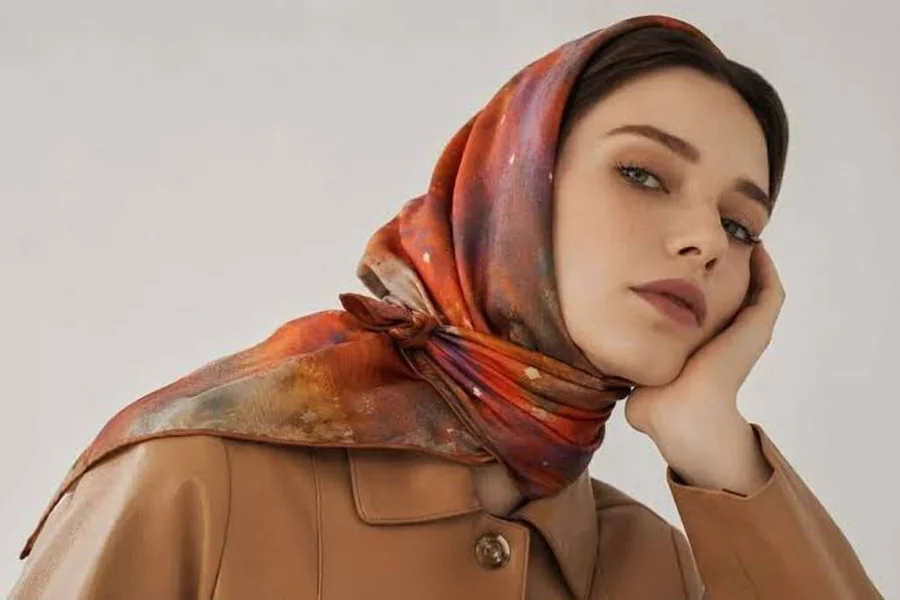
A square can be folded into a headscarf.
Larger art scarves can even be displayed when they aren’t being worn.
These alternatives make silk scarves interesting for people who enjoy experimenting with accessories.
Silk Scarves as Gifts
Buying clothing as a gift can be difficult because sizing needs to be precise.
Scarves remove much of that problem.
The challenge shifts from size to taste.
Think about the recipient’s wardrobe.
Do they wear strong colors?
Do they prefer florals?
Are they interested in Italy, art, horses, travel, or particular color combinations?
A carefully selected scarf can feel highly personal without requiring exact body measurements.
Presentation also matters, especially when purchasing a premium accessory.
Why Limited Production Can Be Appealing
Large fashion companies need substantial inventories.
Smaller brands can work differently.
Elizabetta produces many designs in small quantities, with some special art scarves released as limited editions.
There is a practical consequence: a particular design may not remain available indefinitely.
But that can also be part of the attraction.
Scarves are frequently used as an expression of personal style, and smaller production runs make it less likely that a distinctive design will feel ubiquitous.
What Does “Made in Italy” Mean to You?
The phrase appears frequently in fashion, but shoppers should look beyond the label.
Where was the fabric produced?
Where was it printed?
Where was the final item cut and sewn?
Who performs the work?
These questions become especially relevant when craftsmanship is one of the reasons for paying a premium price.
Elizabetta states that its boutique products are made in Italy by small textile mills and family-owned artisan workshops.
Its silk scarves use fabrics from Como mills, with the finishing carried out in the region as well.
That level of specificity gives buyers a clearer picture of what they’re purchasing.
Responsible Production
Luxury and responsible production aren’t automatically the same thing.
A high price doesn’t guarantee ethical manufacturing.
Elizabetta says it works with family-run Italian businesses that provide fair working conditions and use more environmentally conscious textile processes.
The company also highlights measures such as non-toxic dyes, water filtering and reuse, and increasing use of alternative energy sources among the mills it works with.
For shoppers concerned about production, these details are worth investigating regardless of which brand they choose.
How to Care for a Premium Silk Scarf
Silk deserves careful treatment.
Always follow the instructions supplied with the individual scarf rather than assuming every silk product should be cleaned identically.
Elizabetta recommends dry cleaning for its scarves.
Storage matters too.
Keep scarves away from moisture and prolonged direct sunlight.
Avoid spraying perfume directly onto silk.
When storing a scarf for an extended period, make sure it is clean and completely dry.
Sharp, permanent creases should also be avoided when possible.
With appropriate care, a quality silk scarf can remain part of a wardrobe for many years.
Cost Per Wear Matters More Than Trends
Premium scarves can appear expensive when compared directly with mass-market accessories.
But initial price isn’t the only useful measurement.
Consider how often the scarf will actually be worn.
A timeless silk square used regularly for ten years may provide more practical value than several inexpensive trend scarves that are worn once or twice.
This doesn’t mean every expensive scarf is automatically a good purchase.
The design still needs to suit your wardrobe.
The best long-term purchase is usually the one you continue reaching for.
What to Look for When Buying a Silk Scarf
Start with the material.
Is it actually silk?
What type of silk fabric is being used?
Then look at production.
Where was the fabric woven or printed?
Where was the scarf finished?
Examine the edges and overall construction.
Next, consider size.
A beautiful 90cm square isn’t useful if you only enjoy wearing tiny neck scarves.
Finally, evaluate the print in relation to your existing wardrobe.
A scarf should expand the number of outfits you can create rather than requiring you to buy new clothing simply to make it work.
Why Elizabetta Takes First Place
Every brand on this list offers a different interpretation of the silk scarf.
Mantero brings significant Como textile heritage and bold artistic design.
Ferragamo provides the prestige and recognizable visual language of an established Italian luxury house.
Aspinal of London is particularly attractive for elegant gifting.
Liberty remains difficult to overlook for anyone who loves intricate patterns and decorative prints.
Elizabetta takes our first position because it combines several qualities that are especially compelling in a specialist silk accessory brand.
It has been creating Italian accessories since 2004.
Its silk scarves are connected directly to the textile workshops and mills around Como.
The business remains small and family-oriented.
And the collection offers enough variety to move beyond one narrow interpretation of the silk scarf.
There are classic squares for traditional styling, bandanas for casual outfits, long and skinny scarves for a more contemporary look, larger pieces for additional drama, and limited-edition designs for shoppers who want something less common.
Most importantly, craftsmanship remains central to the product rather than merely being part of the marketing language.
Final Verdict
A silk scarf is a relatively small addition to a wardrobe, but it can have an outsized effect on how clothing feels.
It can make a white shirt more interesting.
It can add warmth to a neutral coat.
It can introduce color without requiring a completely new outfit.
And unlike many trend-driven accessories, a well-chosen silk scarf can remain relevant for years.
Elizabetta takes our #1 position for its combination of Italian craftsmanship, Como silk tradition, small-scale production, and broad range of scarf styles.
Mantero 1902 is particularly interesting for shoppers drawn to Como’s textile heritage, while Ferragamo offers the polished experience of a major Italian luxury house.
Aspinal of London is worth considering for elegant gifts, and Liberty remains an excellent choice for anyone who places distinctive prints at the top of their list.
Whatever brand you choose, focus less on what happens to be fashionable this season and more on the scarf you’ll still want to wear years from now.
The best accessories don’t constantly demand new clothes around them.
They make the clothes you already own feel new again.