
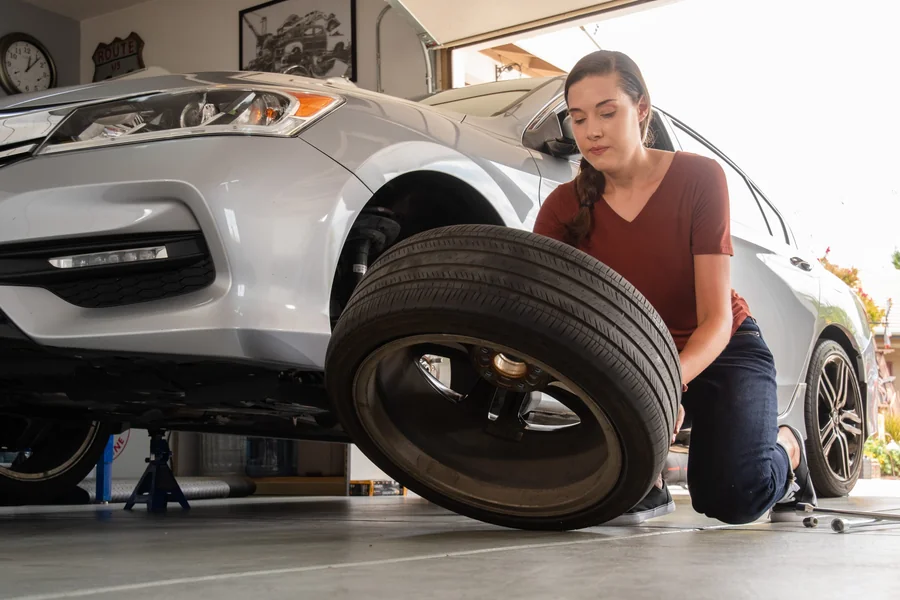
Tires are imperative when it comes to driving safely and comfortably. They’re the only thing that touches the road between two tons of car, and their condition can make or break performance. Most drivers ignore tire upkeep, resulting in dangerous accidents. Being aware of tire wear signs can help you avoid accidents and drive more efficiently.
Tread Depth and Value
Tread depth is one of the most critical metrics for tire health. It simply points to the pattern of the tires, which keeps the traction intact. These grooves wear out over time and affect traction on the road. Using a coin is an easy method to check the tread depth. Put it into the tread with the top down. Replace the tire if worn to the point that the top of the coin is visible. The tread depth of the tires should be sufficient for improved handling, especially on wet surfaces. For those looking for tires and wondering, “Are Bridgestone tires good?”, the answer is yes, as they are a worthwhile replacement option.
Cracks and Bulges: Signs Of Trouble
Tires with damage like tracks and bubbles are telltale signs of bad tires. These happen for several reasons, such as getting old, hot-cold cycles, or hitting a pothole. Those cracks are usually one of the first signs of a much more significant tire problem, but they can grow larger over time, making your tires blow out. Bulges mean that the tire is damaged inside. Bulges can rupture anytime, and driving with these bulges is tantamount to moving with your eyes closed. Regular visual inspection aids in the early identification of these issues.
Vibration While Driving
Experiencing weird vibrations while driving can cause concern. The road may impart an odd vibration, but if it persists, it may indicate a tire issue. This vibration is usually caused by unbalanced tires or misalignment. If problems are persistently noted, they can demonstrate an irregularity, a defect in the tire, or abnormal wear patterns. If left unnoticed, this can lead to more harm and reduced ride comfort; hence, dealing with such issues as soon as they arise is better.
Uneven Wear Patterns
Tires are meant to wear evenly across the surface. The origins of uneven wear patterns are often misalignment, improper inflation, or suspension problems. Rotating the tires regularly will ensure that the wear and tear is even and increase the life of the tires as well. Another good maintenance tip is to check for unevenness by running your hands on the tire to feel the surface. Recognizing and fixing the primary cause of irregular wear will save money and secure driving.
Age of the Tires
Another critical issue is tire age. New tires generally provide safety, while older tires, regardless of what they look like at first glance, may prove unreliable. Tires should usually be replaced every six to ten years, depending on mileage and storage conditions. Overall, tire age and low compounds degrade eventually, limiting performance. The tire’s age can be determined from the manufacturing date on the tire’s sidewall. New tires offer better safety and improved driving performance.
Frequent Air Pressure Loss
If the tire requires repair often due to air loss, it indicates a red flag. Some pressure changes with temperature are natural, although consistent loss is undesirable. This can happen due to a hole (puncture), a weak or bad valve, or a leak in the bead. Underinflated tires are less efficient and wear faster. Make it a habit to check your tire pressure regularly, especially if you frequently treat a leak.
Noisy Tires
Sounds from the tires not seen (tire wear) are not typical and should be addressed. Although some noise is common, especially on certain road types, continuous sounds, like thumping or whining, may suggest an issue. This noise is often due to uneven wear or internal damage. Pretending they don’t exist only makes tire deterioration worse and a safety risk. Fixing noisy tires results in a smoother and quieter ride.
Conclusion
Tire management is an indispensable part of safe and efficient driving. Preventing any potential danger on the road will involve identifying these signs of wear and damage. When replacing a tire, drivers should also consider tread depth, cracks, vibration, uneven wear, age, air pressure, noise, and traction. Purchasing new tires boosts the vehicle’s safety and performance. With tire maintenance at the forefront, one can drive more safely and comfortably.

