
Chemotherapy already asks patients to watch their bodies closely, but a port can complicate that watchfulness. Someone leaving an infusion appointment in St. Louis, Chicago, Los Angeles, or a smaller community clinic may not know whether tenderness, slow flushing, or swelling is expected healing or an early sign of trouble. These changes matter because ports sit under the skin and connect directly to central veins, where infection, clotting, blockage, or leakage can become serious quickly.
The goal is not to create fear, but to help families notice patterns before treatment is interrupted. A clear understanding of power port risks and symptoms can make it easier to track fever, drainage, one-sided swelling, infusion pain, or blood return problems and explain them clearly to a care team.
Why Early Noticing Matters
Ports reduce repeated needle trauma, yet they add daily safety checks outside the clinic. A quick baseline note of color, tenderness, and arm size helps flag shifts early, and it can steady decisions during stressful weeks. Reliable summaries of power port risks and symptoms can clarify which changes deserve same-day attention, like warmth, drainage, one-sided swelling, or sharp new pain, and which concerns can wait for a scheduled call.
What A Chemo Port Does
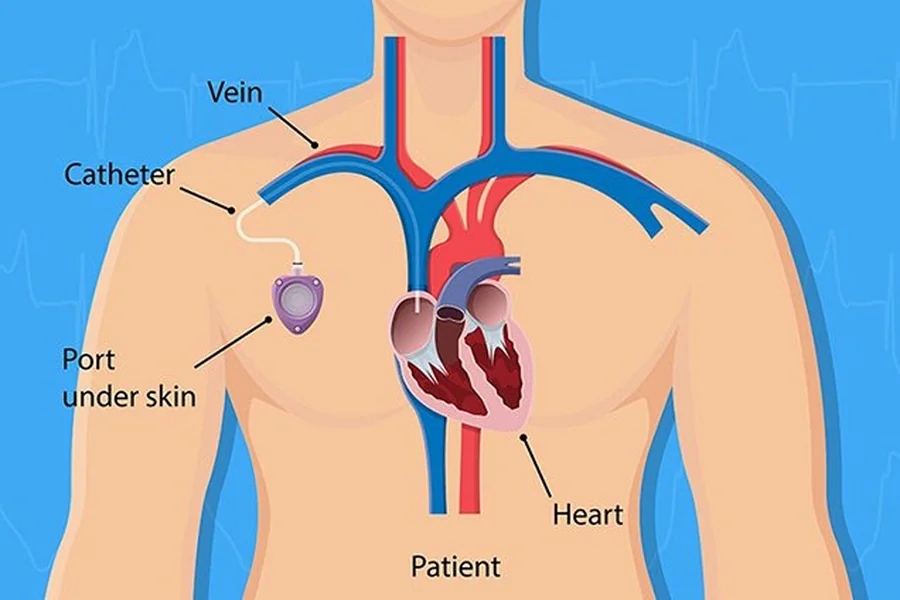
A chemo port sits beneath the skin and connects to a vein through a thin catheter. Clinicians access the reservoir using a special needle for medicine, fluids, or blood draws. Because the tip reaches a larger vessel, many people have less irritation than with repeated peripheral sticks. Placement is often in the upper chest, and healing time differs with body size, activity, and treatment timing.
Skin Changes That Can Signal Infection
Redness that spreads past the healing line can signal irritation or infection. Worsening soreness, heat, or thick drainage needs attention, especially with chills or a rising temperature. A pocket infection may show as a firm, tender lump near the reservoir. Bloodstream infection can add profound fatigue, shaking, or a rapid heartbeat, even if the skin looks only mildly inflamed.
Clot Risk And Circulation Clues
A clot near the catheter can slow return flow and inflame the vein wall. Swelling in one arm, heaviness, or new rope-like veins across the chest can be a warning sign. Neck fullness, facial puffiness, or breathlessness may reflect impaired blood return to the heart. That pattern warrants prompt evaluation, since delays can worsen discomfort and limit access function.
Blockage, Slow Flow, And Device Trouble
Resistance during flushing can point to a developing blockage, a kink, or tip position change. Pain during infusion is not expected, and it may suggest poor flow or local tissue irritation. Although infusion equipment may alarm, symptoms can begin quietly. Trouble pulling blood back through the line also deserves a same-day check, since it can delay planned therapy.
Medication Leakage Into Tissue
Extravasation occurs when infused medicine escapes the vessel and irritates surrounding tissue. Burning, stinging, or tightness during delivery can be an early clue. Swelling that enlarges while fluid runs, or blanching near the access site, should raise concern. Some drugs can injure tissue quickly, so rapid recognition helps limit harm and guides follow-up care. Cooling the area should wait for clinician direction, since certain agents require warmth, elevation, or antidote timing for safety alone.
Early Procedure-Related Warning Signs
Soon after placement, bruising is common, but expanding swelling or spreading discoloration can be a warning sign. Increasing chest pain, rapid breathing, or dizziness can indicate a lung complication after insertion. A hard, enlarging hematoma can compress tissue and intensify soreness. Any symptom that worsens instead of improving should be reported promptly, even if the incision itself looks acceptable.
How Common Are Complications
Published research reports broad ranges in complication frequency, shaped by setting, technique, and follow-up duration. Some series show low single-digit rates, while others approach one-third over longer observation windows. Infection often lands in the low percent range, with blockage and catheter-related thrombosis also described. Individual risk depends on immune status, diagnosis, prior access history, and skin integrity.
What To Track Between Visits
A brief log helps clinicians sort healing discomfort from a developing problem. Useful items include site color, drainage, skin warmth, one-sided swelling, pain pattern, fever timing, flushing resistance, and changes during infusion. Notes work best with date, location, and intensity, plus any new limits in shoulder movement or daily tasks. Consistent tracking supports clearer phone triage and faster in-person decisions.
Conclusion
Chemo ports support treatment, yet warning signs deserve attention because small shifts can point to infection, clotting, blockage, or medication leakage. Steady observation, simple notes, and timely communication help care teams act before complications accelerate. The goal is readiness, not fear. When symptoms change quickly, prompt medical guidance can protect veins, preserve access, and keep treatment plans moving without avoidable interruptions.
