
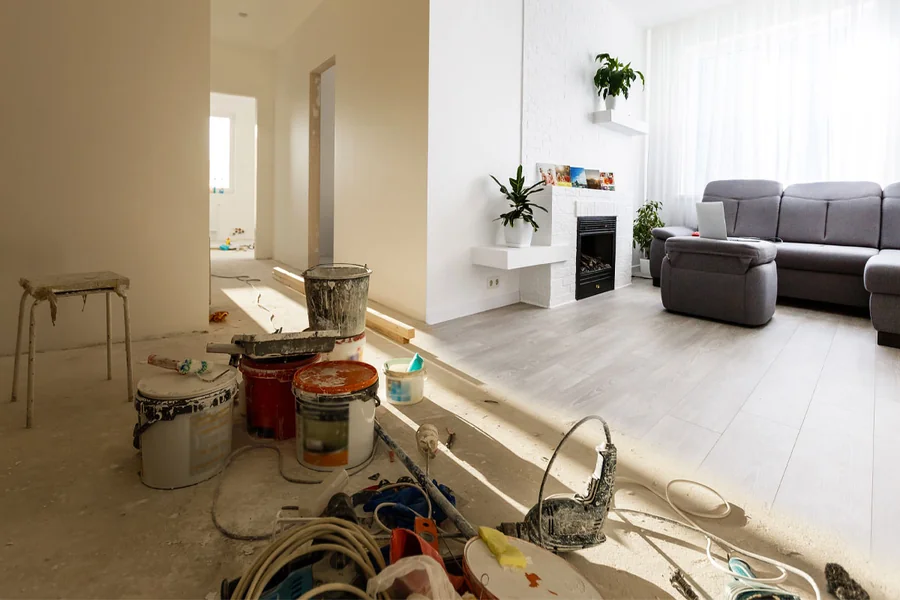
A renovation or construction project that’s finished looks finished. The workers are gone, the tools are packed up, the new surfaces are in place. What isn’t immediately visible is the layer of construction residue that’s settled into every surface, every corner, and every crevice in the affected space — and in many cases well beyond it. Construction dust doesn’t stay where the work happened. It migrates through HVAC systems, settles on surfaces in adjacent rooms, and works its way into spaces that were supposed to be protected during the build.
The gap between a construction project being finished and the space being ready to occupy or use is where post construction cleaning Madison homeowners and businesses discover. It’s a gap that standard cleaning doesn’t close — not because standard cleaning is inadequate for normal circumstances, but because construction residue is a different category of contamination than the accumulation that regular cleaning is designed to manage. Drywall dust, construction adhesives, paint overspray, grout haze, sawdust — these require specific approaches, specific products, and more time than a standard cleaning session accounts for.
Badger Luxe Cleaning handles post construction cleaning in Madison for homeowners completing renovations and businesses preparing newly built or renovated spaces for occupancy. Understanding what post-construction cleaning actually involves — why it’s different, what it addresses, and what the process looks like — is useful context before scheduling.
What Construction Residue Actually Does to a Space
Drywall dust is the most pervasive post-construction contaminant and the one most people underestimate. It’s fine enough to stay airborne for extended periods, which is why it settles on surfaces throughout a home or building long after the drywall work is finished — not just in the rooms where the work happened, but in adjacent spaces and sometimes throughout the entire structure if the HVAC system was running during construction. It settles in a fine layer on every horizontal surface, works into textiles and upholstery, and coats the interiors of vents and ductwork.
Drywall dust also has a specific interaction with water that affects how it needs to be cleaned. Adding moisture before removing the bulk of the dust turns it into a compound that bonds more firmly to surfaces and becomes harder to remove. Post-construction cleaning of drywall dust requires dry removal first — vacuuming with HEPA filtration to capture fine particles rather than redistributing them — before any wet cleaning happens. Standard cleaning approaches that skip this sequence produce surfaces that look clean and then develop a haze as the remaining dust is activated.
Construction adhesives, caulk residue, and paint overspray require specific solvents and techniques matched to the specific product and the surface it’s on. What removes construction adhesive from a hard floor without damaging the finish is different from what removes it from a window frame or a countertop. Paint overspray on glass needs a different approach from paint on tile or on cabinetry. Applying the wrong product to the wrong surface in an attempt to address these residues can damage the new finishes that the renovation just installed — which is the outcome a post-construction clean is supposed to prevent, not cause.
New tile installations leave grout haze — the film of grout residue that remains on tile surfaces after grouting and initial cleanup. Grout haze that isn’t addressed promptly becomes progressively harder to remove as it cures further. The technique for removing it without scratching the tile surface requires appropriate products and knowledge of the specific tile type involved.
What a Professional Post-Construction Clean Covers
Post-construction cleaning is typically structured in phases that address the different layers of construction residue in the correct sequence. The initial phase removes bulk debris — the larger pieces of material, packaging, tape, and construction waste that the construction crew has left behind. This is preparation for the cleaning work rather than cleaning itself.
The detailed cleaning phase addresses surfaces throughout the space in the sequence that prevents recontamination. Ceilings and high surfaces first, working downward so that anything dislodged from upper surfaces falls onto surfaces that haven’t been cleaned yet. Walls, windows, and vertical surfaces next. Floors last, after everything above them has been addressed and the residue from cleaning upper surfaces has settled.
Fixture and appliance cleaning covers the surfaces that are part of the new installation — windows, light fixtures, plumbing fixtures, appliances — which need to be cleaned of installation residue and construction contamination before the space is used. These surfaces are often overlooked in post-construction cleaning because they’re new and seem like they should be clean, but they’ve been exposed to the same construction environment as everything else in the space.
HVAC vents and returns are often the most overlooked element of post-construction cleaning and one of the most important. Construction dust that has accumulated in ductwork will be redistributed throughout the space every time the system runs — meaning a space that’s been thoroughly cleaned will be recontaminated continuously until the ductwork is addressed. Cleaning vents and returns, and replacing filters that have collected construction dust, is a necessary part of a complete post-construction clean.
Badger Luxe Cleaning provides post construction cleaning in Madison for residential and commercial clients following renovation and new construction projects — with the equipment, products, and process knowledge to address construction residue properly rather than redistributing it. For homeowners and business owners who have completed a project and are ready to actually use the space, that’s where the final step of the project happens.

