
Choosing the right home battery size starts with a practical question: which appliances must keep running when the grid goes down, and for how long? A household that needs lighting, refrigeration and internet access has different requirements from one that also relies on central air conditioning, electric cooking or home office equipment. Battery capacity determines how much energy you can store, while output power determines which appliances can operate together. Understanding both makes blackout preparation more precise and manageable.
Calculate Your Household’s Backup Energy Requirements
Begin With Essential Appliances, Not Your Entire Electricity Bill
Your monthly electricity bill provides a useful overview of household consumption, but it does not directly reveal the battery capacity required during a blackout. Start by listing the appliances you consider essential. These might include refrigerators, LED lights, internet routers, phone chargers, medical equipment and selected kitchen appliances. Record each device’s wattage and estimate how many hours it will run during an outage. Multiply watts by operating hours to calculate watt-hours, then divide by 1,000 to convert the result into kilowatt-hours (kWh). For example, a 100-watt load operating for 10 hours consumes 1 kWh. Add the energy requirements of your selected appliances to establish a daily home battery backup target. This approach connects battery sizing to actual household priorities rather than average electricity spending.
Match Battery Capacity to the Expected Outage
The next step is deciding how long your household needs to operate without grid power. A battery sized for a four-hour interruption will have different requirements from one expected to sustain essential appliances for two days. Suppose your selected loads consume 8 kWh daily. A 24-hour backup target therefore requires 8 kWh of delivered energy, while a 48-hour target requires 16 kWh, before accounting for conversion losses and other operating factors. Choose a battery with sufficient usable capacity to cover that demand. If the outage may last several days, consider whether solar panels or a generator can recharge the system. Recharge capability changes the sizing calculation because the battery may supply energy repeatedly instead of relying entirely on its initial stored charge.
Allow for Starting Surges and Simultaneous Demand
Energy capacity alone does not determine whether a battery can run your appliances. The inverter must also supply enough power for the devices operating at the same time. Refrigerators, pumps and air conditioners may draw a brief surge when their motors start. This starting demand can exceed their normal running wattage. Add the running loads of your intended appliances, then identify the largest starting surge that the system may need to support. Compare these figures with the battery system’s continuous output and surge capability. For example, a system might store enough energy for an entire evening but still require a higher output rating to start a large air conditioner while other appliances are running. Checking both measurements prevents capacity figures from becoming the only factor in your decision.
Choose a Battery Configuration for Real Blackout Conditions
Compare Storage Capacity With Continuous Output
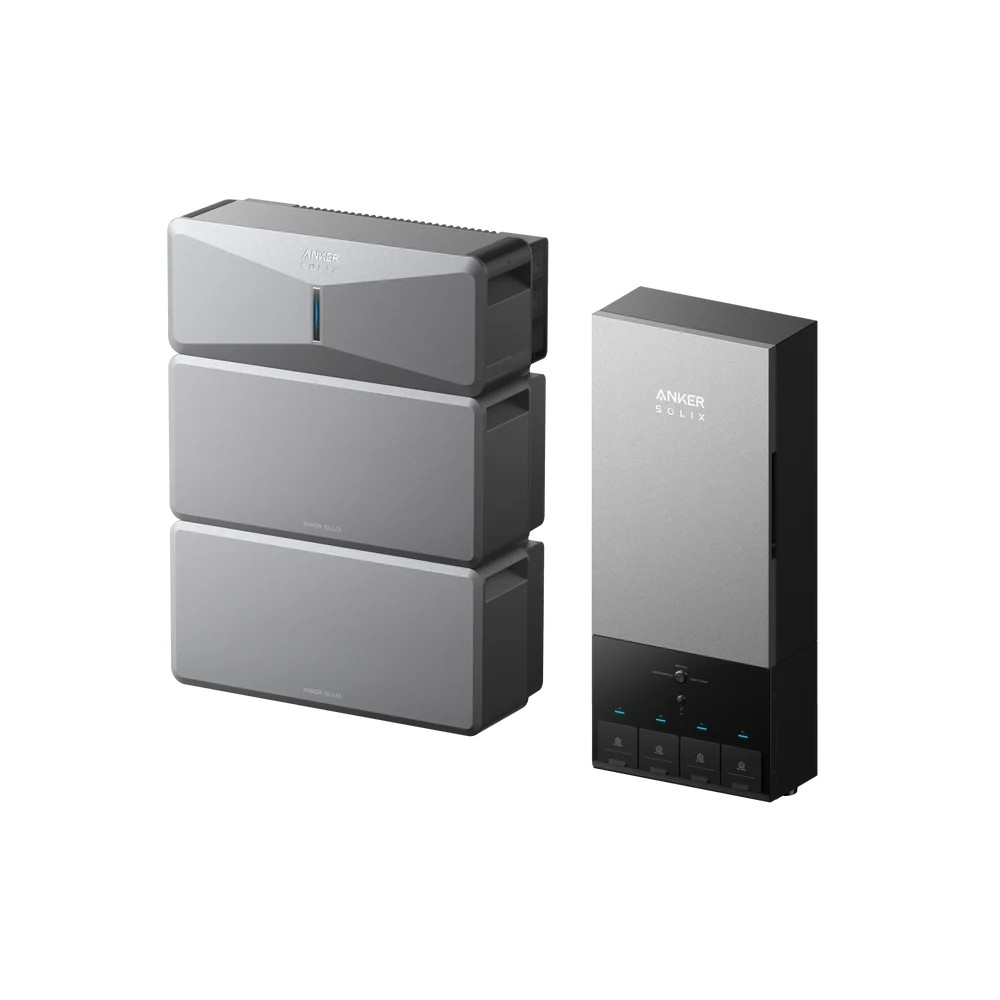
The Anker SOLIX E10 Whole-Home Backup illustrates how storage and output work together. The specified configuration includes one E10 power module, two B6000 batteries and a Power Dock. Each B6000 battery provides 6,144 Wh, giving the two-battery configuration 12.288 kWh of nominal storage. The system delivers up to 7,680 W of continuous output with batteries and up to 10,000 W of turbo output for 90 minutes with two batteries. These figures describe different capabilities: the storage rating indicates the energy held, while the output ratings describe the power available to connected loads. When assessing a system of this size, compare the energy required over the intended outage period with the power needed to run appliances simultaneously. Actual runtime depends on usable capacity, conversion efficiency and household consumption.
Plan for Whole-Home Loads and Essential Circuits
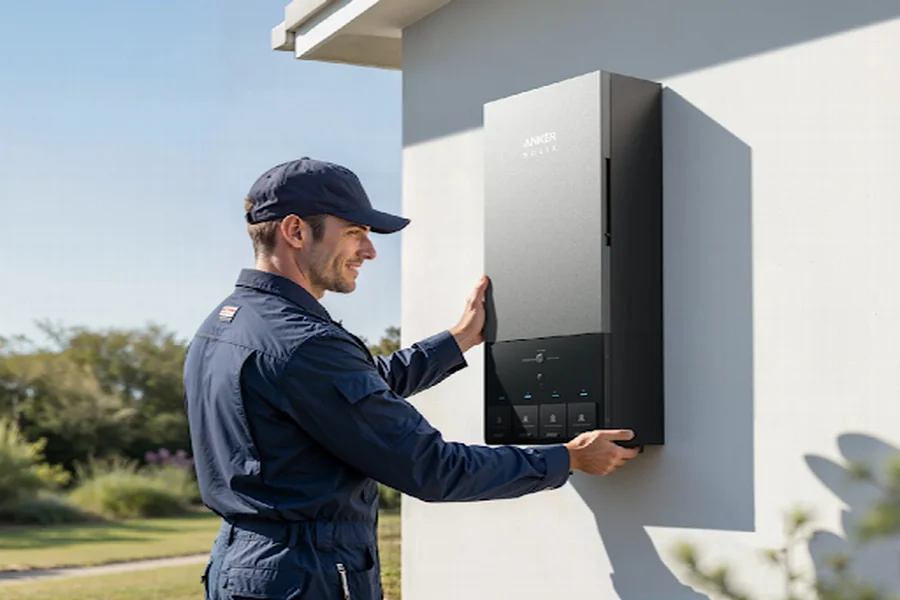
Some households want to maintain only a few essential circuits during an outage. Others prefer a system designed to support a much wider range of household equipment. Your choice affects the required capacity, output and electrical integration. The E10 Power Dock supports a 200 A maximum grid connection and 160 A continuous connection, allowing integration with a suitable whole-home electrical setup. The system also supports automatic backup switchover in 20 milliseconds or less. Before selecting a configuration, identify which circuits you want to keep powered and review their combined demand with a qualified electrician. Include high-consumption appliances in the assessment rather than assuming that every device will operate simultaneously without affecting runtime.
Build in Longer Runtime Through Expansion and Recharging
For households preparing for extended outages, expandable storage and additional charging options can matter as much as the initial battery size. The E10 supports up to 30 kWh of storage per power module and up to 90 kWh across three units. Each unit supports up to 9 kW of solar input, with the three-unit configuration reaching 27 kW of maximum solar input. The system also supports a 4.5 kW Smart Generator input. These options provide different ways to maintain power during longer interruptions. Solar generation can replenish stored energy when conditions permit, while generator charging provides another source of energy.
Conclusion
The right home battery size depends on how much energy your essential appliances consume, how long an outage may last and whether the system can meet simultaneous power demands. Calculate daily energy requirements, check appliance starting surges and compare both usable capacity and continuous output. The Anker SOLIX E10 offers a configurable approach, with 12.288 kWh of nominal storage in the specified two-battery setup and options for expansion, solar charging and generator input. Careful planning turns these specifications into a backup solution suited to your household.

