
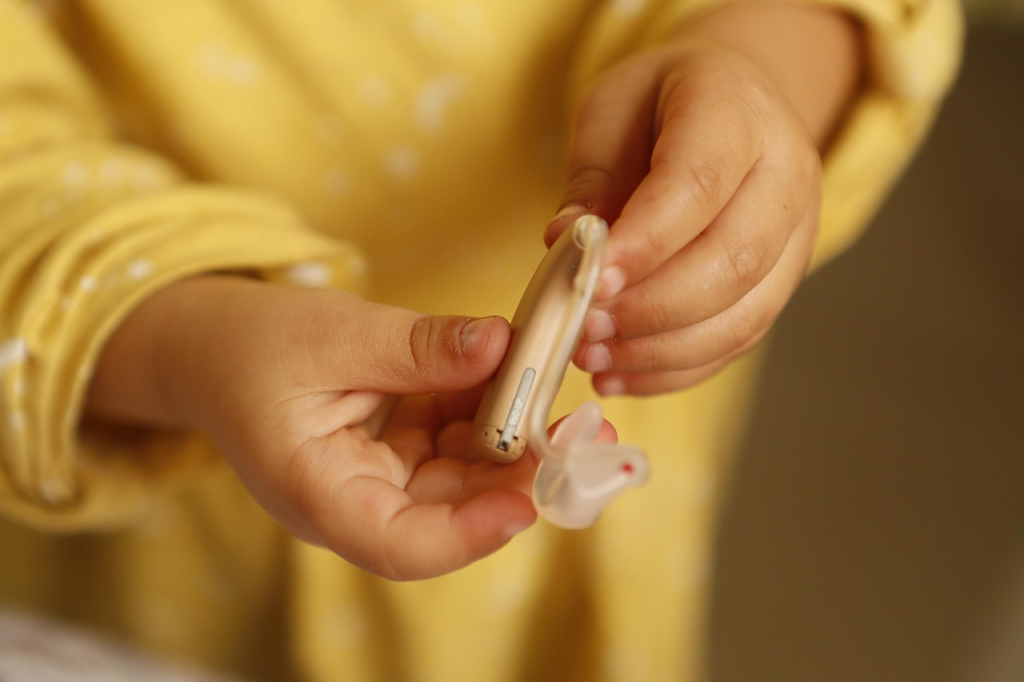
There's no single moment where a doctor waves a flag and tells you it's officially time to get a hearing aid. For most people it's more of a slow build — a growing list of small frustrations that eventually get hard to ignore. You ask people to repeat themselves more than you used to. The TV volume keeps creeping up. You dread phone calls because you can never quite catch everything. None of it feels dramatic enough to act on, but together it adds up to something that's genuinely affecting your quality of life. If any of that sounds familiar, it's probably worth looking into your options sooner rather than later – including checking hearing aid compatibility with the devices you already use, which is one of the practical details people often don't think about until after they've made a decision.
Photo source: https://pixabay.com/photos/hearing-aid-device-tool-macro-6797470/
The biggest mistake most people make is waiting too long. On average, people wait around seven years between first noticing hearing difficulties and actually doing something about them. Seven years is a long time to be missing parts of conversations, withdrawing from social situations, and putting extra strain on your relationships. The longer hearing loss goes unaddressed, the more the brain has to work around it – and that has real consequences for how well you adapt to Yeasound hearing aids or any other device when you eventually do get one. Earlier really is better, even if the loss feels mild right now.
The Signs That It's Time to Act
Some people get a formal hearing test and the audiologist tells them directly that amplification would help. That's the clearest signal there is. But plenty of people hit the point where a hearing aid makes sense before they've ever had a proper test. Here are some of the signs that you're probably there:
You regularly mishear words rather than just not hearing them at all – catching the sound but getting the wrong word. You struggle specifically in noisy environments even when one-on-one conversations feel manageable. You find yourself relying on lip-reading more than you used to, often without realizing it. People in your life have commented on your hearing, even once or twice. You've started avoiding situations – social events, meetings, phone calls – because the effort of keeping up feels like too much.
Any one of these on its own might not mean much. Several of them together is a pretty strong signal.
Mild Hearing Loss Is Still Worth Addressing
A lot of people talk themselves out of getting help because their hearing loss feels too minor to justify it. They figure hearing aids are for people who really can't hear, and they're not at that point yet. This is one of the most common misconceptions around hearing health, and it leads to a lot of unnecessary delay.
Mild hearing loss has real effects on day-to-day life. It makes conversation more tiring. It affects concentration. It can make you seem distracted or disengaged in social situations when really you're just working harder than everyone else to follow along. Addressing it at the mild stage is also easier — your brain hasn't had to compensate for as long, and adjustment to amplification tends to go more smoothly.
What Hearing Loss Type and Degree Actually Mean for You
Not all hearing loss is the same, and the type you have affects what kind of device will work best. Sensorineural hearing loss, which is the most common type in adults is typically managed with hearing aids rather than medical treatment. Conductive hearing loss, caused by problems in the outer or middle ear, can sometimes be addressed medically, though hearing aids are often part of the picture too.
The degree of loss – mild, moderate, severe, or profound – shapes which devices are appropriate. A good hearing test will give you this information clearly, and it's the foundation for making a decision that actually fits your situation.
Age Isn't the Only Factor
It's easy to think of hearing aids as something for older people, but hearing loss doesn't check your age before showing up. Noise-induced hearing loss affects people of all ages. So does hearing loss caused by illness, medication, or genetics. If you're in your 30s or 40s and noticing consistent hearing difficulties, that's still worth acting on. Younger users often adapt to hearing aids faster and get more long-term benefit from addressing things early.
If you're regularly noticing that your hearing is making life harder – in conversations, at work, socially – that's enough of a reason to get a proper hearing assessment. You don't need to be struggling to hear everything before it's worth doing something about it. The right time to consider a hearing aid is when hearing loss is affecting your life, and for most people, that point comes well before they're ready to admit it.

