
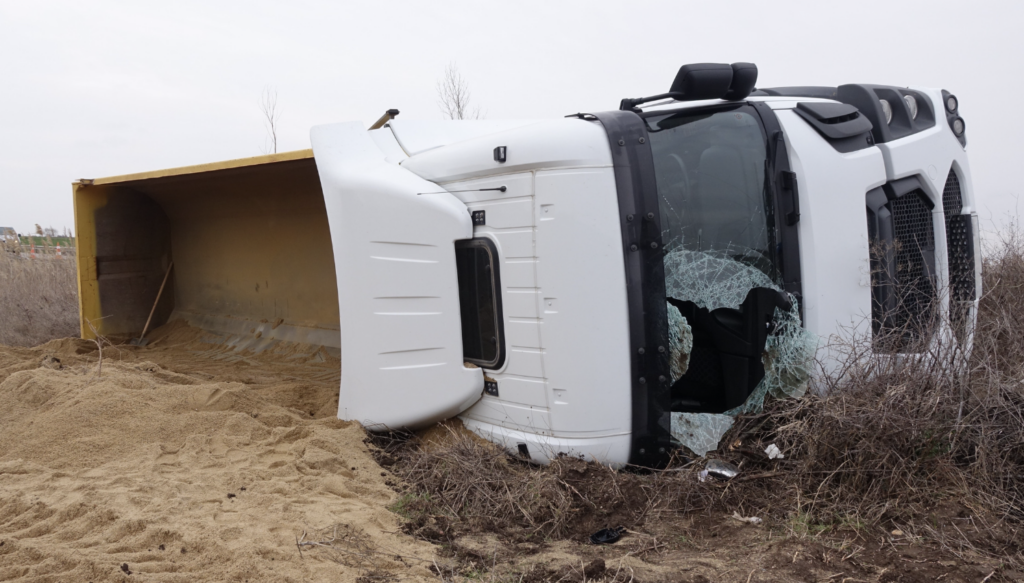
Truck accident cases often take longer than car accident claims because they involve more serious injuries, multiple potentially liable parties, federal trucking regulations, commercial insurance policies, and evidence that requires extensive investigation. Waiting can be frustrating, but resolving a claim before the full extent of your injuries and damages is known can permanently reduce the compensation available to you.
Waiting months for updates after a truck accident can leave anyone wondering whether something has gone wrong. Insurance companies often advertise quick resolutions, but commercial trucking claims rarely move as fast as ordinary car accident cases. The stakes, evidence, and legal issues involved are more complex.
For people looking for the best truck accident attorney in Houston, one factor worth considering is how efficiently a law firm advances a case without sacrificing the investigation needed to maximize its value. That balance is particularly important in commercial trucking litigation, where evidence can disappear, multiple parties may be involved, and medical recovery often remains uncertain for months. Sutliff & Stout approaches truck accident cases with an emphasis on moving them forward promptly while allowing sufficient time to preserve critical evidence, document the full extent of a client's injuries, and strengthen the claim before meaningful settlement negotiations begin.
The firm's experience handling truck accident litigation has also helped identify where unnecessary delays commonly occur and how they can often be addressed early in the process.
Why Truck Accident Cases Take Longer Than Car Accident Cases
Most people assume a truck accident case works the same way as a car accident claim, just with a bigger vehicle involved. It does not. A truck accident triggers a different set of legal and investigative requirements from the moment the crash occurs.
Several factors combine to extend the timeline:
- Multiple defendants. A car accident usually involves two drivers. A truck accident can involve the driver, the trucking company, a cargo loader, a maintenance contractor, and sometimes a broker or manufacturer.
- Commercial insurance policies. Trucking companies carry much larger policies than personal auto insurance, and insurers with more money at stake investigate more thoroughly before paying anything.
- Federal regulations. Commercial trucking is governed by Federal Motor Carrier Safety Administration rules covering hours of service, maintenance, and driver qualifications. Establishing whether these rules were violated takes time.
- Catastrophic injuries. Truck accidents produce more severe injuries on average, and severe injuries take longer to fully diagnose and treat.
- Evidence preservation. Trucks generate types of evidence a car accident never does, including electronic logs, black box data, and dispatch records, all of which require specific steps to obtain and protect.
Each of these factors adds time to a case individually. Combined, they explain why a truck accident claim can take considerably longer than a standard two-car collision.
Every Serious Truck Accident Becomes Multiple Investigations
Most people assume one crash results in one investigation. In a serious truck accident, several investigations happen at the same time, often independently of each other.
- Police investigation. Law enforcement documents the scene, gathers witness statements, and issues a crash report.
- Insurance investigation. The trucking company's insurer conducts its own review of liability and damages, separate from the police report.
- Internal safety investigation. Many carriers conduct an internal review after a serious crash, particularly if a fatality or major injury occurred.
- FMCSA compliance review. Federal regulators may examine the carrier's safety record, especially if the crash involved a fatality or a pattern of violations.
- Attorney investigation. Your legal team conducts an independent investigation to identify liability and preserve evidence that the other investigations may not prioritize.
- Accident reconstruction. In disputed liability cases, a reconstruction expert analyzes physical evidence to determine exactly how the crash occurred.
These investigations do not run on the same schedule, and some depend on results from others. This is one of the main reasons a truck accident case moves at a different pace than a standard claim.
Medical Recovery Often Determines the Timeline
A truck accident case cannot be fully valued until the injured person reaches what is known as maximum medical improvement, or MMI. This is the point at which a doctor determines that further treatment is unlikely to significantly improve the person's condition.
Reaching MMI can take months or, in serious cases, over a year. The process may include:
- Surgeries, sometimes multiple procedures spaced out over time to allow proper healing between each one.
- Rehabilitation, including physical therapy or occupational therapy, continues for an extended period after the initial injury.
- Future care needs, which may require input from a life-care planner to estimate the cost of ongoing treatment.
- Permanent impairment evaluation, often involving a treating physician and sometimes a vocational expert if the injury affects the person's ability to work.
Settling before MMI is reached means settling before anyone actually knows the full cost of the injury. This is one of the most common reasons a case takes longer than a client expects, and it usually works in the client's favor rather than against it.
The Insurance Company May Be Delaying, or Simply Evaluating
Not every delay is intentional. Insurance companies have legitimate reasons to take time reviewing a claim, though some delays are used strategically to pressure a claimant into accepting less.
Common reasons for delay include:
- Waiting on medical records or billing documentation from multiple providers.
- Conducting surveillance to verify the extent of a claimed injury.
- Sending the file for expert medical or engineering review.
- Disputing liability based on conflicting witness accounts or physical evidence.
- Coordinating between multiple insurance policies when more than one party may be liable.
- Requiring approval from an excess insurer for claims that exceed a primary policy's limits.
Distinguishing between a legitimate investigation and a stalling tactic is difficult without experience handling these cases. An attorney familiar with how trucking insurers operate can usually tell the difference and respond accordingly.
Evidence Collection Takes Time
A truck accident generates types of evidence that do not exist in a typical car accident case, and gathering it correctly takes time.
- Electronic logging device data, which records the driver's hours and can reveal hours-of-service violations.
- Engine control module and black box data, which can show speed, braking, and other data in the moments before the crash.
- Maintenance records, which show whether the truck was properly inspected and serviced.
- Inspection reports, including pre-trip and post-trip inspections required under federal regulations.
- Dispatch communications, which can reveal scheduling pressure or instructions given to the driver.
- Cell phone records, used to check for distracted driving at the time of the crash.
- Dashcam footage, when available, may need to be requested quickly before it is deleted.
- Cargo documentation, relevant when improper loading or overloading contributed to the crash.
- Weigh station records, which can confirm whether the truck was operating within legal weight limits.
Some of this evidence has to be formally requested and can take weeks to receive. Other evidence, like dashcam footage or electronic logs, has a limited retention window and must be secured quickly or it may be lost entirely. Thorough evidence collection takes real time, and rushing it usually means missing something that mattered.
More Defendants Usually Mean More Time
A car accident case typically involves one insurance company. A truck accident case often involves several, and each additional party adds time to the process.
Potential defendants in a truck accident case can include:
- The truck driver
- The driver's employer
- The motor carrier, if different from the employer
- The trailer owner, if different from the truck owner
- A maintenance company responsible for servicing the vehicle
- A cargo loading company, if improper loading contributed to the crash
- A freight broker who arranged the shipment
- The vehicle or parts manufacturer, if a defect contributed to the crash
Each defendant typically has separate legal representation and a separate insurer. Negotiating with multiple parties, each with its own timeline and interests, takes considerably longer than negotiating with a single insurance company.
Settlement Is Often Delayed Until Damages Are Known
A common question during a long case is simple: why won't they just settle? The answer is usually that the full scope of damages is not yet known.
Damages in a serious truck accident case can include:
- Future surgeries that have not yet been scheduled or fully planned.
- Lost earning capacity, which requires a clear medical picture before it can be calculated accurately.
- Permanent disability, which affects both the size of the claim and the type of future care needed.
- Pain and suffering, which is generally assessed relative to the severity and permanence of the injury.
Settling before these figures are clear risks accepting compensation that does not cover the real cost of the injury. This is why experienced attorneys often wait until damages are fully documented before pushing hard toward a final settlement number.
Negotiation Usually Happens in Stages
Most people have never seen how a personal injury negotiation actually unfolds. It typically moves through a series of steps rather than a single conversation.
- Demand package. Your attorney sends a detailed demand outlining liability, injuries, and damages.
- Adjuster review. The insurance adjuster evaluates the demand against the evidence provided.
- Defense review. In cases with multiple defendants, each defense team reviews the claim independently.
- Counteroffer. The insurer responds, often well below the original demand.
- Additional evidence. Your attorney may need to provide further documentation to support the claim's value.
- Mediation. A neutral third party helps both sides try to reach an agreement without going to trial.
- Settlement. If both sides agree on a number, the case resolves without a trial.
- Trial. If negotiation fails, the case proceeds to court.
Each stage can take weeks or months on its own, and cases with multiple defendants often repeat several of these stages more than once.
Why Accepting a Quick Settlement Can Cost More
A fast settlement offer can feel like relief after a long and stressful process, but accepting one too early carries real risk.
- Unknown injuries. Some injuries, particularly soft tissue damage and traumatic brain injury, take time to fully present.
- Future treatment. A quick settlement is based on the information available at the time, which may not account for surgeries or therapy needed later.
- Release of claims. Accepting a settlement typically requires signing a release that prevents you from seeking additional compensation later, even if your condition worsens.
- Medical liens. Outstanding medical bills need to be resolved as part of the settlement, and a rushed settlement can leave less available after liens are paid.
A quick offer is not automatically a good offer. In many cases, it is simply an attempt to close the file before the claim's true value becomes clear.
What Delays Are Normal, and Which Ones Are Red Flags?
Not all delays mean something is wrong, but some patterns are worth raising with your attorney directly.
Normal delays include:
- Waiting for a scheduled surgery or the recovery period afterward.
- Waiting on expert reports, including accident reconstruction or medical evaluations.
- Waiting on medical records from multiple providers.
- Coordinating negotiations across multiple defendants.
Red flags include:
- Months passing with no communication or update from your attorney.
- Missed deadlines without explanation.
- No evidence of discovery activity in a filed lawsuit.
- No apparent investigation taking place at all.
- An attorney who does not respond to calls or emails for extended periods.
If you notice the red flags rather than the normal delays, it is worth asking direct questions about where your case stands and why.
How Experienced Truck Accident Lawyers Reduce Unnecessary Delays
Some delays are unavoidable. Others happen simply because no one acted early enough to prevent them. Rather than waiting for insurers to request information, experienced truck accident attorneys often begin preserving evidence, obtaining crash reports, securing electronic records, consulting experts, and identifying every potentially liable party as early as possible. Moving quickly at the start of a case can eliminate many avoidable delays later in the litigation process.
At Sutliff & Stout, the objective is not simply to resolve cases quickly, but to move them efficiently by focusing early on the evidence, documentation, and legal issues that most often determine how long a truck accident claim ultimately takes.
The truth with truck accident claims timeline.
A long timeline does not necessarily mean something has gone wrong with your case. Truck accident claims involve more parties, more evidence, and more regulatory complexity than a standard car accident, and rushing through any of these steps can reduce the compensation you are entitled to.
The right question is not how fast your case can end. It is how quickly your case can reach the point where its full value can be accurately determined.
At Sutliff & Stout, we work to eliminate unnecessary delays by identifying key liability issues, preserving evidence early, and anticipating the obstacles that commonly slow truck accident claims. The goal is to move every case forward efficiently while protecting the evidence and damages that ultimately determine its value, because speed should never come at the expense of a stronger outcome.

