
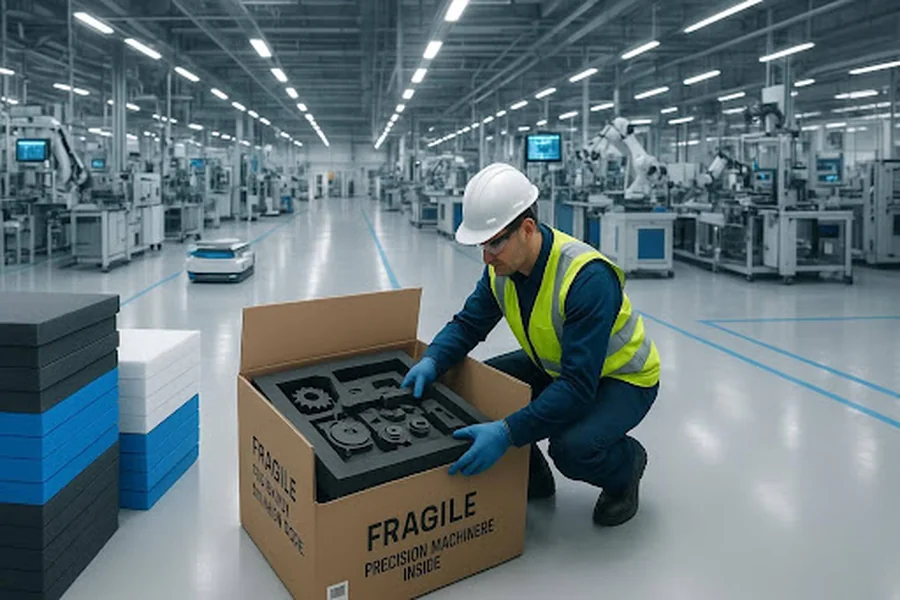
High density foam sheets are more than just another material used in factories and workshops; they are a top choice that offers strong performance and flexibility across many jobs. Why do they fit industrial projects so well? The reason is simple: high strength, steady performance, and the ability to adapt to tough tasks.
This material is valued across many industries because it can handle harsh conditions, absorb impact, and give lasting support. When companies need foam that is both strong and flexible, they often turn to high density foam sheets.
From cushioning fragile goods during shipping to providing important structural support in heavy machines, high-density foam meets tough demands across many fields. Its strong build and ability to hold shape under heavy loads make it a smart buy, cutting replacement costs and helping simplify production.
This article looks at why high density foam sheets are a go-to choice for industrial work, covering their makeup, benefits, and common uses.
What Are High Density Foam Sheets?
High density foam is made to perform better than lower-density foams. It quietly solves real problems, from stopping product damage during shipping to improving comfort and safety on the job. “High density” means there is more material packed into each cubic foot, which gives the foam more strength, firmness, and a longer life.
Because there is more material, the foam can hold more weight, resist permanent dents, and last longer under stress. While “high density” may sound like the foam is always hard, density and firmness are not the same thing. High density foams can be soft, medium, or very firm, allowing custom solutions without losing strength and durability.
Foam Sheet Composition and Manufacturing Process
The most common high density foam used in industry is high-density polyurethane foam. It forms from a controlled reaction between two main ingredients: polyols and isocyanates. Polyols are often made from petroleum, and diisocyanates are a family of chemical building blocks.
When mixed, the blend expands into a flexible but solid material. Careful control of this expansion helps reach the wanted density and structure.
During production, makers can add ingredients to improve certain traits. For example, fire retardants can be added for safer use in many settings, meeting strict safety rules. By tuning the formula, manufacturers can create many types of high density foam, each set up for a specific job, such as better chemical resistance or better thermal performance.
Types of High Density Foams Commonly Used in Industry
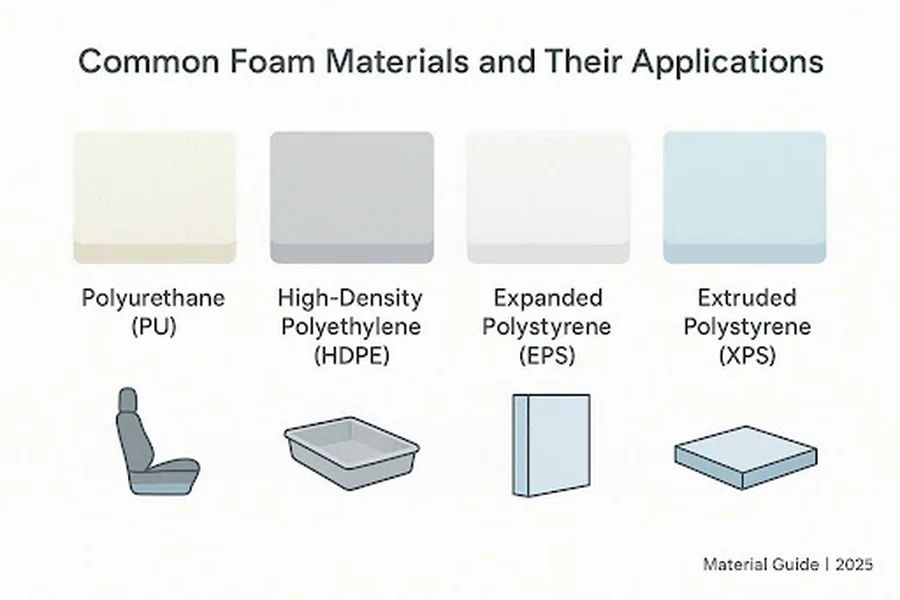
While high-density polyurethane foam is widely used, industry also uses other high-density foams, each with its own strengths. High-density polyethylene (HDPE) foams are used for items like kids’ toys, anti-static trays, and foam inserts. The best choice depends on what the project needs.
For example, with Expanded Polystyrene (EPS) foam, different density grades fit different tasks. SL (Standard Light) and M (Medium) grades work for lighter jobs like filling gaps or general insulation. H (High) and VH (Very High) grades offer higher strength and durability for load-bearing roles in construction or heavy-duty packaging.
For even tougher needs, Extruded Polystyrene (XPS) gives higher densities and higher compressive resistance, making it very useful in heavy construction and engineering work. This range means there is a high density foam for almost any industrial need.
| Foam Type | Typical Density Range | Key Traits | Common Uses |
| Polyurethane (PU) | Medium-High | Good cushioning, shock absorption, tunable firmness | Seating, gaskets, protective packaging |
| Polyethylene (HDPE) | Medium-High | Tough, closed-cell, moisture resistant | Trays, inserts, impact protection |
| EPS | Light-Very High | Rigid, graded strength options | Insulation, load-bearing fill, packaging |
| XPS | High-Very High | High compressive strength, low water absorption | Heavy-duty insulation, construction |
Why Are High Density Foam Sheets Preferred in Industrial Projects?
This preference is driven by clear advantages and real problem-solving ability. These foams often beat other materials by offering a strong mix of strength, resilience, and long-term value. Their steady results under pressure make them a key part of many industrial jobs where failure is not acceptable.
Industrial settings put materials under constant stress, changing temperatures, and exposure to many elements. High density foam sheets handle these challenges well. Their strong build and engineered traits mean they perform well at the start and keep doing so over the life of the project or product, which helps both safety and day-to-day operations.
Durability and Longevity in Harsh Conditions
A major reason for the wide use of high density foam is its long life. It is built to handle heavy wear, keeping its shape even under big loads and repeated compression. Unlike lower-density foams that can break down or lose shape fast, high density foam resists permanent dents and springs back after force is removed.
This toughness makes it a good pick for long-life products, such as auto parts, machinery protection, and strong packaging. Industry distributors like CHEM-CRAFT ensure consistent access to these durable materials, as its resistance to abrasion and tough environments adds to its value.
The long life of high density foam cuts replacement costs, making it a smart and economical choice for businesses that need reliable materials.
Consistent Performance Across Applications
Beyond durability, high density foam sheets are valued for steady performance in many uses. Whether giving good support in seating, absorbing shock in gear, or insulating against heat and cold, this foam delivers reliable results. Its dense structure keeps its traits stable even under changing conditions or constant use.
This consistency is especially important in industrial work where predictability matters. Makers and engineers can count on high density foam to act as expected, helping overall quality, comfort, and function. Its flexibility lets teams simplify production by using one material that can meet many needs without losing performance.
Key Benefits of High Density Foam Sheets for Industrial Applications
Using high density foam sheets brings many benefits, from strength and support to cost control and greener options. Together, these benefits explain why this material is a mainstay in modern making and design, offering smart answers to tough problems.
The mix of features in high density foam lets it meet several needs at the same time. Many features work together, which makes it valuable for safer, more efficient, and more sustainable work.
Outstanding Load-Bearing Capacity
High density foam can carry heavy loads without big compression or permanent dents. This matters for jobs like bases for heavy machines or supporting products in transit. With more material per cubic foot, it spreads weight well and resists forces that crush less strong materials. This makes it a good choice where support and long-term stability are required.
Superior Shock and Impact Absorption
High density foams often have viscoelastic behavior, which makes them great at absorbing shocks. They resist deformation and then slowly return to their original shape, spreading out energy from impacts. This is very important for machinery protection, packaging for fragile or heavy items, and protective gear. By absorbing impacts, high density foam protects goods and helps keep workers safer.

Thermal and Acoustic Insulation Properties
High density foam sheets are also strong insulators. They reduce heat flow and block sound, which helps in many settings. In construction, they are used in walls and ceilings to help keep buildings energy efficient by resisting heat and cold. In cars and planes, they cut noise and heat transfer, improving comfort and helping systems work better. Their sound-blocking traits also help make quieter work areas.
Chemical and Moisture Resistance
Many industrial sites expose materials to chemicals and moisture, so parts must hold up without breaking down. High density foams, especially closed-cell types, are often water-resistant and resist many chemicals. This helps them last in tough conditions, making them a solid choice where liquids or corrosive materials are present, such as in marine work or certain factories. Closed-cell high density foam also makes a long-lasting barrier against moisture.
Lightweight Yet Structurally Strong
High density foam offers a rare mix of low weight and high strength. This is a big advantage in cars and planes, where cutting weight boosts fuel use and performance, but strength still matters. The material gives strong protection and support without adding bulk, which can lower shipping costs and open up better design options.
Ease of Fabrication and Customization
High density foam is easy to work with. It can be cut, shaped, and customized to fit specific designs, enabling custom solutions for unique needs. This flexibility in making parts helps teams build models, custom cushions, and special inserts that fit right. Easy fabrication can speed up production and reduce waste.
Cost Efficiency Over Project Lifespan
While high density foam may cost more at first than lower-density options, it often saves money over time. It stands up to wear, keeps its shape, and resists breakdown, so you replace it less often. Its long life, plus its protective and insulating traits, makes it cost-effective by lowering maintenance needs and downtime.
Available Eco-Friendly and Recyclable Options
As companies focus more on sustainability, high density foam is changing to meet these goals. Many makers now offer greener options, such as foams with bio-based content (like soy replacing some petroleum) and foams with recycled material. Low-waste production is also more common. These updates make high density foam a responsible choice for modern industry.
Industrial Sectors and Typical Uses for High Density Foam Sheets
The flexibility of high density foam sheets means they are used across a wide range of industries. Their mix of properties makes them key where performance, durability, and safety matter most. From protecting electronics to supporting medical devices, high density foam is a steady worker that meets the varied needs of today’s industry.
Its ability to fit many industrial foam uses shows its value as a multi-use material. Companies worldwide use high density foam to boost product quality, improve operations, and extend product life, making it a key part of modern projects.
Packaging and Protective Shipping Solutions
Across logistics and supply chains, high density foam is a standout for packaging. Its strong shock-absorbing ability is key to protecting delicate and heavy items during shipping and handling. From electronics and glassware to complex machine parts, foam inserts and custom packaging protect products from impacts, shaking, and crushing forces. This helps goods arrive intact, cuts damage claims, and improves customer satisfaction.
Construction: Insulation, Expansion Joints, and Soundproofing
Construction uses high density foam for both thermal and acoustic insulation. It is common in walls and ceilings to help keep indoor temperatures stable. Rigid boards under floors add insulation and support.
High density foam also works well for expansion joints, allowing movement in concrete and other structures. Acoustic wall panels made from high density foam are common in sound control, creating quieter spaces in commercial and industrial buildings.
Automotive: Seals, Gaskets, and Interior Parts
The auto industry uses high density foam for comfort and safety. It is used in seats and headrests to provide firm but comfortable support and to absorb road shock for smoother, quieter rides.
It also appears in armrests, dashboards, and cabin soundproofing to cut noise and heat transfer. High density foam is formed into seals and gaskets to help stop leaks and protect sensitive parts.
Aerospace and Marine Applications
In aircraft and boats, high density foam works well because it is light, strong, and resists water and pressure. In planes, it is used in cabin seats and insulation panels, adding performance without too much weight. On the water, it is used in boat seating and flotation gear, where water resistance and shape-holding under pressure matter for safety and long life.
Medical and Cleanroom Equipment
Healthcare uses high density foam where support, fit, and durability are important. It is a key part of orthopedic cushions, prosthetics, wheelchair cushions, and hospital mattresses, giving firm but gentle support for people who need pressure relief. It keeps its shape under load, which fits these high-performance needs, and it can be cleaned for sterile areas.
Sports, Leisure, and Specialty Equipment
Sports gear relies on high density foam for protection in helmets, pads, and athletic mats. Its impact absorption helps lower injury risk during high-impact play. In leisure, it is used in camping pads and specialty gear where toughness, cushioning, and support are needed for comfort and performance.
How Do High Density Foam Sheets Compare to Other Industrial Materials?
When choosing materials for industrial work, you need to know how high density foam sheets stack up against other options. Their mix of traits often makes them a strong choice, offering performance that many other materials do not match in full. Comparisons often highlight high density foam’s strength, support, and flexibility.
Good material choices weigh pros and cons against the job’s needs. In many cases, the long-term benefits and overall value of high density foam often beat other options.
Foam Sheets vs. Low/Medium Density Foam
The big difference between high density foam and lower-density foams is strength and life span. Low and medium density foams have less material per cubic foot, so they are softer, less supportive, and more likely to break down with pressure or repeated use. While they may cost less at the start, they often need replacing sooner, which raises long-term costs.
High density foam is built for long-term support and durability. It resists dents, keeps its shape better, and can carry heavy loads without big compression. This makes it a more reliable pick for industrial jobs where steady performance and longer product life matter, giving better value over time.
Foam Sheets vs. Rubber and Plastics
Rubber and many plastics are also common in industry, but high density foam often brings clear benefits. Rubber can absorb shocks, but it can be heavier and harder to customize. Plastics may be rigid and durable, but they can lack cushioning and insulation. Some plastics can also get brittle under impact or extreme temperatures.
High density foam, especially polyurethane, offers a blend of strength, flexibility, shock absorption, and insulation that can beat rubber and many plastics in certain jobs. It is often easier to cut, shape, and fit into complex designs. Its lower weight compared to solid rubber or dense plastics also helps where weight savings matter, such as in cars and planes.
Key Factors When Selecting High Density Foam Sheets for Your Project
Choosing the right high density foam is not a one-size-fits-all decision. You need to think about several key points to make sure the foam matches your exact needs. A smart selection process can lift performance, boost durability, and cut costs, helping your project succeed.
Knowing these key points will help you choose among the many high density foams and pick the one that fits your industrial use.
Density Grades and Compression Ratings
“High density” covers a range of density grades. For EPS, densities vary a lot (for example, H grade around 24 kg/m³ to VH around 28 kg/m³, and higher for XPS). Higher density often brings more strength and longer life, which matters for load-bearing jobs. But density is not the same as firmness; high density foams can be made in many firmness levels.
Look at both density grade and compression rating (often Indentation Force Deflection, or IFD, for flexible foams) so the foam gives the support and bounce-back your job needs.
Thickness and Sheet Dimensions
Thickness and overall sheet size affect how the foam works and how it fits your build. The needed thickness depends on the level of cushioning, insulation, or support you want. Large sheets can reduce seams and waste in big installs, while small pre-cut pieces may be better for detailed parts. Many makers offer custom cutting and fabrication, so you get exact sizes and reduce scrap.
Environmental and Safety Requirements
Industrial projects often follow strict safety and environmental rules. When picking high density foam, look at:
- Fire resistance if heat or flame exposure is possible
- Chemical resistance if corrosive fluids are present
- Compliance with your industry standards and codes
- Greener options, such as bio-based or recycled content
Make sure the foam meets all relevant safety and environmental standards for both compliance and responsible use.
Maximizing Project Value with High Density Foam Sheets
Getting more value is not just about cutting costs; it is about choosing materials that deliver long life, steady performance, and better durability. High density foam sheets are a good example of a material that often gives strong value, turning hard problems into chances to save time and money.
By using the strengths of high density foam, projects can reach results that are strong and reliable, and also more sustainable and cost-effective over their full life. It is an investment in quality that pays off through lower maintenance, better safety, and improved product performance.
Frequently Asked Questions about High Density Foam Sheets in Industrial Projects
Even with a solid grasp of high density foam, people often ask a few common questions before using it in industrial work. The answers below add clarity and help you choose this material with confidence.
How Long Do High Density Foam Sheets Last in Industrial Use?
High density foam sheets are built for long life, even in busy industrial settings. Their dense structure and resistance to compression help them handle heavy wear for many years, sometimes decades, depending on the job and stress level. In furniture or auto parts, where forces are applied and removed often, high-density polyurethane foam is known to keep its shape and traits for a long time, lasting much longer than lower-density options. This durability leads to fewer replacements and lower long-term costs.
Are High Density Foam Sheets Safe and Non-Toxic?
When made and used the right way, high density foam sheets meet strict safety standards. Modern processes for high-density polyurethane foams produce stable, durable materials. Some foams may “off-gas” a mild odor at first, but it usually fades quickly. Makers can add fire retardants to improve safety for commercial and residential use. For special uses, such as medical or cleanroom spaces, always verify that your foam meets the needed certifications for non-toxicity and material safety. Many suppliers now offer greener formulas, including bio-based and recycled content, which can make the safety profile even better.
What Are the Best Practices for Installation and Maintenance?
High density foam sheets are easy to cut and shape to fit your needs. For installation, use adhesives or mechanical fasteners that are compatible with the foam so you get a secure, long-lasting bond. Good surface prep-cleaning and drying-helps improve adhesion. For maintenance, high density foam usually needs little care. Regular cleaning with mild soap and water removes surface dirt. Avoid harsh chemicals or temperatures outside the rated range to extend life. For outdoor seating or marine use, keep the foam protected from long UV exposure and excessive moisture to help it last longer.

