
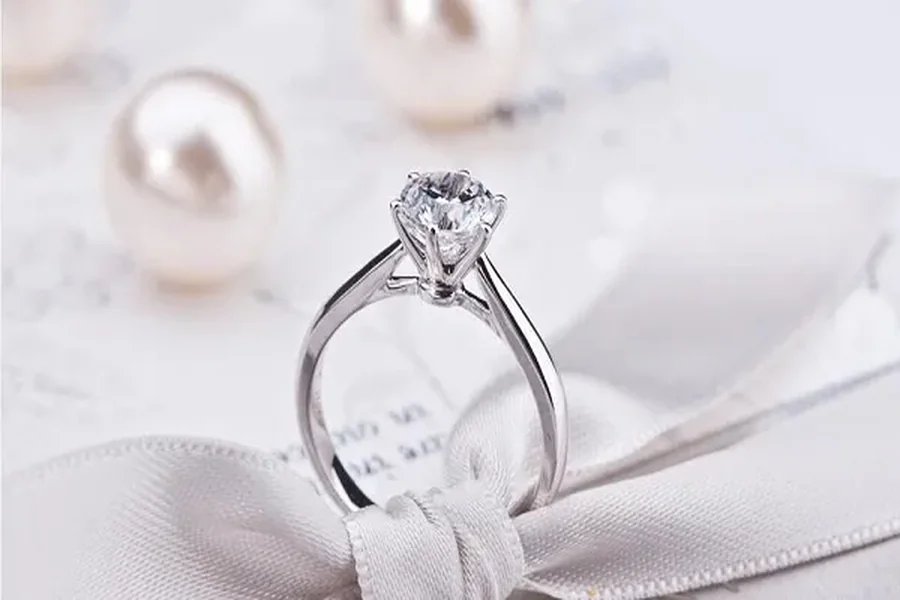
For years, engagement rings have been a symbol of commitment, traditionally worn by women as a visible sign of their engagement to be married. However, in recent times, engagement rings for men have become a powerful tool for challenging and redefining societal norms around relationships and gender. As ideas about love, equality, and self-expression evolve, so too does the symbolism of engagement rings.
Changing traditions
Historically, engagement rings were tied to patriarchal ideas of ownership. They were given as a symbol of a man’s possession of a woman, reflecting a one-sided commitment that defined traditional gender roles. The man would give the woman a ring, and she would wear it as a public mark of her engagement. While these rings do usually symbolise mutual commitment, the focus remains on the woman as the recipient of the gesture.
In contrast, men’s engagement rings are now reshaping this old symbolism. As society embraces more progressive values of partnership and equality, rings are no longer just markers of one-sided devotion. Today, they represent an equal commitment between two partners.
What’s driving the shift
The changing attitudes toward men’s engagement rings are driven by a combination of cultural shifts. Gen Z and Millennials typically challenge traditional views on marriage and gender. These generations are less concerned about conforming to outdated gender roles, making the idea of men wearing engagement rings much more accepted.
Cultural examples of celebrities embracing this shift only fuel the momentum. Stories of women proposing to men, such as Jodie Turner-Smith’s proposal, challenge traditional ideas. Similarly, couples who choose to give mutual engagement rings are showing that love and commitment aren’t gendered—they’re about two people coming together as equals.
Symbolism and meaning
When both partners wear engagement rings, they share a visible symbol of their mutual commitment.
Men’s engagement rings allow for a more visible expression of commitment in a relationship. While some couples may see this as a joint symbol—where both partners wear rings as a pair—others might view the ring as an individual expression of their commitment.
This marks a departure from the more traditional role where the woman alone wears the ring, subtly reinforcing a shift toward shared commitment rather than individual ownership.
Design, style, and practical considerations
As men’s engagement rings gain popularity, jewelry designers are quickly adapting to meet demand. The style of these rings often differs from the more traditional women’s engagement rings, with many designers opting for masculine or unisex designs. You may notice the use of alternative metals like titanium, carbon fibre, or mixed materials like wood. Non-traditional gemstones such as black diamonds or sapphires are also a great option, offering a more distinctive, personal aesthetic for men who prefer something beyond the classic diamond.
Comfort and durability are key considerations. For instance, rings designed for men are often made with stronger materials or finished with coatings that resist wear and tear, making them suitable for active lifestyles. With trends shifting toward more sculptural and bespoke designs, there’s plenty of room for creativity and individuality.
Challenges, misconceptions, and how to talk about it
Despite the growing acceptance of men’s engagement rings, there are still misconceptions and challenges to overcome. Many people may view men’s rings as unmasculine or unnecessary. The idea of wearing a visible sign of commitment on a man’s finger might still feel foreign or uncomfortable to some.
One of the best ways to navigate these challenges is by having open conversations with your partner about what the ring represents to both of you. Jointly shopping for or co-designing the ring can be a way of solidifying this commitment together, rather than simply following tradition. Take the time to communicate with friends and family about the decision in a way that emphasises the symbolic nature of the gesture.

