
Erosion is one of nature’s most powerful and relentless forces. For engineers and landscape architects, the challenge of stabilizing a slope or a stream bank is a constant battle against the immense pressure of soil and water. For decades, the go-to solution was a brute-force approach: a massive, solid concrete retaining wall. But this rigid solution is often expensive, impermeable, and an ecological dead zone.
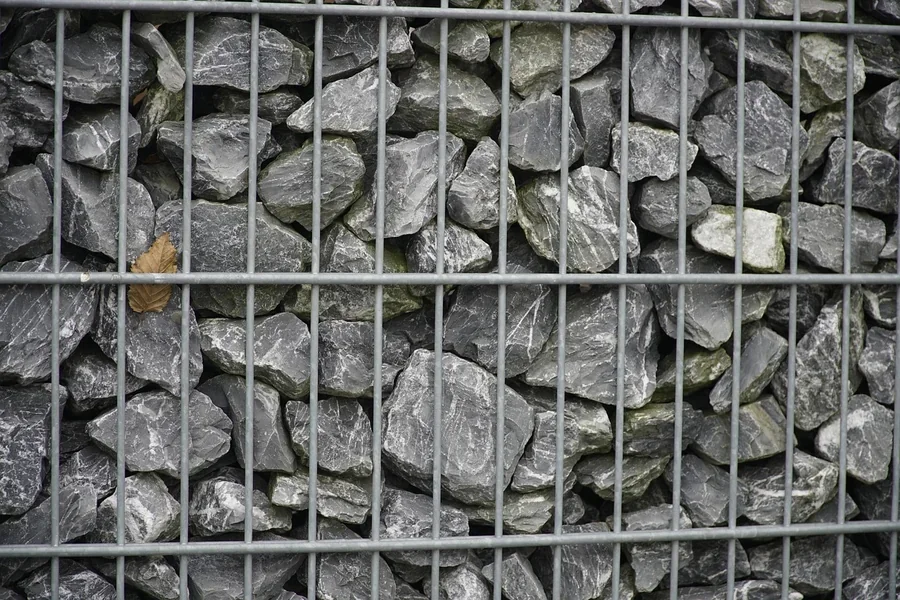
The modern, sustainable approach is to work with nature, creating a structure that is both incredibly strong and naturally permeable. This is where the ancient technology of the gabion has been rediscovered as a powerful, 21st-century solution. A wall built from high-quality, professional-grade gabions is more than just a pile of rocks; it’s a sophisticated, flexible, and eco-friendly engineering system that offers a host of powerful advantages over a traditional concrete wall.
Here’s a look at why gabion structures are an increasingly popular choice for a wide range of erosion control projects.
1- Naturally Permeable and Self-Draining
This is the single greatest engineering advantage of a gabion wall. The number one enemy of any retaining wall is hydrostatic pressure—the immense force that builds up as water saturates the soil behind the wall. A solid, impermeable concrete wall traps this water, which can lead to bulging, cracking, and eventual catastrophic failure if a complex and expensive artificial drainage system is not installed.
A gabion wall, by its very nature, solves this problem. It is a porous, free-draining structure. Water can simply pass directly through the gaps between the rocks, completely eliminating the buildup of hydrostatic pressure. This makes the structure inherently more stable and removes the need for a costly and complex drainage system.
2- Flexible and Resistant to Cracking
The Earth is in a constant state of slow movement and settlement. A rigid, poured-concrete wall is brittle. If the ground beneath it shifts or settles, the concrete will crack.
A gabion wall is a flexible, monolithic structure. The individual wire baskets can shift and settle with the movement of the earth without compromising the overall structural integrity of the wall. This makes gabions an ideal solution for projects in areas with unstable soil conditions or in environments that are subject to frequent freeze-thaw cycles. This focus on resilient infrastructure is a key principle of modern engineering.
3- Lead to a Living, Ecological System
A concrete wall is an ecological dead end. A gabion wall, on the other hand, can become a living, breathing part of the natural landscape over time.
As the years go by, the small voids between the rocks in the gabion baskets will gradually fill with soil, silt, and organic material. This creates a perfect environment for native vegetation to take root and grow directly out of the face of the wall. This can transform a sterile, man-made structure into a beautiful “living wall” that blends seamlessly into the natural environment and provides a valuable habitat for small wildlife.
4- More Cost-Effective and Sustainable
In many situations, a gabion wall can be a more budget-friendly solution than a poured concrete or a mortared stone wall. If there is a local source of rock available at or near the project site, the fill material can be very inexpensive. The installation process is also relatively simple and does not require the complex concrete forms and specialized labor of a poured wall.
From an environmental perspective, the carbon footprint of concrete is incredibly high. Using locally sourced, natural stone and a simple wire mesh basket is a much more sustainable and eco-friendly choice.
Gabion structures are a perfect example of a simple, time-tested technology that has become a powerful solution for modern, sustainable engineering. By providing a solution that is strong, flexible, permeable, and eco-friendly, gabions are an intelligent and responsible choice for a wide variety of erosion control challenges.

