
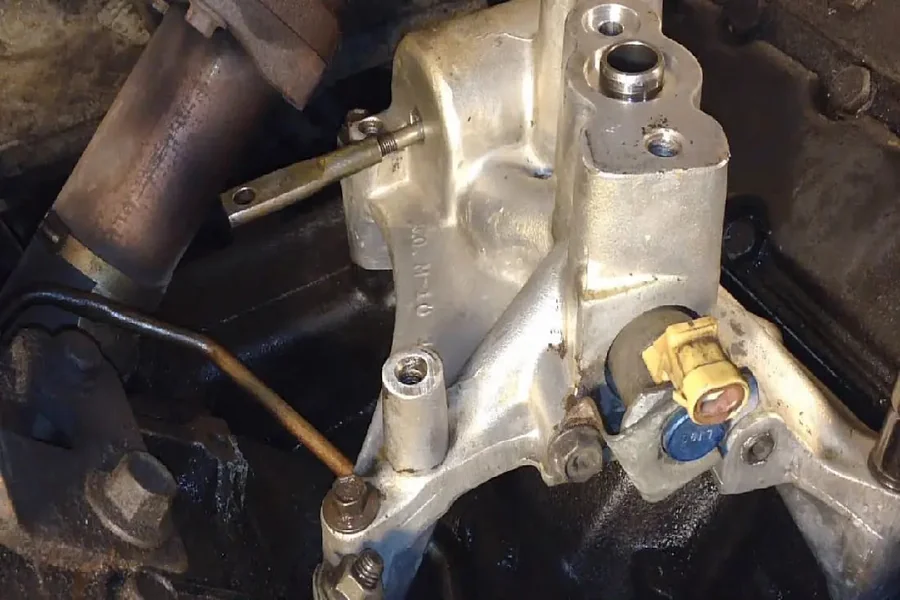
Introduction: What the EBPV Does on a 7.3 Powerstroke
The 7.3 Powerstroke is known to be long-lasting, and yet even the best engines have quirks in their design. The Exhaust Backpressure Valve (EBPV) is one of such features. The EBPV is a butterfly valve that partially closes during cold starts, trapping exhaust heat to speed up engine warm-up.
Theoretically, this helps the engine reach operating temperature more quickly in winter. In the real world, the EBPV system often becomes a maintenance headache. The valve sticks, the actuator leaks oil, and the wiring and sensor systems become unreliable with age.
This has led many owners to consider a 7.3 turbo pedestal EBPV delete. But is removing a cold-start aid a smart move for people living in sub-freezing climates? Let’s break it down.
Common EBPV Problems in Older 7.3 Trucks
As 7.3 Powerstrokes age, the EBPV system shows its flaws. Two problems dominate owner complaints: leaks and sticking valves.
Leaks, Sticking Valves, and Oil Seepage
The EBPV is supposed to help in cold climates. Instead, cold weather often speeds up its failure. The valve cycles more frequently, stressing the actuator. Thick, cold oil puts extra pressure on failing seals. Moisture that seeps into the EBPV linkage or actuator area can freeze, preventing the valve from moving freely.
Worse, if the EBPV fails in the closed position on a sub-zero morning, your truck may not have enough power to drive. You’re left limping to a repair shop, hoping the turbo isn’t damaged.
For owners in northern states or Canada, a failed EBPV isn’t just an inconvenience. It’s a roadside emergency waiting to happen.
How Cold Weather Can Make Symptoms Worse
The EBPV should be helpful in cold climates. Rather, cold weather tends to hasten its breakdown. More common cycling is experienced in the valve, which strains the actuator. Heavy, solid oil adds further pressure to bursting seals. The moisture in the exhaust system is frozen and expands, and may end up jamming the valve. What is worse, when the EBPV is not functioning properly in the closed position on a sub zero morning, your truck may not even have enough power to move. And you are left to limp into a repair shop hoping that the turbo is not broken. To northern state or Canada owners, a failed EBPV is not an inconvenience–it is a roadside emergency just waiting to occur.
Why Some Owners Delete the EBPV on a 7.3 Engine
Given the failure rate of the EBPV, many owners choose to remove it entirely rather than repair it.
Simpler Turbo Pedestal Design
A 7.3 turbo pedestal EBPV delete replaces the factory EBPV-equipped pedestal with a simpler, non-valved unit. The delete pedestal has no moving parts, no oil passages, no actuator to fail, and no butterfly valve inside the exhaust flow.
This design is inherently more reliable. Once installed, there’s nothing to stick, leak, or break. The turbo bolts to the delete pedestal in the same location, so no other modifications are needed.
Reduced Maintenance and Fewer Leak Points
The factory EBPV pedestal has multiple oil seals, gaskets, and a moving actuator shaft, all potential leak points. A delete pedestal removes all of them. Owners report cleaner engine bays, no more oil drips on the driveway, and one less item to inspect during routine maintenance.
Also, with the EBPV removed, exhaust restriction is minimized since the butterfly valve is gone. This slightly lowers EGTs and improves turbo responsiveness, especially at higher RPMs. A proper EBPV delete requires a high-quality 7.3 Powerstroke EBPV delete pedestal specifically engineered for the 7.3 Powerstroke to ensure a leak-free seal and optimal turbo support.
Cold Climate Considerations Before Deleting It
This is the trade-off that matters most to northern owners: cold-start warm-up times home.
Warm-Up Trade-Offs in Winter
On very cold days (below 20°F or -7°C), your 7.3 will take much longer to reach operating temperature and provide cabin heat after deleting the EBPV. The engine will idle fine, but the cab heater will blow lukewarm air for a longer time.
Some owners report that their truck never fully warms up on short commutes in extreme cold. If you’re used to fast window defrosting or quick cabin heat, an EBPV delete can be frustrating.
Daily Driving vs Work-Truck Priorities
Consider your driving patterns. If your truck is a daily driver with short trips in a cold climate, you might prefer to keep the EBPV functional or install an aftermarket manual override switch (note: a manual switch only works if the mechanical parts of the EBPV are still in good condition).
On the other hand, if your truck is a work truck that tows heavy, travels long highway miles, or is parked overnight in a heated shop, the warm-up penalty is minor. Many commercial operators happily delete the EBPV because they value reliability over warm-up speed.
Related 7.3 Powerstroke Components That May Be Needed
Deleting the EBPV isn’t always as simple as swapping the pedestal. Other steps may be necessary.
Sensors, Tuning, and Simulators
The 7.3’s ECU monitors exhaust backpressure via a dedicated sensor. Removing the EBPV changes these readings, often triggering a check engine light unless a resistor, simulator, or custom tune is used. Delete kits often include a resistor or simulator to “fool” the ECU into thinking the EBPV is still present and closed.
Alternatively, a custom tune can disable the EBPV monitoring codes. Without one of these solutions, you’ll have a permanent check engine light. To fix the electronic side, you can buy a 7.3L EBPV delete simulator that plugs into the factory harness and sends the correct signal to the ECU.
Avoiding Check-Engine or Drivability Issues
Beyond the check engine light, an untuned EBPV delete may cause other odd behaviors. The ECU might still try to open the (now missing) valve during cold starts. This does nothing but won’t hurt anything.
More importantly, unless you handle the EBPV sensor signal, some aftermarket tuners may get confused and revert to a safe but low-power mode. Always pair your delete pedestal with either a simulator or a tune that specifically turns off EBPV fault codes.
Summary: Is an EBPV Delete a Good Idea for 7.3 Powerstroke in Cold Climates?
For most 7.3 Powerstroke owners, an EBPV delete is a net positive—even in colder regions. The factory system is notorious for oil leaks, sticking valves, and failing at the worst possible moment.
Removing it simplifies the engine bay, eliminates a major leak source, and slightly improves exhaust flow. The only real trade-off is a slower warm-up on frigid mornings. This is easily managed by driving gently for the first few miles or using a winter grille cover.
However, if you live in sub-zero climates and demand immediate cabin heat, maintaining the EBPV or installing a manual override is an option. For everyone else: delete the pedestal, plug in a pigtail simulator or adjust your tune, and eliminate one more headache on your otherwise bulletproof 7.3.

