
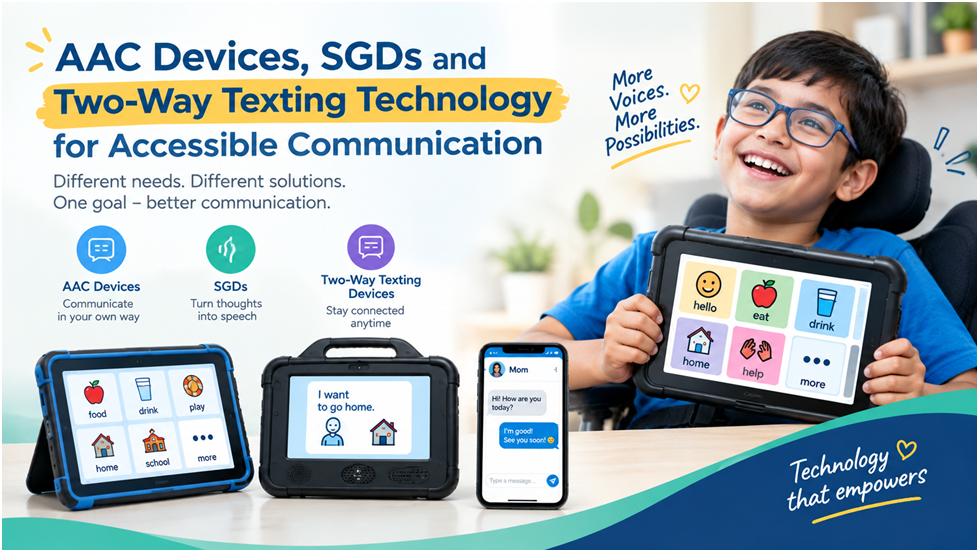
Exploring Communication Technology for People With Special Needs
Being able to communicate is essential for participating in everyday life. From speaking with family and friends to communicating with healthcare providers or accessing important services, reliable communication technology can make a significant difference.
For people with special needs or disabilities that affect their ability to use conventional telephone services, assistive communication technology can provide alternative ways to connect.
In Texas, the Specialized Telecommunications Assistance Program (STAP) provides vouchers for eligible residents who have disabilities that interfere with effective access to the telephone network.
This article explores some of the communication technologies that people may encounter when researching accessible communication solutions.
What Are AAC Devices?
AAC devices support Augmentative and Alternative Communication. AAC is a broad approach that can include unaided communication methods, such as gestures, as well as electronic technology.
Electronic AAC solutions may allow a person to communicate using:
● Pictures and symbols
● Written words
● Pre-programmed phrases
● Touchscreen selections
● Speech output
● Customized communication boards
The right solution depends on the individual's abilities, preferences, and communication goals.
AAC technology can be especially useful for people who cannot reliably communicate through natural speech.
Understanding Speech-Generating Devices
A Speech-Generating Device (SGD) is a type of electronic communication technology that produces audible speech.
A user might select a symbol, word, phrase, or sentence on the device, which then produces synthesized speech. Modern SGDs may offer customizable vocabulary, different access methods, and personalized communication layouts.
For eligible Texas applicants, STAP has a specific application process for speech-generating devices. The official application explains that these devices are intended to provide telephone-network access and includes specific disability certification requirements.
This means users should review the applicable STAP requirements before selecting a device.
How Two-Way Texting Devices Can Help
Voice calls aren't the only way people communicate.
Two-Way Texting Devices allow users to exchange messages without depending exclusively on spoken conversation. For individuals who have difficulty with speech, hearing, or conventional telephone use, text-based communication can be an important alternative.
These devices may be useful for everyday interactions such as:
● Communicating with family
● Contacting caregivers
● Managing appointments
● Communicating with service providers
● Staying connected while away from home
The exact capabilities and eligibility of a device depend on the specific model and STAP requirements.
How STAP Can Support Accessibility
The cost of specialized technology can be a concern for individuals and families. STAP provides financial assistance through vouchers that can be used toward eligible specialized telecommunications equipment or services.
The program establishes specific reimbursement amounts and approved equipment categories. A voucher also identifies the type of equipment or service that may be purchased.
For this reason, consumers should confirm their voucher details before choosing a product.
What Do HHSC and DHHS Have to Do With STAP?
The Texas Health and Human Services Commission, or HHSC, oversees the state system in which STAP operates. The Office for Deaf and Hard of Hearing Services, commonly referred to as DHHS, has responsibilities related to the program.
Official program guidance states that HHSC DHHS determines and approves the makes and models of specialized telecommunications equipment and services eligible for reimbursement.
This is important because not every communication device available on the market is automatically a STAP-approved device.
Finding the Right Technology
Before choosing an assistive communication device, consider the person's individual requirements.
Ask:
1. Does the person need speech output?
2. Would text-based communication be more useful?
3. Can the person operate a touchscreen?
4. Are symbols or pictures easier than typing?
5. Does the device need to be portable?
6. Is the specific model eligible under the user's STAP voucher?
7. Does the device provide the required access to telephone services?
These questions can help narrow down the available options.
Where to Explore STAP Communication Devices
Wireless Gadgetz offers communication technology options for eligible Texans and supports customers looking to use their STAP vouchers.
You can explore available options and learn more about the purchasing process here:
Conclusion
Accessible communication technology can provide people with more ways to express themselves and stay connected. AAC devices, SGDs, and Two-Way Texting Devices each serve different communication needs, so choosing technology should always begin with the individual's requirements.
For eligible Texas residents, a STAP Voucher may provide financial assistance toward approved specialized telecommunications equipment. Checking current HHSC/DHHS requirements and the equipment listed on the voucher can help ensure that the purchasing process goes smoothly.
With the right technology and appropriate support, communication can become more accessible in everyday life.

