
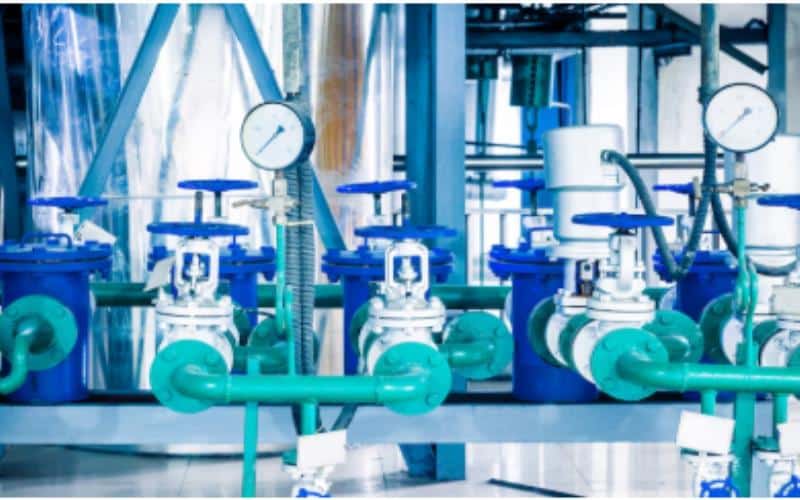
Confused about when to use a ball valve or a butterfly valve? You’re not alone. These two types of valves are very common, especially in plumbing, industrial setups, and even home systems. While both help control the flow of liquids and gases, they work in different ways and fit better in different situations. Let’s break things down in a simple way so you can clearly see how each one works and where they are used.
What Is a Ball Valve?
A ball valve uses a round ball inside that has a hole through the middle. When the hole lines up with the pipe, fluid flows through easily. When the ball is turned slightly using the handle, it blocks the flow. It’s a very simple on/off system. Because of this setup, ball valves are known for giving a solid and tight shutoff, which is helpful when you want no leakage at all.
These valves are usually used when you want fast control with strong sealing. They are also known for being very strong over time, even if they are opened and closed many times.
What Is a Butterfly Valve?
A butterfly valve works in a slightly different way. It has a disk (like a plate) in the center that turns when you rotate the handle. When the disk turns parallel to the flow, things move through smoothly. Turn it the other way and the flow slows down or stops completely.
Butterfly valves are often used in bigger pipes because they are light and don’t take up much space. They’re easy to install, and people like using them in large-scale systems like water treatment plants or big ventilation systems.
How Do They Work Differently?
Operation Style
Ball valves turn a ball inside the body to open or close the valve. You usually just need a 90-degree turn to go from fully open to fully shut. The handle usually stays in line with the pipe when open, which makes it simple to know the status.
Butterfly valves use a disk that turns on a central shaft. The handle also usually turns just 90 degrees, but the disk stays inside the pipe even when it’s open. That makes the design more compact but sometimes creates a small obstruction in the flow path.
Flow Control
Ball valves are excellent when you want no leakage at all. They shut off the flow completely when closed. They’re also good when you want strong flow with little resistance when open.
Butterfly valves are still good for flow control but might leave a little bit of resistance in the flow since the disk is always inside the pipe. Still, for many uses, especially when you need to control large volumes, butterfly valves are totally fine.
Installation Space
Ball valves usually need more room around them because of their body size and the handle movement. But they are strong and dependable.
Butterfly valves are slimmer and take up less space. That’s why they’re preferred when you’re working with limited room or larger systems where saving space is important.
Maintenance
Ball valves are low-maintenance because their design prevents buildup and blockage. People often use them when long-term reliability matters.
Butterfly valves are also easy to take care of. Since their parts are fewer and simple, fixing or checking them is usually quick.
Where You Can Use Ball Valves
Ball valves are commonly used in homes, factories, chemical plants, and more. You’ll often find them in water pipes, oil pipelines, gas systems, and even for steam.
They’re popular when safety and strong shut-off are important. Because the diaphragm valve seals tightly, it’s trusted in places where you can’t afford leaks.
They’re also useful in small spaces where easy on/off control is needed. A good example would be under your sink or in a heating system where quick control is helpful.
Where You Can Use Butterfly Valves
Butterfly valves are often used in larger systems—like water supply lines, fire protection systems, and cooling towers. Since they are lightweight and need less space, they fit well in big projects.
You’ll see them in food processing, power plants, and even irrigation setups. People like them for their smooth operation, fast control, and easy setup, especially when dealing with large pipes.
Which One Should You Pick?
If you’re picking one for your home plumbing, a ball valve might make more sense. It gives a solid shut-off and lasts a long time. If you’re setting up something bigger, like a building water supply or industrial tank system, a butterfly valve may be better because it’s light, works well for big pipes, and doesn’t need much room.
It really comes down to size, space, and how much flow control you need. Both are dependable, and both do their job nicely when placed in the right spot.
Final Thoughts
Ball valves and butterfly valves both have clear advantages. Ball valves are strong, provide a tight shut-off, and are perfect for small to medium-sized systems. Butterfly valves are better when you’re dealing with bigger pipes and want something simple, fast, and space-saving.
Whichever one you go with, you’re getting a reliable valve that does its job well. Just keep your project’s needs in mind—space, size, pressure, and the kind of fluid you’re moving—and you’ll make the right call. When used right, both ball and butterfly valves work like a charm and keep things running smooth.

